


Artificial intelligence is moving faster than most development teams can comfortably follow. New models appear almost every week. Each model promises better reasoning, sharper images, smarter automation, or richer media. However, building with these models can quickly become complicated. Developers often need several AI systems inside one application. They may need one model for text, another for images, and another for video. Then comes the difficult part. Every provider can introduce different APIs, credentials, request structures, pricing systems, and output formats. Consequently, adding another model can require significant engineering effort.
This is where unified model access becomes increasingly valuable. Platforms such as Atlas Cloud aim to simplify this growing challenge. They provide developers with one access layer for multiple AI capabilities.
Instead of rebuilding integrations repeatedly, teams can create applications around a consistent interface. As a result, developers can focus more attention on product quality and less on repetitive integration work.
What Is Unified Model Access in AI Development?
Unified model access provides one technical gateway to multiple artificial intelligence models. Traditionally, developers connect directly with individual model providers. Each connection requires separate authentication, documentation, testing, and maintenance. A unified platform places another layer between the application and those models. The application communicates with one interface. The platform then routes requests toward the selected model. This approach can support different generative AI workloads through consistent integration patterns.
For example, a single application might generate marketing copy with one model. It could create product images through another model. Meanwhile, a video feature could use a specialized video generation system.
The application does not need completely separate architectural approaches for every capability. That separation creates an important advantage. Developers can change models without redesigning the entire product architecture.
Why AI Model Integration Has Become So Complicated
AI development looked simpler when applications depended on only one model. Today, modern products increasingly combine multiple AI capabilities. Chatbots can understand documents, generate images, summarize conversations, and create structured responses. Creative platforms can combine text prompts, images, video, speech, and background audio. Consequently, one product may require several specialized models.
Each model can have different requirements. Some models accept text only. Others accept images, audio, or video. Some return immediate responses. Others require asynchronous processing.
Therefore, developers must manage more than simple API calls. They also need to handle authentication, rate limits, errors, response validation, file management, and monitoring. A unified access layer can reduce some of this repeated engineering work.
Atlas Cloud and the Unified AI API Approach
Atlas Cloud is an AI inference platform designed around unified model access. It provides developers with access to hundreds of AI models through one interface. Its model coverage includes text, image, video, and audio capabilities. The platform also follows an OpenAI-compatible API structure. Therefore, developers familiar with that format can adapt their existing knowledge more easily. The major attraction is flexibility.
Instead of committing an application permanently to one model provider, developers can evaluate multiple options. They can then choose models based on quality, speed, cost, and functionality. This creates a more adaptable development environment.
However, unified access does not eliminate the need for careful model evaluation. Developers still need to understand each model’s strengths and limitations.
The Biggest Advantage: Faster AI Experimentation
AI development depends heavily on experimentation. A model that performs well for one task may perform poorly elsewhere. Therefore, developers need practical ways to compare different systems. A unified interface can make this process easier. Teams can test multiple models while keeping their surrounding application architecture relatively stable. They can compare responses without rewriting large sections of application code.
This creates a faster feedback loop. For startups, this advantage can become especially important. Smaller teams often have limited engineering resources. They cannot afford to rebuild integrations every time a better model appears. With a flexible model layer, developers can experiment without creating unnecessary technical debt.
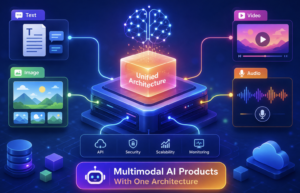
Building Multimodal AI Products With One Architecture
Modern AI products increasingly move beyond text. Users now expect applications to understand and generate multiple content formats. Therefore, developers need architectures that support multimodal workflows.
Text Models for Intelligent Applications
Text models remain central to many AI products. They can power chat assistants, summarization tools, content generators, coding assistants, and document-processing systems. Developers can also use them for extraction, classification, rewriting, and structured content generation. However, model selection should depend on the specific workload. Speed may matter more for customer support applications. Meanwhile, complex reasoning tasks may require stronger models.
Image Models for Creative Experiences
Image generation adds another dimension to AI applications. Businesses can use image models for advertising concepts, product visualization, design exploration, and personalized content. However, image generation requires more than sending a simple prompt. Developers must consider dimensions, output formats, storage, moderation, and delivery. A unified inference layer can help keep these technical workflows organized.
Video Models for Next-Generation Content
Video generation introduces even greater technical requirements. Video files can become large quickly. Generation can also take considerably longer than text responses. Therefore, applications often need asynchronous workflows. Developers may need job queues, status tracking, storage systems, and notification mechanisms. Specialized video models can become powerful components within these workflows. The Seedance 2.5 API, for example, illustrates how specialized video generation can fit broader AI applications.
Audio Models for Voice-Based Products
Audio models can support narration, speech generation, voice interfaces, and interactive experiences. They can also work alongside text and visual models. For example, an application could generate a script, create visuals, and produce narration. That combination creates a complete content pipeline. Unified model access can make these combinations easier to manage from one development environment.
Designing an AI Application Around Capabilities
One of the strongest architectural strategies involves separating capabilities from specific models. Instead of programming an application around one permanent model, developers can create capability-based services. For example, the application might request a “fast text generation” capability. The underlying configuration can determine which model performs that task. This approach reduces direct model dependency.
It also makes future upgrades easier. When another model delivers better results, developers can change the configuration rather than rewriting business logic. This architecture can become especially valuable as AI models evolve rapidly.
Model Routing Can Improve AI Application Efficiency
Unified access can also support smarter model-routing strategies. Not every request needs the most powerful available model. A simple customer question might require a fast and affordable system. A complicated research request could require a stronger reasoning model. Therefore, applications can potentially route different workloads toward different models.
This strategy can improve resource efficiency. It may also reduce unnecessary inference costs. Developers can create routing rules based on complexity, latency requirements, content type, or user expectations.
As a result, model flexibility becomes more than a development convenience. It can become part of the application’s operational strategy.
Managing Reliability in Production AI Systems
A successful prototype does not automatically become a reliable production application. AI systems depend on external services, networks, processing resources, and model availability. Consequently, developers need strong reliability practices. Applications should handle timeouts and temporary failures gracefully. They should also implement appropriate retry mechanisms.
However, retries should not happen without limits. Excessive retries can increase costs and create additional service pressure. Developers should also validate model outputs before using them. Unexpected responses can cause downstream application failures.
Logging and monitoring provide another important layer. Teams need visibility into failures, response times, usage patterns, and model performance. This information helps developers identify problems before they affect large numbers of users.
Security Should Remain a Core AI Development Priority
AI applications often process valuable information. Prompts may contain customer information, business documents, personal details, or confidential instructions. Uploaded files can also contain sensitive data. Therefore, security should become part of the architecture from the beginning.
API credentials should remain on secure server infrastructure. Developers should never expose private keys inside client-side applications.
Teams should also understand platform data policies before processing sensitive information. Important considerations include retention, authentication, access controls, and data processing practices. Strong security practices can reduce risks while supporting responsible AI adoption.
How to Evaluate AI Models Before Choosing Them
A large model catalog can create another challenge. More options do not automatically produce better results. Developers should evaluate models according to actual product requirements. Quality should be measured using representative examples. Showcase prompts can produce misleading results. For a document assistant, factual consistency may matter most. A creative application may prioritize visual quality and flexibility.
Latency can also influence user satisfaction. A highly capable model may become impractical if users wait too long for every response. Cost matters as well.
Developers should examine usage patterns instead of focusing only on individual request prices. Reliability should also influence the final decision. A model that performs brilliantly during testing may create problems if production availability remains inconsistent.
Unified APIs Can Reduce Technical Debt
Technical debt often develops through small architectural decisions. A developer may create a direct integration because it seems faster. Later, another feature requires a second provider. Eventually, the application contains several provider-specific integrations. Each integration requires separate maintenance. A unified access layer can reduce this fragmentation.
Developers can keep provider-specific concerns behind a controlled interface. Consequently, business logic remains cleaner. This structure can also simplify onboarding.
New developers do not need to learn every provider immediately. They can first understand the application’s common inference layer.
Scaling AI Products Beyond the Prototype
Scaling introduces new challenges. An application that serves ten users behaves differently from one serving thousands. Request volumes can increase suddenly. Media generation can consume significant storage. Long-running jobs can create processing backlogs. Therefore, scalable AI systems often require queues and asynchronous workflows. Caching can also reduce repeated processing.
Developers may cache appropriate responses when identical requests occur frequently. Load management becomes important too. Applications should control request volumes and protect critical services from unexpected traffic spikes. These practices help keep AI features responsive as adoption grows.
Why Model Flexibility Matters in 2026
The AI ecosystem continues to change rapidly. New models can introduce better performance, lower costs, or specialized capabilities. Meanwhile, existing models can change their pricing and availability. A rigid architecture can make these changes expensive. A flexible architecture provides more room to adapt.
Unified model access supports this flexibility by creating a stable layer between application logic and AI services. Developers can therefore evaluate new models without completely restructuring their products. That advantage becomes increasingly important as AI becomes a standard software component.
The Future of AI Product Development
AI development is moving toward greater specialization. Instead of relying on one model for every task, applications can combine specialized systems. One model may handle reasoning. Another may create visuals. A third may generate speech. This specialized approach can improve overall application performance.
However, specialization also increases integration complexity. Unified inference platforms can help address that challenge. The goal is not simply to provide access to more models. The larger goal is creating infrastructure that lets developers use those models efficiently.
Atlas Cloud represents this broader approach to AI infrastructure. Its unified API model gives development teams a way to explore different AI capabilities through a common access layer.
Final Thoughts
AI-powered software is entering a more flexible and complicated development era. Developers now have access to an enormous range of models. However, managing those models can become difficult without a thoughtful architecture. Unified model access provides one practical solution. It can simplify integrations, support experimentation, encourage model flexibility, and reduce provider-specific development work. Still, technology alone cannot guarantee a successful AI product.
Teams must evaluate models carefully. They must protect user data and design reliable production systems. They should also focus on the actual problem their AI feature needs to solve. When those fundamentals come together, unified model access can become a powerful foundation for modern AI development.
Frequently Asked Questions
1. What is unified model access?
Unified model access lets developers connect with multiple AI models through one common interface.
2. What is Atlas Cloud?
Atlas Cloud is an AI inference platform providing access to hundreds of models through a unified API.
3. Can unified APIs support multiple AI formats?
Yes, unified platforms can support workloads involving text, images, video, and audio.
4. Why should developers use multiple AI models?
Different models often perform better for specific tasks, making specialized combinations more effective.
5. Does a unified API remove model evaluation?
No, developers still need to test models for quality, speed, reliability, and cost.
6. Can unified model access reduce development time?
Yes, shared integration patterns can reduce repetitive provider-specific development work.
7. How does model routing help AI applications?
Model routing sends different requests toward models that best match their complexity and requirements.
8. Is unified model access useful for startups?
Yes, startups can experiment with different models without rebuilding their entire application architecture.
9. How should developers protect AI API keys?
Developers should store API keys securely on server infrastructure or within a secrets-management system.
10. What makes an AI model suitable for production?
Production models should deliver reliable quality while meeting latency, security, scalability, and cost requirements.
11. Can developers replace models after launching an application?
A flexible architecture makes model replacement significantly easier after deployment.
12. Why is multimodal AI becoming important?
Users increasingly expect applications to work with text, images, video, and audio together.
13. What is the biggest benefit of a unified inference platform?
Its biggest benefit is reducing integration complexity while giving developers greater model flexibility.
14. Will unified model access replace individual AI providers?
No, it provides an additional access layer while allowing applications to use models from different providers.