

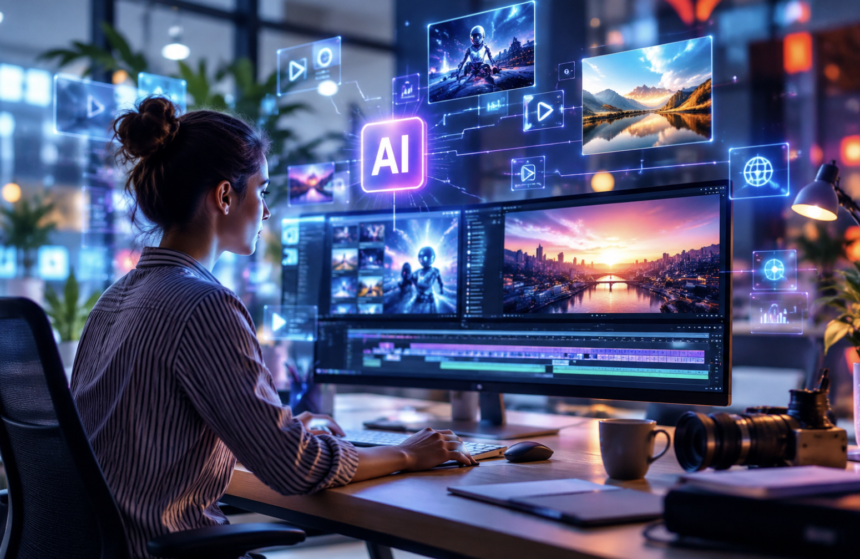
A blank screen can now become a cinematic scene within minutes. An idea can turn into moving characters, locations, and stories without a camera. That shift is changing how people imagine, produce, and share visual content. For decades, video creation depended on cameras, actors, studios, editors, and expensive equipment. Today, artificial intelligence can handle many production tasks through simple instructions. Consequently, creators can focus more on storytelling instead of repetitive technical work.
AI video technology is also becoming more sophisticated. Modern systems can understand prompts, generate movement, simulate camera techniques, and maintain visual details. Moreover, creators can experiment with multiple concepts before investing heavily in traditional production.
The result is not simply faster video creation. Instead, AI is changing the entire creative process from the first idea to final publication.
What Is AI Video Technology?
AI video technology uses machine learning models to create, edit, or enhance video content.
These systems can transform text descriptions, images, audio, or existing footage into visual sequences.
For example, users can describe a futuristic city during sunset.
An AI model can interpret that description and generate a corresponding video scene.
However, generation is only one part of the technology.
AI can also assist with editing, background replacement, motion tracking, subtitles, voiceovers, and visual effects.
Therefore, AI video tools are becoming broader creative platforms rather than simple video generators.
Why AI Video Creation Is Growing So Quickly
Traditional video production often requires significant planning and financial investment. Even short promotional videos can involve several people and multiple production stages. AI reduces many of these barriers.
Creators can develop concepts without immediately hiring large production teams.
Furthermore, digital platforms constantly demand fresh video content. Social networks reward brands and creators that publish consistently.
Consequently, producing one video every few weeks may no longer be enough. Businesses need efficient workflows that support frequent content creation. AI helps address this challenge by accelerating several stages of production. Creators can develop drafts, test concepts, and produce variations much faster.
How Modern AI Video Models Understand Creative Instructions
Earlier video generators often produced unpredictable movements and inconsistent objects. Characters could change appearance between frames, while backgrounds sometimes became distorted. Modern models have improved considerably. They can interpret more detailed instructions and connect multiple visual elements within a scene.
For instance, creators can specify camera movement, lighting, subject behavior, location, and atmosphere. The model then attempts to combine these instructions into one coherent sequence.
Additionally, improved temporal consistency makes movement appear more natural. This development matters because realistic motion is essential for convincing visual storytelling.
Text to Video Is Opening New Creative Possibilities
Text to video generation allows creators to begin with an idea instead of physical footage. They can describe a scene and receive a visual interpretation from an AI model. This process can benefit writers, marketers, educators, designers, and filmmakers.
A written concept can become a visual prototype before traditional production begins.
Moreover, creators can quickly test different moods and storytelling directions. A single concept might produce realistic, cinematic, animated, or artistic interpretations. Therefore, text-to-video technology can function as a powerful creative brainstorming partner.
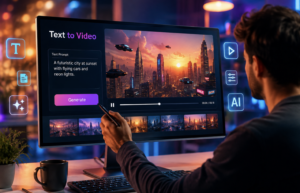
Image to Video Adds Motion to Static Ideas
AI video technology is not limited to text prompts. Many platforms can also transform still images into animated sequences. A product photograph can become a dynamic promotional clip. Likewise, an illustration can gain movement without requiring manual animation.
This capability creates new opportunities for designers and content creators. They can reuse existing visual assets instead of creating every element from scratch.
Furthermore, image to video workflows can help brands maintain recognizable visual identities. Existing product images, artwork, and campaign designs can become foundations for new videos.
AI Video Is Changing Marketing Forever
Marketing teams constantly need fresh content for campaigns and digital platforms. However, traditional production can make frequent experimentation expensive. AI allows marketers to create multiple concepts before selecting the strongest option. They can test different messages, visuals, audiences, and storytelling approaches.
For example, one product campaign can receive several visual treatments. One version might emphasize luxury, while another highlights convenience or affordability. As a result, marketers gain more opportunities to discover what resonates with audiences.
AI also supports content personalization. Brands can potentially adapt visuals for different audiences, locations, or campaign objectives.
Social Media Content Can Be Produced at Greater Speed
Short-form video dominates many social media strategies. However, maintaining a consistent publishing schedule can overwhelm small teams. AI video tools can simplify the creation of short clips, explainers, advertisements, and promotional content. They can also help adapt concepts for different aspect ratios and platforms.
For instance, one campaign idea can become several platform-specific videos. Creators can then adjust captions, pacing, visuals, and messaging for each audience. Consequently, AI can make social media production more scalable without requiring massive creative departments.
AI Video Is Reshaping Online Education
Education depends heavily on clear communication. However, complicated concepts can become difficult when presented through text alone. AI-generated video can combine narration, animation, illustrations, diagrams, and visual examples. This approach can make lessons more engaging and easier to understand.
Teachers can visualize scientific processes, historical events, technical procedures, and abstract concepts. Meanwhile, companies can create training materials for employees.
Furthermore, AI can help organizations update educational videos more efficiently. Changing a section may require less effort than recording an entire production again.
E-Commerce Can Turn Product Images Into Experiences
Online shoppers cannot physically inspect products before purchasing. Therefore, businesses need strong visual communication to explain their products. AI video can demonstrate product features, usage scenarios, and design details. It can also create lifestyle scenes around products without requiring elaborate photography sessions.
For small businesses, this can reduce dependence on expensive studio productions. Consequently, smaller brands can compete with larger companies through stronger visual presentation.
AI Is Becoming a Pre-Production Tool for Filmmakers
AI video technology does not need to replace filmmaking. Instead, it can support filmmakers during the planning process. Directors can visualize scenes before production begins. Writers can explore how specific moments might look on screen.
Production teams can also test compositions, environments, costumes, and camera movements. This process can reveal creative problems before expensive filming begins. As a result, AI can become a practical pre-visualization tool for modern productions.
Virtual Production and AI Are Moving Closer Together
Virtual production has already changed filmmaking through digital environments and real-time graphics. AI can expand these capabilities by helping create environments and visual concepts faster. Creators can generate backgrounds, locations, and atmospheric elements for virtual scenes. This can reduce the time required to build certain digital environments manually.
Moreover, AI-assisted production can support smaller teams. Independent creators may gain access to visual capabilities previously available mainly to major studios.
AI Avatars and Synthetic Presenters Are Expanding
Another major development involves AI-generated presenters and digital avatars. Businesses can use these systems for training, announcements, tutorials, and informational videos. These tools can reduce the need for repeated recording sessions. They may also help organizations produce multilingual content more efficiently.
However, responsible use remains essential. Organizations should clearly consider consent, transparency, identity rights, and audience trust.
AI Voice and Video Are Becoming More Connected
Video storytelling also depends heavily on sound. Therefore, AI video development increasingly overlaps with AI voice technology. Creators can generate narration, dialogue, sound effects, and synchronized audio. This creates a more complete production workflow within fewer applications.
Additionally, automated captioning can improve accessibility and content discoverability. Creators can therefore reach audiences who watch videos without sound.
The Importance of Prompt Engineering in AI Video
AI does not automatically understand every creative idea perfectly. The quality of instructions can strongly influence the final result. Effective prompts should describe the subject, environment, movement, camera, lighting, and visual style. Creators should also specify important details that must remain consistent.
Instead of writing “a car driving,” describe the scene more precisely. Mention the road, weather, camera position, speed, lighting, and desired atmosphere.
Furthermore, creators should experiment with different prompt structures. Small changes can produce significantly different visual results.
AI Video Still Needs Human Creativity
Despite rapid technological progress, AI cannot replace meaningful creative direction. A technically impressive video can still fail without a strong story. Human creators provide context, emotion, originality, judgment, and cultural understanding. They decide what deserves attention and what should remain outside the frame.
Therefore, the strongest workflow combines artificial intelligence with human creativity. AI handles repetitive tasks while people guide the creative vision. This collaboration can make production faster without removing the human element.
Challenges Creators Should Consider
AI video technology also introduces important challenges. Generated content can sometimes contain visual errors or unrealistic movements. Additionally, creators must consider copyright, consent, privacy, and intellectual property concerns. The rapid development of synthetic media makes responsible content practices increasingly important.
Deepfakes create another serious concern. Highly realistic generated videos can potentially mislead viewers when presented deceptively. Therefore, creators should use AI transparently and verify important visual claims.
The Future of AI Video Technology
AI video generation is moving toward greater realism and creative control. Future systems may produce longer sequences with stronger continuity and more precise direction. They may also provide better control over characters, environments, camera movements, and storytelling structure.
Meanwhile, AI could become deeply integrated into traditional editing software. Instead of switching between numerous tools, creators may manage entire workflows through natural language. This could make professional video production accessible to an even wider audience.
How Businesses Can Prepare for the AI Video Revolution
Businesses should begin by identifying repetitive video tasks within their existing workflows. Short advertisements, tutorials, training clips, and social content can provide useful starting points. Next, teams should establish clear quality standards. AI-generated content still requires human review before publication. Companies should also create guidelines for copyright, disclosure, brand consistency, and responsible AI use.
Finally, organizations should treat AI as a creative investment rather than a simple automation tool. The biggest advantage comes from combining technology with strong storytelling and strategic thinking.
Conclusion
AI video technology is transforming visual storytelling from concept development to final production. It allows creators to experiment faster, produce more content, and explore ideas with fewer resources. At the same time, AI introduces new responsibilities surrounding authenticity, copyright, consent, and misinformation. Therefore, successful creators will combine technological innovation with careful human judgment.
The future belongs neither entirely to humans nor entirely to machines. Instead, it will favor creators who know how to make both work together. As AI video tools continue improving, visual storytelling will become faster, more flexible, and increasingly accessible.
FAQ’s
1. What is AI video technology?
AI video technology uses artificial intelligence to generate, edit, enhance, or transform video content.
2. Can AI create videos from text?
Yes, modern AI systems can generate video sequences from detailed written prompts.
3. Is AI video generation useful for businesses?
Yes, businesses can use AI videos for marketing, training, social media, product demonstrations, and communication.
4. Can beginners create AI-generated videos?
Yes, many modern platforms offer simple interfaces designed for beginners and professional creators.
5. Does AI video technology replace filmmakers?
No, AI primarily supports filmmakers by accelerating production tasks and expanding creative possibilities.
6. How can creators improve AI-generated videos?
Creators can improve results by writing precise prompts and clearly describing movement, lighting, composition, and style.
7. What is text to video AI?
Text-to-video AI converts written descriptions into moving visual sequences using machine learning models.
8. What is image to video generation?
Image-to-video technology animates static images and transforms them into dynamic video sequences.
9. Can AI generate realistic voices for videos?
Yes, AI voice systems can generate narration, dialogue, and other audio elements for video projects.
10. Is AI-generated video suitable for social media?
Yes, AI can efficiently produce short-form videos, advertisements, explainers, and promotional content for social platforms.
11. What industries benefit from AI video technology?
Marketing, education, entertainment, e-commerce, filmmaking, training, and social media can all benefit significantly.
12. What are the biggest AI video challenges?
Accuracy, copyright, consent, misinformation, visual consistency, and responsible synthetic-media use remain important challenges.
13. Why are AI video prompts important?
Detailed prompts give AI clearer creative direction and can produce more consistent visual results.
14. Can AI video technology help small businesses?
Yes, AI can reduce production barriers and help smaller businesses create professional-looking visual content.
15. What does the future hold for AI video?
Future AI video systems will likely offer longer sequences, stronger consistency, greater control, and more realistic storytelling.