

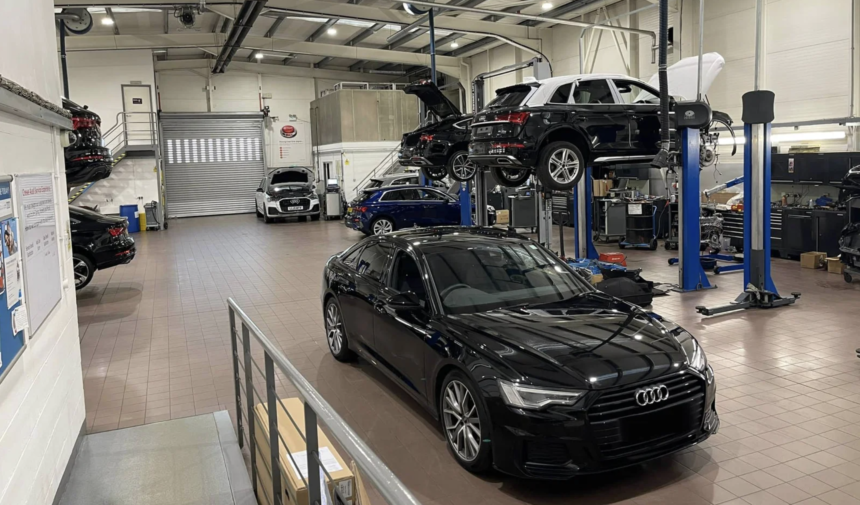
The MOT is one of those annual jobs that many motorists approach with a mix of habit and dread. The test itself is short, but the outcome can bring a bill that nobody planned for, and a missed date can leave a car unusable on the road and an insurance policy open to challenge. A little preparation tends to pay for itself.
This guide explains how the test works in the UK, which parts of a vehicle are examined, how results are graded, what to do if your car fails and how to keep the next test straightforward. It covers the rules in England, Scotland and Wales, where the test is run by the Driver and Vehicle Standards Agency (DVSA), and notes where Northern Ireland differs. Fees, standards and procedures are updated from time to time, so check GOV.UK for current details before you book.
Timing Your MOT Around the Expiry Date
In Great Britain, a new car needs its first MOT on the third anniversary of its registration. After that, the test is annual. In Northern Ireland, private cars usually take their first test at four years old, through the Driver and Vehicle Agency. Some vehicles are exempt, including most vehicles first registered at least 40 years ago that have not been substantially changed, and keepers must declare that status when taxing the vehicle.
The date to watch is the expiry on your current certificate. You can check it for free on GOV.UK by entering your registration number, and the same service shows the vehicle’s MOT history, including past advisories and failures. You can also sign up for a reminder by text or email. Do not rely on the garage or on the post to remind you, because some garages send reminders and many do not.
A key timing rule is that you can take the test up to a month, minus one day, before the current certificate runs out and still keep the same renewal date. For example, if your MOT expires on the 20th of a month, testing from the 21st of the previous month preserves the 20th as your annual date. Taking it earlier than that resets the expiry to a year from the new test date, so you lose some of the cover you had paid for. Booking early in that window leaves time for repairs and a retest without driving illegally.
Driving without a valid MOT is an offence. You can be fined, and your insurer may refuse a claim or treat the policy as void, because many policies require the vehicle to be roadworthy. There are limited exceptions: you may drive to a pre-booked MOT appointment, or to a place where repairs are being done to meet MOT requirements. Keep proof of the booking in case you are stopped.
Also keep in mind that an MOT certificate is a snapshot. It records the condition of the vehicle on the day of the test, and it does not guarantee that the car will stay roadworthy for the next twelve months. A tyre can be damaged or a bulb can blow the day after you pass. The legal responsibility for keeping a vehicle in a safe condition sits with the owner or driver at all times.
When planning dates, think about the practical side too. Garages are busiest at the end of the month and around the March and September number-plate changes, when many cars reach their anniversaries. Booking a couple of weeks ahead, and aiming for a mid-week slot, usually gives you more choice.
Reviewing the Parts of Your Vehicle the Test Covers

The test is a check of safety and environmental standards. It is not a service, and it does not check every mechanical part. For a standard car, the tester inspects a defined list of items, using a combination of visual checks, hands-on tests and equipment such as a brake roller and exhaust analyser. The main areas include:
- Lights and signals: headlights, sidelights, brake lights, indicators, fog lamps and reversing lights must work, be the right colour, be properly aimed and be securely fitted.
- Steering and suspension: the tester looks for wear, play, damage and leaks in the steering, shock absorbers, springs and linkages.
- Brakes: the performance, balance and condition of the brake system are measured, along with the handbrake or parking brake, pipes and hoses.
- Tyres and wheels: tyres are examined for tread depth, damage, correct size and pressure, and wheels for security and condition. The legal minimum tread depth for cars is 1.6 millimetres across the central three-quarters of the tyre.
- Seatbelts and seats: all fitted seatbelts are checked for condition, operation and secure mounting, and the seats must be properly fixed.
Beyond these, the test covers the bodywork and structure for sharp edges or severe corrosion in key areas, the exhaust system for security and leaks, the fuel system for leaks and a secure fuel cap, the horn, mirrors, windscreen and wipers, doors, registration plates and the vehicle identification number. The tester also looks at the battery and electrical wiring, and any towbar fitted.
Emissions are tested on petrol and diesel vehicles. Petrol cars have exhaust gases measured, while diesel cars face a smoke test and checks of the particulate filter if fitted. Electric vehicles are not tested for exhaust emissions but are still examined for all the other safety items. Warning lights on the dashboard are checked as well, and certain lights, such as those for the engine management system, anti-lock brakes, airbags and tyre pressure monitoring where fitted, can lead to a fail.
What the test does not cover is equally important. It does not assess the condition of the engine, clutch or gearbox, and it does not replace servicing. A car can pass its MOT and still be due for new brake pads in a few months, or have a worn clutch. Treat advisory notes as an early warning and consider a separate service to catch problems the test would not.
The test applies to different vehicle classes, with rules varying for motorcycles, larger vans, buses and taxis. Standard cars with up to eight passenger seats fall into the class most readers will know. If you drive something else, check the DVSA guidance for your class.
Preparing Your Car With Simple Checks at Home
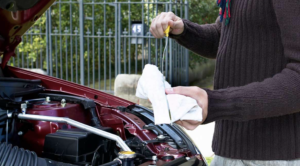
Many failures arise from small faults that are easy to fix before the appointment. A short walk-around and a few minutes with a torch can save the cost of a retest and the inconvenience of a second visit. Run through these checks a few days before the test:
- Lights: switch on the dipped beam, main beam, sidelights, fog lights, hazards and indicators, and check them from outside. Ask someone to confirm the brake lights and reversing lights work, or reverse up to a reflective surface to see them.
- Tyres: look for cuts, bulges and worn patches, check the pressures against the handbook and measure tread depth with a gauge or a coin test, remembering that 1.6 millimetres is the legal minimum, not a recommended level.
- Wipers and washers: check that the blades clear the screen without smearing, and top up the washer bottle so that the jets spray properly.
- Horn and mirrors: sound the horn, and ensure mirrors are secure, with no cracks or loose fittings.
- Number plates: they should be clean, undamaged, correctly spaced and in the legal font. Plates with unusual lettering or poor visibility can fail.
Then look at the dashboard. When you turn the ignition on, warning lights should come on briefly and then go out once the engine starts. Any that stay lit, especially for the engine, brakes, airbags or power steering, should be investigated beforehand.
It also helps to check fluid levels, as low brake fluid or coolant can lead to problems and the tester may refuse to test an unsafe vehicle. Make sure there is enough fuel for the emissions test and for moving the car around the test lane. A vehicle may be turned away if it is very dirty, inside or out, in a way that stops the tester carrying out the inspection. Clear out the boot and the passenger area, remove child seats or heavy items if they obstruct seatbelts, and keep pets away from the vehicle.
Take everything out of the car that you do not need. Cluttered footwells and boots can obstruct checks on the seatbelts and bodywork. Also remember to bring any locking wheel nut key, so the tester can remove wheel trims if needed. Without it, the garage may not be able to test the wheels.
Finally, check whether there are open recalls on your vehicle. The government provides an online tool where you enter your registration number to see if the manufacturer has issued any safety recall. A recall does not itself fail an MOT, but the repair is free and relevant to safety.
Spotting Common Causes of Failure
A large share of failures come from a small group of faults. Knowing them helps you focus your pre-test checks. The DVSA publishes information on the most frequent reasons for failure, which you can find via GOV.UK, and the pattern changes little from year to year. The usual suspects include:
- Lighting and signalling: blown bulbs, misaligned headlamps, cracked lenses and faulty indicators are among the most common causes, and they are cheap and quick to fix.
- Suspension: worn springs, damaged shock absorbers and worn joints often show up as the car ages, especially on roads with potholes.
- Brakes: worn pads and discs, seized callipers, leaking hoses or an imbalance between wheels can fail the car.
- Tyres: tread below the legal limit, cuts or bulges in the sidewall, or an incorrect type for the wheel result in failures that are easy to see.
- Visibility: damaged windscreens in the driver’s line of sight, worn wiper blades and non-working washers all matter, as does a badly cracked mirror.
Other problems are more specific. Excess corrosion on the structure or in areas supporting the suspension or seatbelts is a serious issue. A missing or modified diesel particulate filter is a fail. Smoke from the exhaust beyond the permitted limit is another. Registration plates with the wrong font or spacing have also caused issues.
Learning from your history helps. The online MOT history lists previous advisories, such as tyres close to the limit or a slightly corroded brake pipe. If these were noted last year, they may now have become failures. Take the advisory list to your garage and ask them to look at each item before the test.
Age and mileage affect risk. Older vehicles tend to have more corrosion and wear, while newer vehicles have more electronic systems whose warning lights can cause failures. High-mileage cars may have worn suspension and brakes even if they look tidy. A pre-test inspection by a trusted mechanic is a reasonable option if you have an older vehicle or have noticed noises, pulling under braking or unusual vibrations.
Think about the environment too. Cars parked outside year-round, driven in coastal areas or on roads treated with grit can suffer more corrosion. Washing the underside after winter helps slow the process.
Reading Your Test Result and Defect Categories
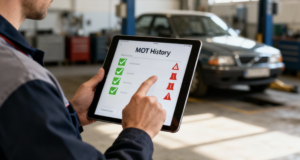
At the end of the test, the garage records the result on the national system, and you receive a certificate or a refusal notice. The details are available online, so you do not need a paper certificate, although most garages still provide one. The result is graded by the severity of any defects found. Under the current system, defects are placed in categories:
- Dangerous: a direct and immediate risk to road safety or the environment. The vehicle fails, and you should not drive it until it has been repaired.
- Major: a defect that may affect safety, put other road users at risk or harm the environment. The vehicle fails and must be repaired before it can pass.
- Minor: a defect with no serious effect on safety. The vehicle can pass, but you should have the issue repaired soon.
- Advisory: something that may become a problem in future, such as wear that is not yet a fault. It is for information and does not cause a fail.
- Pass: no defects, or only minor or advisory items.
A pass with advisories is common, especially on older vehicles. Do not ignore the notes. Keep them, ask your garage what each one means and how urgent it is, and plan to deal with the important ones before the next test.
A fail means the vehicle does not meet the minimum standard on the day. If the certificate shows a dangerous defect, driving the car away may itself be an offence, and you could face a fine and penalty points. The garage should tell you about the risk. If the previous MOT is still valid, you may be able to drive the car, but only if it is safe to do so, so take advice before leaving.
Check the details on the refusal notice. It should list each defect with a description and the location on the vehicle, so that you or another garage can identify the work. If anything is unclear, ask the tester to show you the fault on the car. Good garages are happy to do this.
If you disagree with a result, do not argue at the counter. Instead, ask for an explanation, then consider your options. You can appeal to the DVSA, usually within a short window of the test, currently 14 days, and the vehicle may be re-examined, sometimes for a fee. Check GOV.UK for the process and deadlines, and avoid repairs on the disputed item before the reassessment, since that would remove the evidence.
Handling a Fail and Retest
A fail is frustrating, but it is not a disaster. The key points are to keep control of the process and to avoid driving an unsafe vehicle. Follow a clear order of action.
- Read the refusal notice carefully and ask the tester to explain every item.
- Ask whether the garage can fix the faults, and request a written quote before agreeing to any work.
- Decide whether to repair at the same garage or elsewhere. You are not obliged to use the test centre for repairs.
- If the vehicle is not safe, arrange recovery or have it repaired where it is, instead of driving it away. 5. Arrange the retest within the allowed period to qualify for a free or reduced-fee partial retest.
Retest rules offer a financial benefit. In general, if the vehicle stays at the test centre for repair and is retested within ten working days, the retest is free. If you take it away and bring it back within ten working days, a partial retest may be available at a reduced fee, covering only the failed items. After that period, you may need a full new test and fee. The exact rules vary, so ask the garage and check the DVSA guidance.
Be careful with quotes. Ask for a clear breakdown of parts and labour, and compare at least two quotes if the repair is costly. If the quote seems high, you can ask a different garage to look at the problem. Remember that a garage cannot force you to repair at their premises, and they must not carry out extra work without your agreement. Repairs for faults found during a test should be restricted to the faults listed unless you approve more.
A car that fails because of a dangerous defect and has no valid MOT certificate can be driven only to a pre-booked retest or to repairs, and only if it is safe to do so. Driving it further could lead to penalties and invalidate insurance. If you are worried, arranging a recovery vehicle may be cheaper than risking a fine.
If the repair costs more than the car is worth, you face a choice. It may make sense to sell the car for parts, scrap it or replace it. Get a quote for the repair and compare it with the likely value, using online valuation tools and local adverts. Ask about the car’s other wear items, because a failed MOT can reveal wider problems.
Keep every invoice and test certificate. They add to the vehicle’s history, help with resale and give evidence if you dispute a garage’s work.
Setting a Budget for Repairs and Choosing a Garage
The fee for the MOT itself is capped by the government, and garages may charge less. The test is only part of the cost, however, because repairs can add up. Setting aside a small amount each month for car maintenance means a fail does not come as a shock. It also encourages you to fix things early, when they are usually cheaper.
When choosing a garage, look for a DVSA approved test centre, displaying the blue sign with three white triangles. Check online reviews, ask friends and neighbours for recommendations, and consider whether the garage belongs to a trade body or code of practice, such as one backed by the Motor Ombudsman. Membership does not guarantee quality, but it gives you a route for complaints.
Be wary of offers that seem too good to be true. A very low test price may be a way to win repair work, with aggressive recommendations afterwards. Equally, “free retest” promises can be useful, but read the conditions. A garage that tests and repairs has a conflict of interest, which is why some drivers prefer to use a separate testing station and then take the car elsewhere for repairs.
This is a matter of preference, and many repair-and-test garages treat customers fairly. Questions worth asking when you book include:
- What does the test price include: confirm whether it covers the retest, and what happens to the fee if the car fails.
- How long will it take: a typical test takes under an hour, but you may need to wait, and some garages offer courtesy cars or drop-off.
- What are your repair rates: ask for hourly labour charges and whether parts are new, used or aftermarket.
- How do you handle advisories: a good garage will explain them without pressure.
Keep records of everything you agree, ideally by email. If a dispute arises over unauthorised work or poor repairs, start by writing to the garage. If that fails, contact Citizens Advice for guidance, and if the garage belongs to a code of practice, use the relevant complaints process.
Under the Consumer Rights Act 2015, services must be carried out with reasonable care and skill, and you may be able to ask for the work to be put right or for a price reduction.
Finally, consider the full cost of ownership. Tyres, brakes, batteries and servicing are predictable. A car that needs repeated expensive repairs may cost more than a replacement, so review your options each year.
Maintaining Your Vehicle Between Tests

The best way to approach the next MOT is to look after the car all year. Regular care catches small faults before they become failures, and it keeps the car safer and cheaper to run.
- Follow the service schedule: manufacturer service intervals exist for a reason, and a full service will usually find the wear items that would trouble a test.
- Check tyres monthly: measure pressures when the tyres are cold, look for damage and rotate or replace them as needed.
- Test lights regularly: a monthly check takes two minutes and avoids a fail, as well as keeping you legal and safe.
- Keep fluids topped up: engine oil, coolant, brake fluid and screenwash all matter, and low levels may be a sign of a leak.
- Act on warning lights: a dashboard light is the car asking for help, and ignoring it can turn a minor repair into a major one.
Keep a simple record, in a notebook or on your phone, of services, repairs, tyre changes and MOT results. When the next test comes around, you can see at a glance what was advised last time and whether it has been done. It also provides a useful history when you sell the car, because buyers value evidence of regular care.
Drive in a way that protects the vehicle. Avoid hitting kerbs and potholes at speed, which can damage suspension and tyres. Allow the engine to warm up gently, and avoid carrying heavy loads that strain the brakes and suspension. For diesels, an occasional longer run at steady speed helps the particulate filter clear itself.
Think, too, about seasonal care. Before winter, check the battery, antifreeze and wiper blades. After winter, wash the underside to remove salt, and check for damage from cold weather. If you park outside, protect the car with regular washing and waxing.
If you buy a used car, check its MOT history before you commit. Look for patterns of repeated failures, large numbers of advisories or gaps in testing. A seller should be willing to show the service book and receipts. A clean history does not guarantee a good car, but a poor one is a warning.
Final Thoughts
The MOT is a modest annual check that rewards preparation. Knowing the test date, doing a quick walk-around, reading the defect categories and keeping a clear record of repairs reduce both cost and stress. Choose a garage you trust, ask for written quotes, and treat advisories as a plan for the year ahead.
If a result seems wrong, ask questions and use the DVSA appeal process within its time limit. If a garage treats you unfairly, keep records and use the complaints routes available through Citizens Advice or a relevant trade code.
This guide is general information and not personal legal or financial advice. For current fees, standards and procedures, check GOV.UK and the DVSA.
Frequently Asked Questions
When does my car need its first MOT?
In Great Britain, a car needs its first MOT on the third anniversary of its registration. In Northern Ireland, private cars are usually tested first at four years old. Check the exact date on GOV.UK using your registration number.
How early can I get an MOT without losing days?
You can test up to a month, minus one day, before the current certificate expires and keep the same renewal date. Testing earlier means the new certificate runs from the date of the test.
Can I drive my car if the MOT has run out?
Generally no, apart from driving to a pre-booked MOT appointment or to a place for repairs needed to pass. Driving without a valid MOT can lead to a fine, and your insurance may be affected.
What happens if my car fails its MOT?
You will receive a refusal notice listing the defects. You must repair them and have the car retested. If the defect is dangerous, you should not drive the car until it has been fixed. A free or reduced-fee retest is often available within a set period.
Does the MOT check the engine and gearbox?
No. The test covers safety and environmental items such as brakes, steering, lights, tyres and emissions. It does not assess the condition of the engine, clutch or gearbox, so a service is still worthwhile.
How much does an MOT cost?
The government sets a maximum fee for each vehicle class, and garages can charge less. Prices vary by area and garage, so compare local quotes and check the current maximum on GOV.UK.