

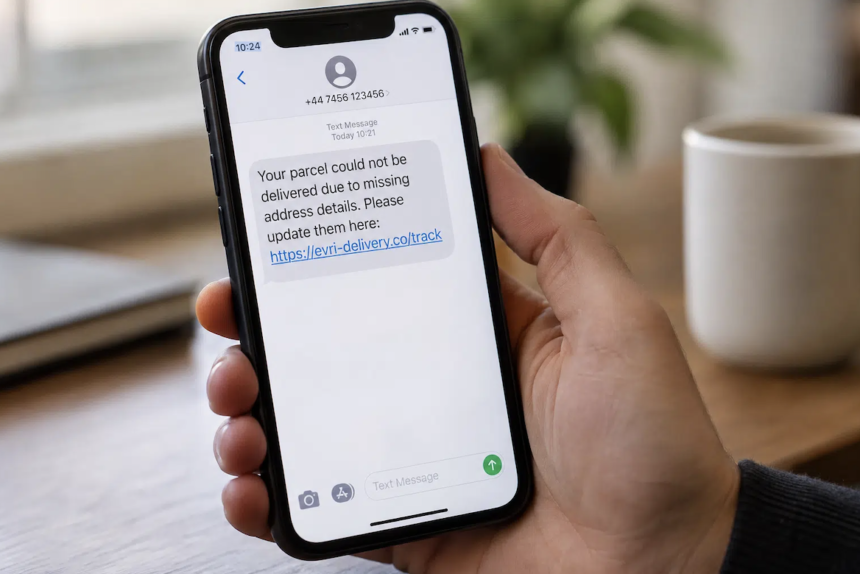
Almost everyone in Britain now receives a suspicious text or call from time to time, and the messages are becoming harder to tell apart from the real thing. A single tap on a bad link or a rushed reply on the phone can cost people their savings, their identity or their peace of mind.
In this article we will discuss how smishing and phone scams work, the warning signs worth learning, the safest ways to respond, and where to report a scam in the UK.
Smishing Uses Urgency to Push Quick Decisions
Smishing is a blend of the words SMS and phishing, and it simply means a scam delivered by text message. The sender wants you to do something fast, such as tap a link, call a number, reply with a code, or make a payment. Criminals favour text messages because they are cheap to send in huge numbers, and because people tend to read them within minutes. Even a small success rate is profitable for them.
The message usually claims to come from an organisation you know and trust. It may pretend to be a bank, a delivery firm, a government body, a mobile network, an energy supplier or a streaming service. The story is built to make you worry or hope: a missed parcel, a suspicious payment, a refund waiting for you, or an account that will be closed. Each version aims at the same moment, when you act before you check.
Calls follow the same logic, and the two often work together. A text may tell you to expect a call, or a caller may ask you to look at a message that arrives while you are talking. Voice scams are sometimes called vishing, and they add pressure because a human being is on the line. A calm, friendly voice can feel more trustworthy than a link, which is exactly why it is used.
Scammers also gather information beforehand. Names, addresses, bank names and recent purchases can come from data breaches, social media or earlier scams. When a stranger quotes some correct details, it feels reassuring, but it proves very little. Treat any contact you did not expect with caution, however much the sender seems to know about you.
Nobody is immune. Scams catch young people, older people, professionals and careful savers, usually when they are busy, tired or worried. Feeling embarrassed is common after being caught, and criminals rely on that silence. The better approach is to talk openly, report quickly and help friends and family do the same.
Time of day and context matter more than most people expect. Scam texts often arrive when you are waiting for something, such as a delivery before Christmas or a refund after a purchase. Others are timed for early mornings, when you are rushing, or late evenings, when you are tired. Knowing that the timing may be deliberate gives you one more reason to pause.
Common Scripts Follow Familiar Patterns

Although the details change, most scams repeat a short list of stories. Learning these patterns helps you recognise a new version before you have seen it. The following table sets out some of the most frequent types in plain terms.
| Scam type | What the message claims | What the scammer wants |
| Parcel or delivery fee | A package could not be delivered and needs a small payment | Card details through a fake page |
| Bank fraud alert | Suspicious activity on your account, call or click now | Login details, codes or a transfer |
| Tax or government refund | You are owed money or must pay a penalty | Personal and bank details |
| Family impersonation | A relative has a new number and needs urgent help | A quick payment to a stranger’s account |
| Scam type | What the message claims | What the scammer wants |
| Prize or survey | You have won something or can claim a reward | Fees, details or a subscription |
| Missed call callback | A call rings once, then a number is shown for you to ring back | A call to an expensive premium number |
| Investment or job offer | Easy returns or simple work from home | Deposits, fees or bank access |
Bank impersonation is among the most damaging forms. The caller says your account is under attack and that you must move your money to a safe account straight away. No real bank will ever ask you to do this, and no police officer or fraud team works that way either. If someone claims you must transfer funds to protect them, hang up, because the request itself tells you it is a scam.
Family impersonation messages usually begin with a greeting such as “Hi Mum” or “Hi Dad”, followed by a claim that a phone has been lost or broken. The sender asks for money to be sent quickly, often for a bill that cannot wait. The fix is simple. Phone the person on the number you already have saved, or ask a question only the real person would answer.
Government impersonation is also common. HMRC, DVLA, TV Licensing, the NHS and councils are all copied, because people generally take their messages seriously. These bodies explain on their official pages how they contact people, and they do not normally demand immediate payment by text. Use the official website or a known number, not the link in the message, to check whether anything is owed.
A useful rule is that official bodies tell you in advance how they will contact you. Check the contact page of the organisation concerned, and save its correct details before you need them. Then compare any suspicious message against those details, and ignore anything that does not match.
Delivery scams grow when people are shopping heavily. A text says a parcel is held at a depot and asks for a small fee to release it. The amount looks trivial, which is the trick, because the real aim is to collect your card details and possibly use them again. If you are not expecting a parcel, ignore the text, and if you are, check the retailer’s own account page.
Job and investment scams deserve a mention because the sums can be large. A message offers easy online work, a high return on crypto, or a tip from a stranger who seems to have contacted you by mistake. Victims are often asked to pay small amounts first, then larger ones, as the supposed profits appear on a convincing website. Any offer that promises quick returns with little risk should be checked against the Financial Conduct Authority register before you send anything.
Warning Signs Are Easier to Spot When You Slow Down

The most reliable warning sign is pressure. Phrases such as “act now”, “within 24 hours”, “your account will be suspended” or “final notice” are designed to stop you from thinking. Real organisations may set deadlines, but they rarely threaten you by text and they normally let you verify the message through a secure channel. When you feel rushed, treat that feeling as the clue.
Look next at the sender and the wording. Messages from unknown mobile numbers, odd email-style addresses or strange sender names deserve extra caution. Poor spelling, clumsy grammar and generic greetings such as “Dear customer” can be signs, although well-made scams may be flawless. Do not rely on mistakes alone, because modern tools can produce polished text very easily.
Check the details of the message against what you know. Does the company usually contact you by text, and does the message use the same name that appears on your last real statement? Is the link going to the organisation’s usual address? These small comparisons take less than a minute and catch many scams that look convincing at first sight.
Links are another test. Short links, strange web addresses with extra words or misspelled brand names are all red flags. A link that imitates a known name but ends in something unexpected is a common trick. If you are unsure, do not tap it, and instead open the official app or type the organisation’s address yourself.
Pay attention to what you are being asked for. Real organisations do not ask for your full password, your full card PIN or a one-time passcode that was just sent to you. A passcode is meant to prove it is you, and anyone requesting it is trying to take over an account. Requests for payment by gift card, crypto or bank transfer to a person’s account are also strong signs of fraud.
Finally, consider whether the contact makes sense. Ask yourself whether you are expecting a parcel, whether you have an account with that company and whether the amount is reasonable. A message that fits your life too perfectly can be a trap, since scammers send millions and some will land at the right moment. If something feels slightly off, trust that feeling and check independently.
Another useful habit is to ask what the message wants you to lose or gain. Fear of losing money and hope of gaining a prize are the two levers scammers pull most often. If a text makes you feel one of those strongly within seconds, stop and ask who benefits if you act. That small question puts you back in charge of the decision.
Caller ID Cannot Be Trusted on Its Own

Spoofing is the practice of making a call or text appear to come from a different number or name. Criminals can make a message look as if it came from your bank, and it may even appear in the same conversation thread as earlier real messages from that bank. This means that appearance alone proves nothing. The only safe test is to contact the organisation yourself through a route you already trust.
When a caller says they are from your bank, you can end the call and ring back. Use the number printed on the back of your card or on the bank’s official website, and not the number the caller gave. Wait a few minutes and, if possible, use a different phone, because a scammer may keep the line open so that your call goes straight back to them. If you only have one phone, try calling a friend first to make sure the line is clear.
The 159 service is a helpful tool in the UK. Dialling 159 connects you to many major banks through a secure route, so you can speak to your own bank without searching for a number. It was set up to help people who have received a worrying call. Check your bank’s official information to confirm that it takes part, and keep the bank’s printed number as a backup.
Be wary of anyone who asks you to install an app or allow remote access to your phone or computer. Scammers use remote access tools to view your screen, read your codes and move money while you watch. Legitimate firms do not ask for this on an unexpected call. If you have given someone access, switch off the connection, turn off the device’s internet and contact your bank.
Silent calls and one-ring calls have their own purpose. A call that rings once and stops is meant to make you call back, sometimes connecting you to a premium-rate number that charges heavily. Silent calls often come from automated dialling systems checking for active numbers. Do not return calls from unfamiliar numbers, and block the number if it keeps happening.
Scammers may also use your phone number against you. A number that is cloned or spoofed can lead friends to receive messages that seem to come from you. If people tell you they have had odd texts from your number, warn your contacts, and let your mobile network know. You do not need to change your number unless the problem continues, but it helps to alert your provider.
Final Thoughts: Safe Responses Are Calm, Simple, and Checked
When a suspicious message arrives, the safest response is to do nothing in a hurry. Do not tap the link, do not reply, and do not call the number given in the text. Take a breath, look at what you have received and decide how to check it. Nothing about a real problem will be lost by waiting ten minutes.
Verify through an official route. Open the organisation’s app, sign in the way you normally do, or phone the number on a bill, bank card or official website. If a courier says it has a parcel, check the retailer’s order page. If the tax office supposedly wrote to you, use your online account with HMRC rather than any link sent by text.
Be equally careful with QR codes in public places and in unexpected letters or posters. A sticker placed over a real code can send you to a fake payment page. Where possible, type the web address yourself or use the official app. Treat a code in an unexpected message with the same caution as a link.
Never share one-time passcodes, passwords, your full PIN or your online banking security details with anyone. A bank may ask you to confirm some personal details when you call them, but it will not ask for your PIN or your full password. If a caller is cross-checking things you did not expect, hang up. Remember that you are allowed to be rude to a stranger on the phone, and polite refusal protects you.
Use the tools on your phone and from your network. Most mobile networks let you forward suspicious texts for free to 7726, which helps them find and block the sending numbers. Smartphones also offer options to filter unknown senders, report junk messages and block numbers, and these are worth using. Switching on the filter for unknown senders and finding the report button in your messaging app takes only a few minutes, and it makes the next bad message far easier to deal with.
Reporting is the step most people skip, and it matters more than it seems. For a suspicious text, forward it to 7726, or to your phone provider, if you have not engaged with the sender. For a suspicious call, text the word “Call” followed by the scam caller’s number to 7726. Your network can then investigate the source and block it. For a scam email, forward it to report@phishing.gov.uk.
If a scam has actually cost you money or details, report it to the police fraud service. Report Fraud has replaced Action Fraud, so searching for the old name will now take you to the new site. You can report cyber crime and fraud at reportfraud.police.uk or by phone on 0300 123 2040. The service covers England, Wales and Northern Ireland, so if you live in Scotland, contact Police Scotland on 101. If a crime is happening right now or you fear for your safety, phone 999 immediately.
If you have already tapped a link, shared a code or sent money, speed matters more than shame. Work through these steps in order:
- Call your bank straight away, using the number on your card or the 159 service, and ask them to freeze or monitor the account.
- Change the passwords for any account you may have exposed, starting with your email, and switch on two-step verification.
- Switch off remote access if you let anyone view or control your device, and run a security scan.
- Keep the evidence. Take screenshots of the messages, note the numbers and save any receipts before you delete anything.
- Report it to Report Fraud and tell your mobile provider.
- Watch for follow-ups. People who have been caught once are often targeted again, sometimes by someone posing as a “recovery service”. Real organisations do not charge to get your money back.
It also helps to talk. Tell a friend or relative what happened, since they may have received the same message, and your story can stop them from being caught. Showing older relatives the warning signs in this guide, and agreeing on a family code word for emergency requests, is one of the simplest protections you can set up.
The pattern across every scam in this article is the same: someone wants you to act before you check. If you stop, verify through a trusted route, never share codes or PINs and report what you see, you remove almost everything the criminal depends on. No scammer can outrun a calm person with an official number in hand.
Frequently Asked Questions
What is smishing?
Smishing is phishing carried out by text message. The sender pretends to be a bank, courier, government body or similar organisation and tries to make you click a link, share details or make a payment.
How do I report a scam text in the UK?
Forward it for free to 7726, which spells “SPAM” on most keypads. Your provider can then investigate and block the sender. If you lost money or gave away details, also report it to Report Fraud.
How do I report a scam phone call?
Send a text containing the word “Call” followed by the scammer’s number to 7726. If you were tricked into paying or sharing details, report it to Report Fraud on 0300 123 2040 or online.
Is Action Fraud still operating?
No. The service was replaced by Report Fraud, run by City of London Police. The phone number stayed the same, and the old website now redirects to the new one.
What should I do if I clicked a link in a scam text?
Do not enter any details. If you already did, contact your bank immediately, change affected passwords, run a security scan on your phone and report the message. Acting within minutes can limit the damage.
Can scammers really make a text appear in a genuine message thread?
Yes. Spoofing can make a message look as if it comes from your bank, even inside an earlier conversation. Always verify through the official app or a number you already trust.
Will my bank ever ask me to move money to a safe account?
No. A request to transfer funds to protect them is a scam. Hang up and call your bank back using the number on your card.
What is the 159 number?
It is a UK service that connects you to participating banks securely, so you can reach your bank without searching for a number. Check that your own bank takes part.
Should I reply “STOP” to a scam text?
No. Replying tells the sender your number is active and can lead to more messages. Report and delete the text instead.