

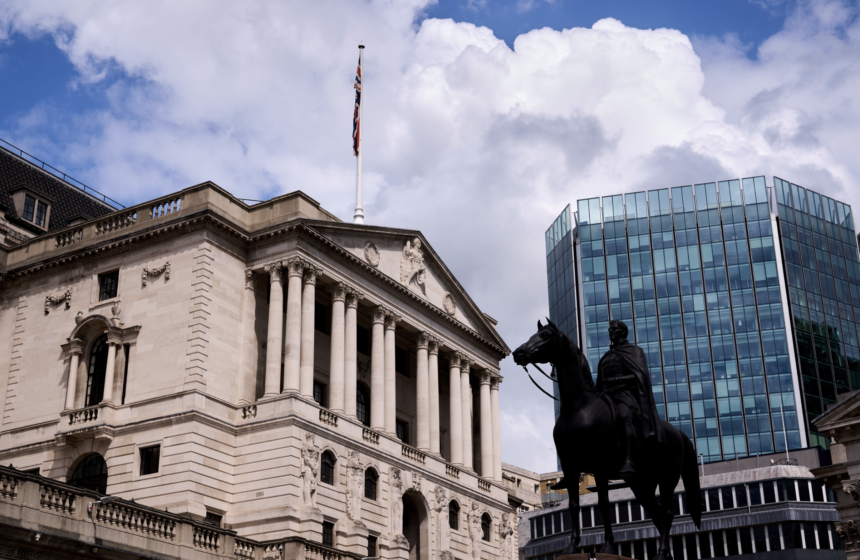
A central bank decision where nothing changes can still reshape how ordinary households plan their money. On 17 September 2026 the Bank of England left Bank Rate at 3.75 percent for the sixth meeting in a row, just as inflation edged higher.
In this article we will explore what the hold means in practice, how the committee reaches its decisions, what the latest inflation figures show, how one outlet describes a divided vote, and what borrowers and savers can sensibly do before the next announcement on 5 November.
September’s Decision at a Glance
The Bank of England’s Monetary Policy Committee decided on 17 September 2026 to keep Bank Rate at 3.75 percent. According to Moneyfactscompare, it was the sixth hold in a row, so the rate has now sat still through a long run of consecutive decisions. Bank Rate is the Bank’s official borrowing cost, and lenders use it as the anchor when they price mortgages, loans and savings accounts.
A hold is a decision in its own right, not an absence of one. The committee weighed raising the rate, cutting it and leaving it alone, and judged that leaving it alone fitted the evidence best. That judgement came against an awkward backdrop, because figures published the day before showed consumer price inflation rising to 3.1 percent in the year to August, up from 2.9 percent in July.
What a Hold Changes and What it Leaves Alone
For anyone on a tracker mortgage, a hold means the Bank is adding nothing to the monthly payment this time. Standard variable rates are set by each lender, so they usually follow Bank Rate but are not obliged to. Fixed-rate deals do not move at all while the fixed period runs, which is the whole point of fixing.
Savers are in a similar position. Banks decide for themselves how much of any Bank Rate level they pass on, and the gap between the best and the worst accounts is often wide. A hold therefore does not tell you whether your own account is paying a fair rate. Only a look at what you earn today, compared with what is on offer elsewhere, will do that.
Why a Sixth Hold Still Makes News
When a rate stays put for months, the interest shifts to everything around the number: the wording of the statement, the way members voted, and the Bank’s own projections for prices. Those are the clues about what might come next. In this case the headline was calm, while the detail behind it was less so, with higher inflation, a cautionary projection and, according to one outlet, three members who wanted a rise.
None of this amounts to a forecast, and this article does not offer one. What it can do is set out what was reported, label which parts rest on a single source, and show how to prepare sensibly whichever way the next decision falls.
How the Committee Arrives at Bank Rate
The Monetary Policy Committee is the group within the Bank of England that votes on Bank Rate. It has nine members, drawn from the Bank’s own senior staff and from outside appointees, and it meets on a published calendar through the year. Each member casts a vote on the level of Bank Rate, and the majority decides. The Bank publishes the result of the vote, and the minutes that accompany the decision explain the arguments that were made.
The committee works to a target set by the government: consumer price inflation of 2 percent. Everything it does with Bank Rate is meant to steer inflation back to that figure over a sensible period without causing needless damage to jobs and growth. Raising the rate makes borrowing dearer and saving more rewarding, which tends to cool spending and ease price pressure. Cutting it does the opposite.
The Trade-off Behind Every Vote
The difficulty is that the rate works slowly. A change today feeds into mortgages, business loans and spending over many months, so members have to judge where prices are heading, not only where they are. They look at wage growth, the labour market, energy and fuel costs, the strength of consumer demand and the state of the global economy. Reasonable people can read the same data and come to different views, which is exactly why votes are sometimes split.
A second difficulty is that interest rates cannot fix every kind of price rise. If inflation is pushed up by an imported cost, such as fuel, a higher Bank Rate does not make fuel any cheaper. What it can do is stop a one-off rise in costs from turning into a lasting pattern of higher wages and prices. Deciding how large that risk is, and how soon it needs a response, is the central argument inside the committee room.
What the Minutes a Add
Readers who want the full picture should look at the minutes and the Monetary Policy Report, both published on the Bank’s own website. They set out the evidence, the range of views and the projections in the committee’s own words. News summaries, including this one, compress a great deal, and the primary documents are the right place to check anything that matters to a personal decision.
Inflation at 3.1 Percent and the Fuel Link
The Consumer Prices Index measured 3.1 percent in the year to August, according to figures reported by Investment Week on 16 September. That was up from 2.9 percent in July, and it is described as a five month high. It also sits more than a point above the 2 percent target the committee is asked to deliver.
The reported cause was mainly higher fuel prices, which are linked to the Middle East conflict. That matters for how the committee is likely to think about the number. A rise driven by a fuel price shock is different in kind from one driven by a wage and price spiral, even though both show up in the same headline figure. Fuel costs feed through quickly to petrol and diesel, and more slowly to transport costs and the prices of goods that depend on them.
What the Annual Rate Does and Does Not Tell You
The annual rate compares prices now with prices a year earlier, so a rise from 2.9 to 3.1 percent does not mean prices jumped by that amount in a single month. It means the cost of the average basket has risen a little faster over the latest twelve months than over the twelve months before. Prices are still going up, only at a slightly quicker pace. Inflation falling does not mean prices fall, either; it means they rise more slowly.
For household budgets, the practical point is that the cost of living keeps climbing from an already high level, and wages, benefits and savings interest all have to keep pace to stand still. Where your income is fixed, as it is for many pensioners and for people on long fixed-pay deals, even a modest rise in the inflation rate eats into what you can buy.
Another practical point is timing. Annual inflation figures are published monthly by the Office for National Statistics, and each release is a snapshot of a twelve-month comparison, so a single reading can be pulled around by what happened a year earlier. That is one reason the committee looks at a range of measures, including underlying price pressures and services inflation, instead of relying on one headline number. When you read the next release, look at what drove the change as well as the total.
Why a Point Above Target is a Problem
A gap of a little over a point may look small. The committee still treats it seriously, because the credibility of the 2 percent target rests on the public believing the Bank will bring inflation back down. If households and firms start to expect higher inflation, they ask for bigger pay rises and set higher prices, and that expectation can make the problem real. Part of the Bank’s job is to keep that belief anchored, and the way it speaks about the risks is as important as the rate itself.
Split vote: what One Source Reports
Moneyfactscompare, which reported the hold, does not state how the committee voted. Karmactive, in a report published on 18 September, says the vote was 6 to 3, with three members wanting to raise Bank Rate to 4 percent. That detail comes from a single outlet in the material we have checked, so treat it as reported, not confirmed, and check the Bank’s published minutes for the official count.
If the split is as Karmactive describes, it would mean six members chose to hold while three argued for a quarter-point rise. Nine members are on the committee, so those numbers add up neatly, but arithmetic is no proof. Whatever the exact tally, any difference of opinion tells us the committee was not unanimous about the balance of risks.
What a Divided Committee Signals
A split does not predict the next decision. Committees can divide for many reasons, and a minority in favour of a rise at one meeting does not guarantee a majority at the next. What a split does tell you is where the debate lies. Members who want a rise are putting more weight on the danger that inflation becomes embedded. Those who prefer to wait are putting more weight on the risk that higher borrowing costs weaken an economy that is already under strain.
What Members Who Prefer to Wait Might Argue
Without access to the minutes, we can only describe the general shape of the case for holding. Higher fuel prices act like a tax on households and firms, which can slow spending by itself, so raising rates on top could deepen the squeeze. Rate changes also take many months to work through, so some members may prefer to see more data before moving. Equally, the case for a rise rests on the risk that repeated price shocks change behaviour. Which argument carries more weight is a judgement, and it is the minutes, not commentary, that record the committee’s own reasoning.
How to Treat a Single-Source Claim
This is a good moment to explain how we handle claims like this. When a figure comes from one outlet and we cannot match it elsewhere, we say whose figure it is and we do not build conclusions on it. The decision to hold at 3.75 percent and the inflation reading are each reported by named outlets in the material we reviewed. The 6 to 3 breakdown rests on Karmactive alone. If you need the exact vote for a work or study purpose, go to the Bank of England itself.
Worst-Case Projections and the Balance Sheet
Moneyfactscompare reports that the Bank has projected inflation could reach 4.5 percent in the second quarter of next year in a worst-case scenario. The wording matters. A scenario is a what-if, built to test how bad things could become if several adverse developments arrived together. It is not the central forecast, and it is not a prediction that inflation will reach that level.
Central banks publish scenarios like this because they help to show the range of outcomes the committee is thinking about. A wide range between the central case and the bad case is a reason for caution when setting policy. If the plausible downside includes inflation well above the target, members who favour a rise have a stronger argument, and those who favour waiting have to explain why the risk is worth running.
The Balance Sheet Plan, With a Caution
Karmactive also reports a quantitative tightening plan of about 46 billion pounds a year on average through 2034. We have not been able to verify that figure against a second source, so please read it as an unverified report. Anyone who needs the actual number should look at the Bank’s own statement on its asset holdings.
Quantitative tightening is the opposite of quantitative easing. During easing the Bank bought government bonds with newly created money to push borrowing costs down. Tightening means the Bank reduces those holdings, either by letting bonds reach maturity without replacing them or by selling some into the market. Doing so takes money out of the financial system and can nudge longer-term borrowing costs higher, separately from any change to Bank Rate.
Why this is Easy to Overlook
Bank Rate gets the headlines, but the size of the balance sheet affects the cost of long-term borrowing too, and that is the borrowing most people use when buying a home. It is a slower and more technical effect than a rate decision, and it is hard to separate from other forces in the market. The practical advice is simply to remember that the Bank has more than one lever and that the decision on Bank Rate is only one of them.
Borrowers, Savers and the Household Budget
A hold on Bank Rate leaves existing arrangements unchanged, but your position still depends heavily on the kind of products you hold. The table below sets out in general terms how each situation usually feels under a hold, a rise and a cut. It is a simplified guide to how the system generally works, not a forecast, and the real outcome always depends on what your lender or bank decides to do.
| Situation | If the rate is held | If the rate rises | If the rate is cut |
| Tracker mortgage | Payment unchanged | Payment usually rises soon after | Payment usually falls
soon after |
| Standard variable rate | Usually unchanged,
lender’s choice |
Often rises, lender’s
choice |
Often falls, lender’s
choice |
| Fixed-rate mortgage mid term | Unchanged | Unchanged until the deal ends | Unchanged until the deal ends |
| Remortgaging soon | Price depends on market expectations | New deals may be priced higher | New deals may be priced lower |
| Easy access savings | Rate set by the bank | Banks may raise rates, but not always | Banks may lower rates, often quickly |
| Fixed-rate savings | Rate locked in for the term | Locked in, so you may miss out | Locked in, so you may benefit |
Borrowers
The most exposed borrowers are those whose fixed deal ends in the next few months, because they will move to whichever rate is on offer when they renew, and lenders price new deals on expectations of Bank Rate as well as its current level. That is why mortgage costs can move even on a day when the Bank does nothing. If you are within six months of the end of a deal, most lenders let you secure a new rate ahead of time, and a broker authorised by the Financial Conduct Authority can compare the market for you. Check for early repayment charges before switching, and read the product terms carefully.
Early Warning Signs Worth Watching
Whatever the Bank does next, a few signals are worth tracking: the rates quoted by lenders for new fixed deals, which often move ahead of the Bank; the gap between your savings rate and the best available; and your lender’s communications about your deal. If a letter arrives about a change in your rate or payment, read it at once, because there are rules about the notice lenders must give.
Savers
For savers, a steady Bank Rate is a reminder that interest rates are not all alike. Where your money sits matters far more than the Bank’s headline figure. If your savings are in an account paying little or nothing, the cost of inaction builds quietly over time, especially while prices are rising. Compare the best easy access and fixed-rate accounts using an independent comparison service, check who regulates the provider, and look up the current Financial Services Compensation Scheme limit on its website, since the amount protected per person per authorised firm can change.
Businesses, Renters and Everyone Else
Bank Rate does not only touch homeowners. Firms with variable-rate loans or overdrafts feel changes in funding costs, and those that plan to borrow for investment weigh the cost of credit against the return they expect. Landlords with mortgages may try to pass higher costs on to tenants, though what they can charge depends on the market and on the tenancy terms. People with credit cards or personal loans on fixed rates see little direct change, while new borrowing is priced off market conditions at the time you apply.
Looking Towards 5 November
The next Monetary Policy Committee decision is due on 5 November 2026. Money facts compare says many commentators predict a rise at that meeting. That is a forecast, not a fact, and forecasts about Bank Rate have a long record of being wrong, above all when events overseas shift the outlook between meetings. This article does not predict the November decision, and no reader should plan their finances on the assumption that any given outcome is certain.
What Will Matter Between Now and Then
Several pieces of evidence will arrive before the committee meets. The next set of inflation figures will show whether the August reading was a blip or the start of a trend. Fuel and energy prices will keep moving with events abroad. Data on pay, jobs and spending will indicate whether the economy is holding up under the pressure of higher prices. Members will weigh these against the Bank’s projections, and the text of the statement and the minutes will again be worth reading for hints about the balance of opinion.
How to Avoid Being Caught Out
The sensible response to uncertainty is to make decisions that work under more than one outcome. If you are borrowing, ask what your finances look like if payments were somewhat higher, and take that as a stress test, not as a prediction. If you are saving, make sure your cash is earning a reasonable rate now instead of waiting for a better one that may or may not come. Avoid decisions made in a panic on the morning of an announcement, because the market usually prices expectations ahead of time.
A Note on Reading the Numbers Calmly
Interest rate news tends to arrive with strong language, and it is easy to feel that every decision is either a triumph or a disaster. The better habit is to separate what has been decided, what has been reported by only one outlet and what is merely forecast. In this story, the hold and the inflation reading are firm facts, the vote split and the balance sheet plan are single-source reports, and the November expectations are commentary.
Conclusion
For people who want a plan, the following order covers most situations. It is general information, and a regulated adviser or free debt and money guidance service can look at your own circumstances.
First, find out where you stand. Check your mortgage type, your current rate, when any fixed deal ends and what the early repayment charges are. Add up what you hold in savings and what each account pays. Most of the useful decisions begin with that picture, and many people have never put it together in one place.
Second, decide what you can afford if borrowing costs rise further. Work out the monthly payment on a rate one or two points above your current one, and see whether your budget copes. If it does not, look at options now, such as overpaying when you can, extending the term, or fixing for a period, while you have time and choice. Be aware that fixing is a bet on direction, and if rates later fall you could be tied to a higher rate.
Third, put idle cash to work. Money in an account earning very little is losing ground against rising prices. Moving it to a better easy access account, or to a fixed-term account if you will not need the money, is one of the simplest steps open to you. Keep within the protection limits and check them on the official scheme website. Fourth, keep an emergency buffer in an account you can reach at once, and resist the temptation to lock everything away. A rate rise or an inflation shock is exactly the time you may need it.
Finally, use official sources. The Bank of England publishes its decisions, minutes and reports, and the Office for National Statistics publishes inflation figures. Free help is available from MoneyHelper, StepChange and Citizens Advice if you are worried about payments. Nothing here is personal financial advice.
Frequently Asked Questions
How high is the Bank of England base rate now?
Following the decision on 17 September 2026, Bank Rate stands at 3.75 percent. It was left unchanged, which Moneyfactscompare describes as the sixth hold in a row. Check the Bank of England website for the latest position, as it can only change at a committee decision.
When is the next Bank of England interest rate decision?
The next Monetary Policy Committee decision is due on 5 November 2026. Many commentators have said they expect a rise, but that is a forecast and not a certainty. The Bank publishes its decisions and minutes on its own website.
How did the Bank of England vote in September?
Karmactive reports a 6 to 3 vote, with three members wanting a rise to 4 percent. Money facts compare does not state the split, so this rests on one outlet. The official count is in the minutes published by the Bank.
Will my mortgage payments go up if the Bank holds rates?
A hold means no change to Bank Rate, so a tracker mortgage should not move because of the Bank’s decision. Fixed deals do not change during the fixed period, and a standard variable rate depends on your lender. If your deal ends soon, ask about locking in a new rate in advance.
Why is UK inflation higher than the Bank of England target?
CPI inflation was 3.1 percent in the year to August, against a 2 percent target. It was mainly attributed to higher fuel prices linked to the Middle East conflict. Rate decisions work slowly, so it can take time for policy to bring inflation back to target.
Should I move my savings after an interest rate hold?
A hold is a good prompt to check what your accounts pay compared with the best on the market. Use an independent comparison service, check the provider is regulated, and look up the current compensation scheme limit. General information only; a regulated adviser can look at your own situation.