

Introduction
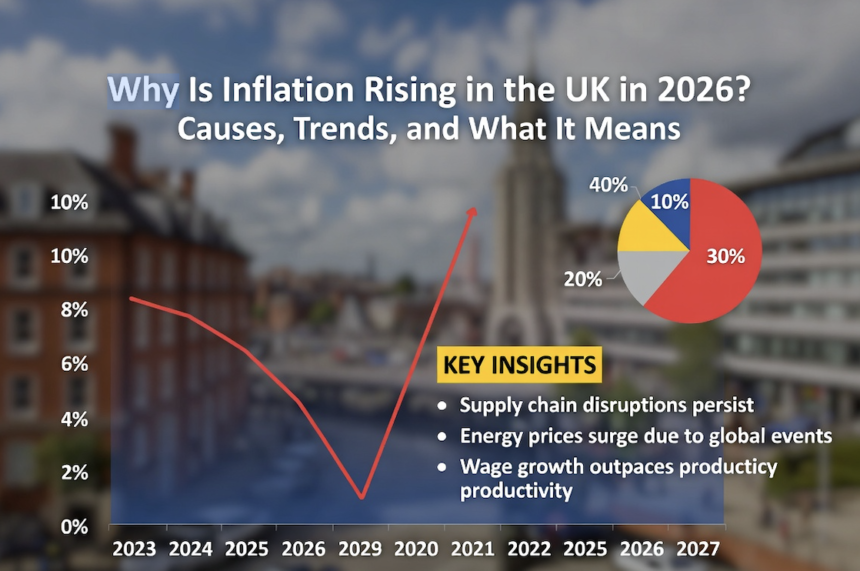
Inflation in the UK has become a major concern again in 2026, affecting both households and businesses across the country. After a brief period of stability, prices are rising steadily, making everyday life more expensive. From grocery shopping to utility bills and rent, people are feeling the pressure in almost every part of their budget.
Many households are noticing that their income is not increasing at the same pace as expenses. This gap is creating financial stress and forcing people to rethink how they spend and save money. Inflation is no longer just an economic term discussed in reports. It is something people experience daily.
This article explains the key reasons behind rising inflation in the UK in 2026. It also looks at how it affects daily life, how businesses are responding, and what the future may hold. The aim is to provide clear, practical insights so you can better understand and manage this situation.
What Is Inflation and Why It Matters
Inflation is how quickly prices for goods and services increase. When inflation goes up, money buys less than before. In simple terms, you need more money to buy the same things you could afford before.
This matters because it directly affects living standards. If wages do not keep up with rising prices, people end up with less disposable income. Essential costs such as food, housing, and transport take a bigger share of income, leaving less room for savings or personal spending.
For businesses, inflation increases operating costs. Companies pay more for raw materials, labor, and logistics. To maintain profits, they often raise prices, which further contributes to inflation. This creates a repeating cycle that can be hard to stop.
A moderate level of inflation is normal and even beneficial for economic growth. However, when inflation rises too quickly or remains high for too long, it creates uncertainty. People may reduce spending, businesses may delay investment, and overall economic growth can slow down.
Key Reasons Why Inflation Is Rising in the UK in 2026
Energy Prices Remain Unstable
Energy costs continue to be one of the biggest drivers of inflation in 2026. Despite efforts to stabilize markets, global energy prices remain unpredictable. Factors such as geopolitical tensions, supply shortages, and the transition to renewable energy are all contributing to this instability.
Energy is a key part of how the economy works. When electricity, gas, and fuel prices increase, the impact spreads across multiple sectors. Manufacturers face higher production costs, transportation becomes more expensive, and service providers raise their prices to stay profitable.
The shift toward cleaner energy is also adding pressure. While necessary for long-term sustainability, it requires significant investment in infrastructure and technology. These costs are often passed on to consumers through higher utility bills.
For households, rising energy prices mean higher monthly expenses. Heating homes, running appliances, and fueling vehicles all become more costly. Even small increases can add up over time, making energy one of the most persistent contributors to inflation.
Food Prices Are Still Climbing
Food inflation remains a serious issue in the UK in 2026. Many families are spending more on groceries than they did just a year ago. This is due to a combination of environmental, economic, and logistical factors.
One major reason is climate-related challenges. Unpredictable weather patterns have affected crop production, leading to lower yields. When supply decreases, and demand stays constant, prices naturally rise. This affects essential food items like vegetables, fruits, and grains.
Import costs are another key factor. The UK relies heavily on imported food products. When global shipping costs rise or the currency weakens, imported goods become more expensive. These additional costs are passed on to consumers.
Supply chain issues, although improved, still exist. Delays, increased fuel costs, and labor shortages continue to affect the distribution of food.
As a result, households are adjusting their habits:
- Buying cheaper alternatives
- Reducing food waste
- Planning meals more carefully
Despite these efforts, rising food prices remain a major contributor to inflation and a daily challenge for many people.
Wage Growth Is Adding Pressure
Wage increases are helping workers cope with rising costs, but they are also contributing to inflation. In 2026, many sectors in the UK have seen noticeable wage growth due to labor shortages and rising living costs.
While higher wages improve income levels, they also increase business expenses. Employers need to pay more for labor, which raises overall operating costs. To maintain profitability, businesses often increase the prices of goods and services.
At the same time, when people earn more, they tend to spend more. Increased demand can push prices higher, especially in sectors like retail, hospitality, and services. This creates what economists call a wage-price cycle.
This cycle works like this:
- Wages increase
- Spending increases
- Prices rise
- Workers demand higher wages again
Although wage growth is important for improving the quality of life, it must be balanced with productivity. If wages rise faster than economic output, inflation becomes harder to control.
Interest Rate Policies Are Still Adjusting
Interest rates are a key tool used to manage and control inflation. In recent years, policymakers have raised interest rates to reduce spending and slow down price increases. In 2026, the effects of these changes are still developing.
Higher interest rates make borrowing more expensive. This affects:
- Mortgages
- Personal loans
- Credit card usage
As borrowing becomes costly, people tend to spend less. Businesses may also delay investments, leading to reduced demand in the economy. This helps slow inflation, but the process takes time.
Many households are still adjusting to higher mortgage payments and loan costs. This financial pressure can reduce spending in other areas, affecting overall economic activity.
While higher rates help control inflation, they also come with challenges:
- Slower economic growth
- Reduced business expansion
- Lower consumer confidence
Balancing inflation control with economic stability remains one of the biggest challenges for policymakers in 2026.
Global Economic Factors
The UK economy is closely connected to the global market. Events happening in other parts of the world can directly impact inflation at home.
In 2026, several global factors are influencing inflation:
- Trade disruptions due to political tensions
- Changes in international trade agreements
- Fluctuations in global demand and supply
When supply chains are disrupted, goods become harder to obtain and more expensive. This leads to higher prices for both businesses and consumers.
Currency fluctuations also play a role. If the British pound weakens, imports become more expensive. Since the UK imports many essential goods, this increases overall inflation.
Global economic uncertainty adds another layer of complexity. Slowdowns in major economies can affect trade and investment, creating ripple effects.
In a connected world, inflation is not just a domestic issue. External pressures continue to make inflation harder to control in the UK.
Housing and Rent Increases
Housing costs remain one of the most significant contributors to inflation in 2026. Both renters and homeowners are facing higher expenses, making housing a major financial burden.
The main issue is the imbalance between demand and supply. More people are looking for homes, but there are not enough properties available. This drives up both property prices and rent.
Higher interest rates have also increased mortgage costs. Homeowners are paying more each month, and landlords often pass these costs on to tenants.
This creates a chain reaction:
- Mortgage costs rise
- Landlords increase rent
- Tenants face higher living expenses
For renters, the impact is especially strong. A larger portion of income goes toward housing, leaving less for other needs.
Housing is a basic necessity, so rising costs in this area significantly affect overall inflation. Until supply improves, housing will continue to be a major factor in the UK’s economic situation.
What Rising Inflation Means for Everyday Life
Inflation is not just about numbers. It directly affects how people live. In 2026, many households are making adjustments to cope with rising costs.
Common changes include:
- Cutting back on non-essential spending
- Delaying major purchases
- Looking for discounts and deals
- Reducing energy usage
People are also becoming more careful with financial planning. Budgeting, saving, and tracking expenses are becoming more important than ever.
For businesses, inflation means adapting strategies. Companies may:
- Increase prices
- Reduce costs
- Improve efficiency
Some businesses are also investing in technology to manage rising expenses more effectively.
What Could Happen Next
The future of inflation in the UK depends on several factors. While some signs suggest it may stabilize, uncertainty remains.
Possible outcomes include:
- Gradual decline if energy prices stabilize
- Continued pressure if global conditions worsen
- Slow economic growth due to high interest rates
Government policies and global market trends will play a key role. While inflation may not disappear quickly, it is expected to become more manageable over time.
Conclusion
Inflation in the UK in 2026 is driven by multiple factors, including energy costs, food prices, wage growth, housing pressures, and global economic conditions. These elements are interconnected, creating a complex economic environment.
For individuals, understanding these causes is essential. It helps in making smarter financial decisions and adapting to changing conditions. For policymakers, the challenge lies in controlling inflation without slowing down economic growth.
While inflation remains a concern, being informed and proactive can make a real difference. Careful planning, smart spending, and awareness of economic trends can help individuals manage their impact more effectively.
FAQs: Why Is Inflation Rising in the UK in 2026?
What is causing inflation in the UK in 2026?
Inflation is mainly driven by rising energy costs, higher food prices, wage increases, housing expenses, and global economic challenges. These factors increase production and living costs, which are passed on to consumers.
Will inflation continue to rise in 2026?
Inflation may remain high in the short term, but it could stabilize later depending on energy markets, global conditions, and the impact of interest rate policies.
How does inflation affect daily life?
It increases the cost of living. People pay more for essentials like food, rent, and utilities, which reduces purchasing power and forces changes in spending habits.
Why are food prices still increasing?
Food prices are rising due to climate issues, higher import costs, and ongoing supply chain challenges. These factors make production and distribution more expensive.
How do interest rates control inflation?
Higher interest rates reduce borrowing and spending, which lowers demand and helps slow price increases. However, the effects take time to appear.
Can inflation be controlled?
Yes, but it requires time and careful policy decisions. Stability in energy markets and global conditions also plays an important role.
How can people manage rising inflation?
People can cope by budgeting, reducing unnecessary expenses, saving energy, comparing prices, and exploring additional income opportunities.