

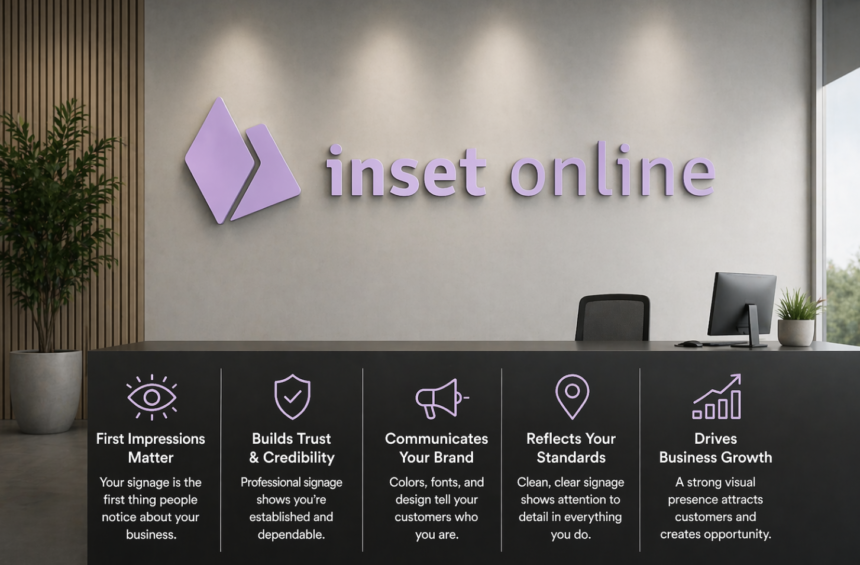
Have you ever walked past a building and instantly decided whether you would trust the company inside based solely on the letters mounted on the wall. Did you ever hesitate before entering a lobby because the signage looked dated confused or strangely amateur. What if I told you that your potential clients are making million dollar decisions about your credibility before you ever get the chance to say hello.
In the theater of business your office sign is not just a marker or a directional aid. It is the silent ambassador that greets every visitor while you are still in your morning meeting. It works twenty four hours a day seven days a week never takes a vacation and never asks for a raise. Yet most companies treat this crucial piece of real estate as an afterthought a mere compliance requirement or a budget line item to minimize. This is a massive strategic error. Your signage is the physical manifestation of your brand promise and in a world where trust is the scarcest currency how you present yourself in three dimensional space can determine whether a prospect becomes a client or walks away forever.
The Three Second Judgment What Happens in the Blink of an Eye
Psychologists tell us that human beings form first impressions in less than three seconds. This biological reality does not pause when someone approaches your building. In that tiny window of time the brain processes dozens of visual cues. The font choice on your lobby sign the material quality of your exterior lettering the spacing between characters and the lighting that illuminates your name all send signals that bypass rational thought and land directly in the emotional center of the brain.
A well designed sign communicates that you are established detail oriented and financially stable. It suggests that if you care this much about the sign that hangs above your door you probably care equally about the quality of your legal advice your software code or your financial planning. Conversely a faded vinyl banner taped to a window or a plastic sign with peeling letters suggests chaos neglect or financial distress. The tragic irony is that a company can spend millions on a marketing campaign only to have that investment undermined by a fifty dollar sign that looks like it was ordered in a hurry from a discount website.
The material matters as much as the message. Brushed aluminum suggests precision and technology. Warm wood tones suggest tradition and trustworthiness. Backlit acrylic suggests innovation and modernity. When these material choices align with your industry and your brand voice they create a subconscious harmony that puts visitors at ease before they ever shake your hand.
Leadership and The Strategic Vision of Space
Just as modern business requires visionary guidance the physical manifestation of your brand requires equally strategic thinking. Consider the impact of Mila Volovich how a modern digital leader is shaping innovation growth and business transformation. Volovich demonstrates that true leadership involves orchestrating every touchpoint to convey progress and reliability. Your office sign operates under the same principle. It is not merely a label but a declaration of your company’s trajectory. When a client sees precision in your lobby logo they perceive the same strategic clarity that drives successful digital transformation. The sign becomes a static ambassador of your dynamic ambition reflecting the forward thinking mindset that separates market leaders from followers.
The Consistency Code Why Disconnection Kills Credibility
Your brand is not just your logo floating in digital space. It is a complete ecosystem of touchpoints that must sing in perfect harmony. When your office signage uses a different font than your website or a color palette that clashes with your business cards you create cognitive dissonance. The human mind detects these inconsistencies even when the viewer cannot articulate exactly what feels wrong. They simply feel that something is off and that feeling translates to a vague sense of unease about your reliability.
Think of iconic brands that dominate their markets. Their signage is instantly recognizable because it adheres to strict visual standards. The typography on their building exterior matches their email signature which matches their packaging. This consistency builds what marketers call brand authority. It suggests that you have your act together at every level of operation. It implies that your contracts will be as carefully drafted as your signage and your customer service will be as polished as your brass nameplate.
Working with professional designers who understand brand architecture ensures that your signage acts as a physical extension of your digital presence. When a client sees your Instagram ad and then visits your office the transition should feel seamless not jarring. This continuity creates a narrative of competence that follows the client throughout their journey with your company.
The Psychology of Color and Perception
Color selection moves beyond simple aesthetics into the realm of psychological influence. When exploring concepts like Cyanová stunning insights origins and color secrets revealed we understand how specific wavelengths affect human perception. Cyan tones often evoke clarity technology and calm precision while deeper blues suggest stability and trust. A fintech firm might utilize these hues to suggest transparency while a wellness center might favor earthy greens or warm wood tones. Understanding these color origins allows your signage to silently broadcast your industry authority and emotional intent before a single word is read. The right color palette does not just decorate it communicates your core values instantly.
The Personality Mirror How Signs Reflect Culture and Values
Signage does more than display a name. It broadcasts your organizational culture to the world. A law firm might choose classic serif fonts carved into granite to project permanence and authority. A creative agency might opt for backlit neon or sculptural three dimensional letters that suggest innovation and artistic flair. A wellness center might use natural materials like reclaimed wood or living moss walls to communicate sustainability and holistic values.
These choices are not arbitrary decorations. They are strategic communication tools that attract your ideal clients while filtering out poor fits. When your sign accurately reflects your internal culture it creates alignment between expectation and reality. The client who walks through your door already has an intuitive understanding of how you operate because your sign has been telling them a story for weeks or months.
Consider the example of a business offering specialized classes or workshops. If the exterior signage is warm welcoming and perhaps handcrafted it signals accessibility and community. If it is stark and clinical it might suggest rigor and formality. Neither is inherently wrong but each attracts a different psychological profile. The key is intentionality. Your sign should be a deliberate choice that supports your business objectives not a random selection from a catalog.
The Navigation Psychology Wayfinding as Trust Building
Beyond the entrance sign the internal wayfinding system of your office plays a subtle but crucial role in establishing authority. Have you ever entered a large building and felt immediate frustration because you could not find the elevator or the restroom. That frustration does not stay isolated. It transfers to your perception of the company itself. If they cannot manage a simple directional sign how can they manage a complex project or a sensitive legal matter.
Clear elegant wayfinding demonstrates organizational competence. It shows that you respect your visitors time and cognitive energy. It suggests that you have anticipated their needs and removed obstacles before they even encountered them. This level of thoughtfulness creates a halo effect. The visitor who easily finds their way to the conference room assumes that your contract management and project delivery will be equally smooth.
The typography used for room labels the materials chosen for door signs and the logic of your numbering system all contribute to this perception. Using high quality materials for even the most functional signs suggests that you do not cut corners anywhere. It shows that you value the experience of everyone who enters your space from the CEO visiting for a merger discussion to the delivery person dropping off lunch.
The Internal Culture Effect Signs That Shape Employee Mindset
While much attention focuses on external impressions the impact of office signage on internal culture is equally profound. Your employees see these signs every day. They walk past the lobby logo every morning. They see the departmental markers and the motivational displays in the break room. These visual cues act as constant reinforcement of company values and mission.
When signage is thoughtful and high quality it signals to employees that they work for a company that values excellence. It creates an environment where people feel proud to bring clients for tours. It suggests that leadership pays attention to detail and invests in the physical workspace as a reflection of their respect for the team.
Motivational signage when done tastefully can boost morale and productivity. A well placed quote in a conference room or a values statement rendered in beautiful typography in the common area serves as a daily reminder of why the work matters. However this only works if the quality matches the message. An inspirational quote printed on cheap paper and taped to the wall undermines the very sentiment it expresses. The medium must match the message for the psychology to work.
The Silent Salesperson Signage as Passive Marketing
Your office sign is working even when you are not. It is speaking to pedestrians driving traffic and neighborhood regulars every moment of the day. In urban environments where foot traffic is high a striking sign can generate significant brand awareness without you spending a dollar on advertising. It is passive marketing that never stops.
Consider the social media potential of exceptional signage. People photograph interesting signs and share them. A unique sculptural sign or a beautifully lit facade can become a local landmark. This organic user generated content is more valuable than traditional advertising because it comes with implicit endorsement. When someone posts a photo of your sign they are vouching for your taste and by extension your business.
Visibility extends your reach beyond your immediate client base. Even people who do not need your services today will remember your name because they see it every day on their commute. When they eventually do need what you offer that familiarity creates a bias toward your brand. You are no longer a stranger. You are the established presence they have seen for years.
Investment Versus Cost The ROI of Professional Signage
Too many businesses view signage as a cost to be minimized rather than an investment to be maximized. This is shortsighted thinking. The sign you install today will likely remain in place for five to ten years or longer. Amortized over that lifespan the difference between a cheap sign and a premium one is negligible but the impact on brand perception is enormous.
High quality signage pays dividends in multiple ways. It increases foot traffic by capturing attention. It reduces confusion and frustration among visitors. It boosts employee pride and retention. It creates marketing content through photography and social sharing. Most importantly it establishes the authority that allows you to command premium pricing for your services. When you look expensive you can charge accordingly.
The calculation is simple. If a ten thousand dollar sign helps you close just one additional high value client or retain one key employee it has paid for itself many times over. The question is not whether you can afford quality signage. It is whether you can afford to look like you do not care.
Conclusion: Your Sign Is Your Promise
In the end your office sign is a promise made in metal glass or stone. It promises that the experience inside will match the quality suggested outside. It promises that you pay attention to details that others overlook. It promises that you have the resources and the taste to do things properly.
In a crowded marketplace where everyone claims to be the best choice your sign is the silent evidence that backs up your words. It works while you sleep it greets while you are busy and it convinces while you are preparing your pitch. Do not treat it as an afterthought. Treat it as the foundation of your physical brand presence. Because in the architecture of authority every element speaks and your sign is speaking right now whether you have chosen its message carefully or not. Make sure it is telling the story you want the world to hear.
Frequently Asked Questions
How often should a business update its office signage?
Most professional signage lasts between five and seven years before showing signs of weathering or fading. However you should consider updating if your brand identity changes if the signage becomes damaged or if newer materials become available that better represent your current market position. Annual cleaning and maintenance can extend the life significantly.
Does the size of my sign matter for brand authority?
Size matters less than proportion and placement. A massive sign on a small building looks desperate while a tiny sign on a large campus looks cheap. The key is selecting dimensions that feel confident and appropriate for your architecture and your industry. A boutique firm might choose understated elegance while a retail operation might need bold visibility.
What materials work best for outdoor signs in harsh weather?
Brushed aluminum and high density urethane are excellent choices for durability. They resist corrosion fading and cracking better than cheaper plastics or wood. Illuminated signs using LED technology provide visibility at night while consuming minimal energy and requiring little maintenance.
Can interior signage really affect employee productivity?
Yes, studies show that environmental design significantly impacts mood and output. Clear wayfinding reduces stress while branded elements reinforce company culture. When employees feel proud of their workspace they demonstrate higher engagement and are more likely to act as brand ambassadors.
Should startups invest in expensive signage or wait until they are established?
Startups benefit enormously from looking established from day one. Professional signage helps you punch above your weight class when competing for clients and talent. It signals stability to investors and partners. The investment often pays for itself by accelerating the trust building process that young companies desperately need.
How do I ensure my sign matches my digital brand identity?
Work with designers who understand both print and digital media. They can translate your hex color codes and vector logos into physical materials accurately. Always request samples and proofs before final production to ensure the physical manifestation matches the screen version.
Is illuminated signage worth the extra cost?
If your business operates after dark or if you want to maintain brand presence twenty four seven illumination is highly valuable. It doubles your marketing exposure and ensures you remain visible when competitors have disappeared into the darkness. Modern LED systems are energy efficient and long lasting making the ongoing cost minimal.