


Britain’s old copper-wire telephone service is being closed, and 31 January 2027 is the date Openreach says will not move again. For anyone who still plugs a phone into the wall, the change reaches beyond the handset to alarms, lifeline pendants and power cuts.
In this article we will explore what the deadline means, what two reports say about line numbers and prices, how the switch works inside a home, and which sensible steps to take before and after the date.
The Deadline Openreach Says Will Hold
The old analogue telephone service is known in the industry as the public switched telephone network, or PSTN. Openreach is withdrawing the wholesale line rental products, usually shortened to WLR, that let phone companies sell a traditional line to households and businesses, while BT is retiring the PSTN itself. The date for finishing the move is 31 January 2027.
That date has been pushed back before, which is why many people have learned to shrug at warnings. According to ISPreview, which reported an interview with Openreach’s Juliette Scott in June, the company says the deadline will not be delayed again. Scott described a tipping point, meaning the stage at which staying on the old network has become more fragile than moving off it. In plain terms, a service built decades ago is harder to keep dependable, and doing nothing now carries more risk than it used to.
The deadline is a milestone for the migration programme, not a day when every remaining phone goes silent. That distinction matters, and a later section looks at what is expected to happen to lines that have not moved by the end of January. For now the practical point is that providers are working through their customers in waves, and many households have already been moved, often without noticing anything beyond a letter and a new piece of equipment.
The phrase high tens of thousands is worth pausing on. It is Openreach’s own expectation of how many lines will still be on the old service at the deadline, and it implies that a small but real group of customers will miss the date, either because they have not responded, because their equipment is awkward or because their circumstances are complicated. Being in that group is not a disaster, but it is not a plan either, and the people most likely to end up there are those who never opened the letters.
Who is affected is wider than people assume. Anyone whose telephone service still arrives as a traditional line is in scope, including people who only use a landline for calls, people whose broadband and phone were bought together on an older arrangement, and businesses with older phone systems. If you are unsure, the quickest check is to ask your provider directly whether your phone service is analogue or already delivered over broadband.
Line Counts and Price Rises Reported by Two Sources
Two reports in the fact record give different line counts, and the gap is explained by timing rather than by one being wrong. ISPreview, writing in June 2026, put the number of lines still needing to move at about 1.9 million, down from about 2.5 million in April and from over 16 million when the programme began. A few hundred thousand of those lines serve business premises. An older summary, published by Particle News and drawing on The Register in February 2026, gave 2.8 million lines with more than half a million of them business.
The direction of travel is clear even if the exact totals are not. Each report is a snapshot from a different month, so the later figure is lower, and readers should treat all of them as approximate. The February summary also reported a migration pace of about 46,000 lines a week against about 52,000 needed, which tells you the programme was running behind its own required speed at that point. Openreach, in the June interview, expects some lines to remain on 31 January 2027, probably in the high tens of thousands.
| Report | Lines still to move | Business lines | Price detail reported |
| ISPreview, June 2026 | About 1.9 million (about 2.5 million in April; over 16 million at the start) | A few hundred thousand | Openreach doubled legacy copper line prices, effective October 2026 |
| Particle News summarising The Register, February 2026 | 2.8 million | More than half a million | WLR rises of 20% from 1 April, a further 40% from 1 July and another 40% from 1 October 2026 |
One way to read the pace figure is as a warning about the final months. A programme that needs to speed up as it nears the end tends to run out of easy cases first, leaving the awkward ones until last: shared lines, remote addresses, customers who do not answer and premises with unusual equipment. If your situation is complicated, that is a reason to start early, not a reason to hope the problem solves itself.
Prices deserve a careful reading. The word doubled in the ISPreview account is approximate, and the stepped rises in the February summary are a different way of describing the same pressure on legacy copper pricing. These are wholesale charges that sit behind the bill a phone company sends you, so what you pay depends on how your own provider treats them. The general lesson is that an old line has become a more expensive thing to keep, and that is a reason to ask your provider what your line rental will cost over the coming months rather than waiting to be surprised.
Digital Voice in Practice
Voice Over Broadband
A digital phone service, often called voice over broadband or voice over internet protocol, carries your calls as data over your internet connection instead of as an electrical signal over the copper pair. The calls still go to ordinary numbers, and your number can normally stay the same. To you it should feel like a phone call, with the difference being that the connection now depends on your broadband working and on your equipment being powered.
Because the call travels over broadband, anyone who currently has only a landline and no internet will need some kind of connection to keep a home phone. Providers handle this in different ways, so the right question is what exactly they will supply and what it will cost, not whether a landline is still possible. Some households decide at this point that a mobile phone is enough, which is a legitimate choice, though it brings its own issues with signal indoors.
A point that surprises people is that a digital phone is tied to the health of the broadband connection. If the internet goes down because of a fault in the area or a problem with the router, the home phone usually goes down too, whereas the old line could fail independently of broadband. Keeping a working mobile phone as the second route is therefore sensible for everybody, not just those worried about power cuts.
The Router or Adapter in Place of the Wall Socket
Moving usually means connecting your phone to a router or to an analogue terminal adapter, shortened to ATA, instead of to the wall socket. Many providers send a router with a phone port on the back, and you plug the handset or the base of a cordless phone into that. An ATA does the same job as a small separate box that turns the analogue signal from an ordinary phone into the digital form the network needs.
The engineer visit, where there is one, is often about wiring rather than technology. Phones that used to work from sockets around the house may now need to reach the router, so the position of the router becomes a real decision. Extension sockets that were fed from the old master socket may or may not carry the service afterwards, and the provider can tell you what to expect before the day of the move.
Old Handsets and Extension Phones
Older handsets generally still work through an adapter or a router phone port, because they speak the same analogue language that the adapter is designed to translate. That includes plain corded phones and many cordless sets. It is still worth checking with your provider, since very old equipment, phones that depend on special line features and answering machines can behave unpredictably. Keep the handset you know works and test it on the first day. If a cordless phone has several handsets, check that each one still registers with its base, since a move often means the base is plugged into a new place.
Power Cuts Change the Rules
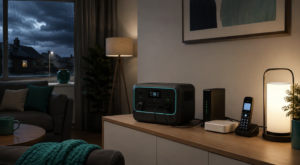
The old PSTN had a quiet advantage that many people never noticed. The line itself carried a small amount of electricity from the exchange, so a plain corded phone could often keep working during a local power cut. Digital lines do not do that. When the electricity goes off in your home, the router goes off with it, and so does the phone service that depends on it.
For most households this is an inconvenience, but for some it is a serious safety gap. The rule of thumb is that your landline is only as dependable as the power to your router, and the first plan should therefore be a charged mobile phone that can reach the emergency services, with a check that you do get a signal indoors. A portable power bank is a cheap way to keep the phone topped up, and a small battery backup unit for the router can keep calls going for a while.
Vulnerable Customers and Priority Help
Providers are expected to take extra care of customers who rely on their phone for safety, such as people who are elderly, disabled or living with a health condition. Tell your provider if that includes you or someone you care for, and ask in plain terms what they will do about power cuts. One example from the reports is that Zen Internet offers free battery backup to vulnerable customers, lasting about eight hours. That is a single-provider detail, so do not assume that every provider offers the same, and ask yours what it provides and how long it lasts.
Household Planning
A short routine helps. Know where the router and any battery unit are, keep them plugged in and charged, and test the arrangement once while you are at home and calm. Cordless phone bases also need mains power, so the cordless set you use every day will stop working in a cut unless it is connected to something with a battery. A simple corded phone plugged into a router that is powered by a battery unit can be the most robust choice, though it remains true that if the battery runs out the line is gone.
Alarms, Lifelines and Other Equipment on the Line
Plenty of equipment quietly relies on a phone line, and the people who set it up may have forgotten that it does. When the line changes, that equipment may stop calling out without any visible fault, because the box on the wall still looks fine. The central rule is to tell both the company that installed or monitors the equipment and your phone provider before the move, not after.
Telecare and Lifeline Pendants
Telecare units, including lifeline pendants and pull-cord systems, often dial a monitoring centre using the phone line. Some older units were designed for the analogue signal and may not work reliably over a digital service. Telecare users may need special solutions, and the reports say as much, so contact the telecare provider, which may be your local council or a private company, and ask whether your unit needs replacing or reconfiguring. Do not wait for the engineer to arrive to raise this, and do not accept a move that leaves you without a tested alert.
Burglar and Fire Alarms
Monitored burglar and fire alarms commonly use the phone line to reach an alarm receiving centre. Ask the alarm company whether your panel is compatible with a digital phone service, whether it can use a mobile signal or your broadband instead, and whether they need to visit. After the move, trigger a test with the company on the phone so that you know the signal arrives. A silent failure here is the worst outcome, because you would only find out when you needed the alarm.
Card Machines, Lift Phones and Business Equipment
Card payment terminals, door entry systems, lift emergency phones and fax-style devices have all traditionally used the phone network. Lifts must have a working emergency line, so building managers should check with their lift maintenance company. For business premises the issue is bigger, because the reports say business ISDN2 and ISDN30 data lines have no migration path and cease from 1 February 2027. If your business still uses ISDN, you need a replacement plan now, and your telecoms provider can explain the internet-based alternatives.
After 1 February: No Big Bang, but a Fragile Tail
The reporting from Openreach is reassuring on one point. Lines that have not been moved by the deadline are not going to be cut off on 1 February, and Scott said there will be no big bang. Instead, the remaining lines will be assessed after the date and handled case by case. That fits what you would expect from a network operator that does not want to leave thousands of people suddenly without a phone, but it is not a reason to relax, because the options for those lines are narrower than the ones available now.
A fair reading of all this is that the deadline works as a line between choosing your own arrangements and having them chosen for you. Before the date, you can compare providers, pick the equipment and book a time that suits you. Afterwards, the decisions pass to the network operator, which will be working through whatever is left with the capacity it has.
Emergency Voice Access
Where capacity exists, a remaining line may be moved to Emergency Voice Access, shortened to EVAc, which is a basic voice-only service. The trade-off is serious: on a line that was carrying broadband alongside a WLR phone service, the broadband would be lost under EVAc. Customers placed on it are also described as harder to move off later. In other words, ending up on EVAc is the outcome to avoid, and the way to avoid it is to arrange your own migration with your provider before the end of January.
Business ISDN Lines
For business customers the position is firmer. ISDN2 and ISDN30 data lines have no migration path and stop from 1 February 2027, according to the account of the interview. A business that depends on those lines for phones, a switchboard or alarm signalling cannot rely on a grace period, and the sensible approach is to treat the deadline as a hard stop.
Fully Unbundled Lines
Fully unbundled lines, known as MPF lines, sit outside the programme and can continue past January 2027, subject to providers continuing to support them. That is a reminder that not every copper line is part of this particular shutdown. If you are unsure which kind you have, the provider’s answer is more useful than guessing, and you should ask in writing if the line carries anything important.
Scam Calls Trade on the Deadline
Any national deadline attracts opportunists, and a phone switch-off is an easy story to exploit. The pattern to expect is a call, text or email saying that your line is about to be cut off today unless you act, pay a fee, confirm your bank details or let someone connect to your computer. The urgency is the giveaway, and so is the request for payment or personal security details by a caller you did not expect.
The safe response is simple. Do not give card numbers, passwords or one-time codes to anyone who contacts you out of the blue, and never let a caller take remote control of your device. Hang up, then ring your provider on the number printed on your bill or on its official site, and ask whether there really is anything outstanding. Real migration messages from your provider will usually arrive as letters or emails that you can verify by logging into your account.
Scam callers also exploit the confusion between the two kinds of change. Proper engineers visit by appointment, and a stranger arriving unannounced to fit equipment or check the line is a reason to ask for identification and to ring the provider before opening the door. A real appointment will be in your account or in a message you can trace, and a real engineer will not mind you checking.
It is also worth telling older relatives and neighbours about this. People who rely heavily on a landline are exactly the people scammers hope to reach, and a calm word before a call comes is better than clearing up afterwards. If you have already shared details, contact your bank straight away using the number on the back of your card.
Final Thoughts
Find Out Where You Stand
Ask your provider whether your phone line is still analogue and when they plan to move you. If you have received a letter and ignored it, find it and read the date. If you suspect you are on a line from a smaller provider, ask them the same question, because the programme depends on providers contacting their own customers.
List Everything That Uses the Line
Walk around the house or premises and write down anything that dials out or connects through the phone socket: alarms, pendants, entry systems, card terminals, a fax or old answering machine. Contact the company behind each one and ask whether it works over a digital service. Do this before you agree an installation date, so that fixes can be arranged first.
Pick the Service and the Equipment
Compare providers on what matters to you, such as whether a router with a phone port is included, whether you can keep your number, what support they offer vulnerable customers, and how they handle power cuts. I would not choose purely on headline price, and the pricing context above is a reason to check the whole bill, not just the line rental. Decide whether a mobile-only home would work for you, or whether you want a home phone for family members who prefer one.
Make a Power Plan
Charge your mobile, buy a power bank if you do not have one, and decide whether a battery unit for the router is worthwhile. If you or someone in the household is vulnerable, tell the provider in writing and ask what protection they offer.
Test It, Then Keep the Paperwork
On the day of the move, make and receive a call, test any alarm signal, and check any extension phones. Keep letters, emails and engineer notes in case something stops working later. If you have not been moved by the end of January, do not wait for a cut: contact your provider and ask to be scheduled, because the reports indicate that waiting can leave you with fewer options than you have today.
Frequently Asked Questions
How Do I Know if I Am Still on an Analogue Phone Line?
Ask your phone provider whether your voice service is analogue or delivered over broadband. If your phone plugs into the wall socket and you have never been sent a router with a phone port, you may still be on the old service. Your provider’s answer is the reliable one.
Will My Landline Stop Working on 1 February 2027?
According to the Openreach interview reported by ISPreview, lines that have not moved will not be cut off on 1 February, and there will be no big bang. Remaining lines will be assessed afterwards, and some may be moved to a basic voice-only service. Business ISDN2 and ISDN30 lines are the exception, as they cease from that date.
Can I Keep My Old Phone Handset After the Switch?
In most cases yes, because old handsets usually work through a router phone port or an adapter. Check with your provider, since very old or specialised equipment may behave differently. Test the handset on the day your service is moved.
Does a Digital Landline Work in a Power Cut?
Not normally, because the router that carries the call needs power. A charged mobile phone, a power bank or a battery backup unit for the router can fill the gap. Ask your provider what help it offers if you are vulnerable.
Is a Call Saying My Phone Line Is Being Cut off Today Real?
Treat it as suspicious, especially if the caller asks for payment, bank details or access to your computer. Hang up and contact your provider using the number on your bill. Your provider should not need you to hand over security details on an unexpected call.
Who Should I Tell if I Use a Lifeline Pendant or Alarm?
Tell your phone provider, the company that monitors the device and, where relevant, the council or care service that arranged it. Ask whether the equipment works over a digital service and how a test will be done. Do this before the move, not afterwards.