
Cloud computing has dominated technology conversations for over a decade, yet a genuinely significant shift is quietly reshaping how many of the apps and services people use daily actually process information, moving computation closer to where data actually gets created rather than sending everything to distant, centralised cloud servers. Understanding what edge computing actually means, and why it genuinely matters for the everyday apps millions of people rely on, provides valuable insight into this important, ongoing technological evolution.
What Edge Computing Actually Means
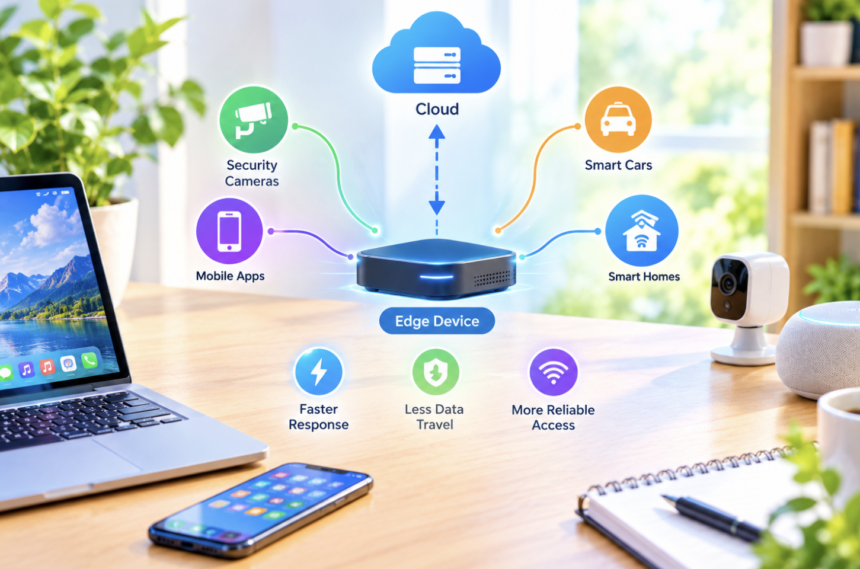
Edge computing refers to processing data closer to where it is actually generated, whether that is your smartphone, a smart home device, or local infrastructure, rather than sending all this data to distant, centralised cloud servers for processing before sending results back. This represents a genuinely meaningful shift away from the traditional cloud computing model, where virtually all processing happened within enormous, centralised data centres, often located considerably far from the actual devices and users generating the underlying data.
Understanding this proximity-based processing approach genuinely matters, since it explains why edge computing has become increasingly relevant as more devices generate ever-larger amounts of data, given that transmitting all this information to distant servers for processing introduces genuine delays and bandwidth demands that edge computing specifically works to reduce by handling more processing locally, closer to the actual data source.
Why Traditional Cloud Computing Genuinely Faces Certain Limitations
Understanding the specific, genuine limitations traditional, fully centralised cloud computing faces helps clarify why edge computing has emerged as such a genuinely important complementary approach rather than simply an interesting technical alternative.
- Data must genuinely travel to distant servers and back, introducing measurable delay for every single interaction
- This round-trip delay becomes genuinely significant for applications requiring near-instantaneous response
- Transmitting enormous volumes of raw data to centralised servers requires genuinely substantial network bandwidth
- These combined limitations become increasingly significant as more connected devices generate ever-growing data volumes
This round-trip delay deserves particular emphasis, since even extremely fast internet connections cannot fully eliminate the physical reality that data genuinely takes measurable time to travel to a distant server and back, meaning applications requiring truly instantaneous response, like certain safety-critical systems or highly interactive experiences, can genuinely benefit from processing happening closer to the actual point of data generation rather than waiting for this round trip to a potentially distant centralised facility.
How Edge Computing Actually Addresses These Challenges
Understanding the specific, genuine technical approach edge computing uses to address traditional cloud computing’s limitations helps clarify how this technology actually delivers its practical benefits.
- Edge computing processes data using computing resources genuinely located closer to where data actually originates
- This proximity considerably reduces the round-trip delay associated with sending data to distant centralised servers
- Only genuinely necessary, processed, or summarised data needs to travel further to centralised systems when required
- This selective transmission approach meaningfully reduces the overall bandwidth demands compared to sending all raw data centrally
Common Everyday Applications Where Edge Computing Genuinely Matters
Understanding the specific, genuine everyday applications where edge computing provides meaningful practical benefit helps illustrate this technology’s real relevance beyond simply abstract technical discussion.
- Smart home devices that need to respond quickly to voice commands or sensor triggers without noticeable delay
- Mobile applications providing real-time features like navigation that genuinely benefit from reduced processing delay
- Video streaming and content delivery services that use edge infrastructure to reduce buffering and improve quality
- Industrial and safety-critical applications where response delay genuinely matters for practical, real-world outcomes
This smart home responsiveness deserves particular emphasis, since many people genuinely notice the practical difference edge computing makes without necessarily understanding the underlying technology, given that a smart home device responding to your voice command within a fraction of a second, rather than experiencing a noticeable pause while data travels to a distant server and back, genuinely reflects edge computing principles working behind the scenes to deliver this improved, more natural, responsive experience.
Why Edge Computing Genuinely Matters for Privacy Considerations
Understanding how edge computing genuinely relates to privacy considerations, beyond simply performance benefits alone, helps clarify an additional, important dimension of this technology’s practical significance.
- Processing data locally means genuinely less raw personal data needs to travel to and be stored on distant servers
- This localised processing can provide genuine privacy benefits by reducing data exposure during transmission and storage
- Some edge computing implementations specifically emphasise this privacy advantage as a deliberate design consideration
- Understanding this connection helps clarify why privacy-conscious technology development increasingly considers edge approaches
This reduced data exposure deserves particular emphasis, since every instance of data travelling to and being stored on external servers genuinely represents an additional point where that information could potentially be intercepted, accessed without authorisation, or otherwise exposed, meaning edge computing’s approach of processing more data locally, rather than transmitting everything to centralised storage, genuinely reduces this broader exposure surface, providing a meaningful privacy benefit that complements its performance advantages.
Genuine Relationship Between Edge Computing and 5G Networks
Understanding how edge computing genuinely relates to and benefits from the continued rollout of 5G mobile network technology helps clarify why these two technological developments are often discussed together.
- Faster, more responsive 5G networks genuinely complement edge computing’s goal of reducing overall processing delay
- 5G’s improved capacity helps support the kind of responsive, real-time applications edge computing specifically enables
- These technologies genuinely work together, with 5G improving connectivity while edge computing improves processing location
- Understanding this relationship helps clarify why both technologies frequently appear within similar technology discussions
Genuine Trade-Offs Edge Computing Involves
Understanding that edge computing, despite its genuine benefits, involves real trade-offs and is not necessarily always the appropriate approach for every situation helps provide balanced, honest technical context.
- Edge computing infrastructure genuinely requires deploying and maintaining more distributed, localised computing resources
- Not every application genuinely requires the reduced delay edge computing specifically provides
- Centralised cloud computing remains genuinely more appropriate for many tasks not requiring immediate, real-time response
- Understanding these trade-offs helps clarify why edge computing complements, rather than entirely replaces, traditional cloud approaches
Practical Understanding for Recognising Edge Computing’s Everyday Impact
Understanding practical, genuine ways to recognise when edge computing technology is actually influencing your everyday technology experience helps translate this technical understanding into practical, everyday awareness.
- Notice when smart devices respond with genuinely minimal delay to your voice commands or interactions
- Recognise that streaming services delivering smooth playback often benefit from edge-based content delivery
- Understand that this technology operates largely invisibly, without requiring your direct awareness or configuration
- Appreciate that this infrastructure represents ongoing technological investment supporting your everyday digital experiences
How Edge Computing Genuinely Supports Autonomous Vehicle Technology
Understanding how edge computing genuinely proves essential for autonomous vehicle development illustrates one of this technology’s most demanding, high-stakes practical applications, where the reduced delay this approach provides genuinely carries significant safety implications.
- Self-driving systems genuinely need to process sensor data and make decisions within fractions of a second
- Sending this data to distant cloud servers before making critical driving decisions would introduce genuinely unacceptable delay
- Edge computing allows vehicles to genuinely process much of this critical data locally, within the vehicle itself
- This application illustrates why some technology genuinely requires edge computing’s speed advantages rather than simply preferring them
How Businesses Genuinely Benefit From Edge Computing Adoption
Understanding the genuine, practical business advantages organisations realise through edge computing adoption helps illustrate this technology’s significance extending beyond simply consumer applications alone.
- Retail businesses genuinely use edge computing for faster in-store analytics and inventory management
- Manufacturing facilities genuinely benefit from edge processing for real-time equipment monitoring and quality control
- Healthcare applications genuinely use edge computing where processing delay could meaningfully affect patient care
- Understanding these business applications helps illustrate edge computing’s genuinely broad, practical significance across industries
How Edge Computing Genuinely Fits Into the Future of Connected Devices
Understanding how the continued growth in internet-connected devices genuinely makes edge computing an increasingly important architectural consideration helps clarify this technology’s genuine, forward-looking significance.
- The number of genuinely connected devices generating data continues growing substantially across homes and businesses
- This growth genuinely increases the practical importance of processing approaches that can handle this expanding data volume efficiently
- Edge computing provides one genuinely important architectural response to this ongoing connected device growth
- Understanding this trajectory helps clarify why edge computing represents genuinely durable, increasingly relevant technology infrastructure
Final Thoughts
Edge computing addresses genuine limitations within traditional, fully centralised cloud computing by processing data closer to its actual source, delivering meaningful benefits including reduced delay, decreased bandwidth demands, and improved privacy through reduced data transmission.
Understanding both how this technology actually works and its genuine everyday impact helps demystify an important technological shift quietly improving the responsiveness and privacy characteristics of many apps and smart devices people increasingly rely upon throughout their daily lives.
Frequently Asked Questions
1. Does edge computing genuinely replace traditional cloud computing entirely?
No, genuinely, edge computing typically complements rather than replaces traditional cloud computing, with many modern systems using both approaches together, handling time-sensitive processing at the edge while still using centralised cloud resources for tasks not requiring immediate, real-time response.
2. Do I genuinely need to do anything to benefit from edge computing technology?
Generally no, since edge computing typically operates behind the scenes within the apps and services you already use, meaning you genuinely benefit from this technology’s improved responsiveness without needing any specific configuration or awareness on your part.
3. Is edge computing genuinely only relevant for large technology companies?
No, genuinely, while large companies have driven much of this technology’s development, edge computing increasingly benefits everyday consumers through the apps and smart devices they use regularly, making this technology genuinely relevant beyond simply large-scale industrial or enterprise applications alone.
4. Can edge computing genuinely work without any internet connection at all?
This varies by specific implementation, since some edge computing scenarios can genuinely process data locally without requiring constant internet connectivity, though many implementations still require some connectivity for certain functions, particularly when data or results eventually need to reach centralised systems.
5. Why do smart home devices genuinely benefit particularly significantly from edge computing?
Smart home devices often need to respond to voice commands or sensor triggers virtually instantaneously to feel genuinely natural and useful, making the reduced processing delay edge computing provides particularly valuable for creating the kind of responsive, seamless experience users genuinely expect from these devices.
6. Is edge computing technology genuinely expected to become more prevalent in coming years?
Yes, genuinely, as more connected devices generate increasing data volumes and applications increasingly demand real-time responsiveness, industry analysts generally expect edge computing adoption to continue growing significantly across various technology sectors and everyday applications.