

Technology companies have increasingly promoted passkeys as a genuinely significant advancement beyond traditional passwords, yet many people remain uncertain about what this newer authentication method actually involves or whether it genuinely represents the meaningful security improvement its proponents claim. Understanding how passkeys actually work, and honestly evaluating whether they might genuinely replace passwords for everyday use, provides valuable insight into this evolving authentication technology.
What Passkeys Actually Are
Passkeys represent a genuinely different approach to account authentication, using cryptographic technology rather than a traditional memorised password to verify your identity when logging into accounts and services. Rather than requiring you to create, remember, and enter a specific password, passkeys use a cryptographic key pair, with one part remaining securely stored on your device and never actually transmitted anywhere, providing a fundamentally different security foundation compared to traditional password-based authentication.
Understanding this cryptographic foundation genuinely matters, since it explains why passkeys offer meaningfully different security characteristics compared to passwords, given that passwords themselves must be transmitted and verified against a stored copy each time you log in, creating genuine vulnerability points that passkey technology specifically eliminates through its fundamentally different underlying technical approach.
How Passkeys Actually Work During Login
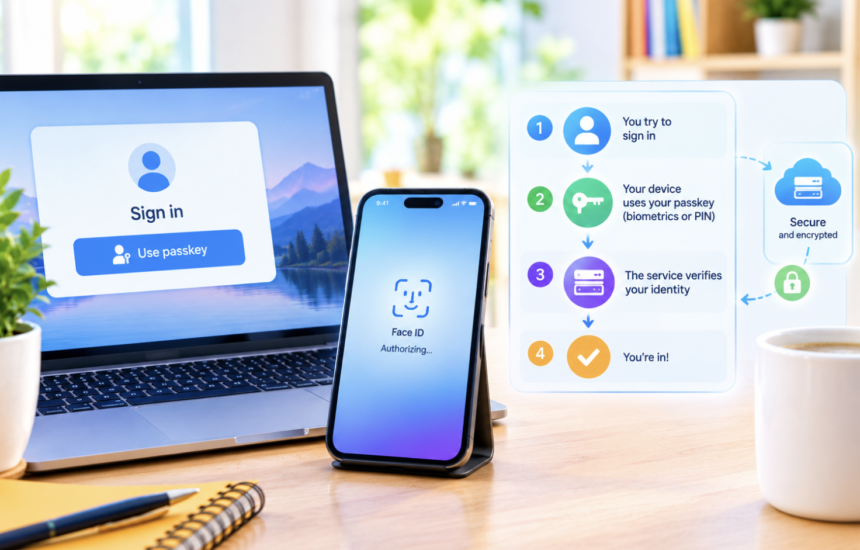
Understanding the genuine, practical technical process by which passkeys actually authenticate you during login helps clarify how this technology functions differently from traditional password entry.
- When setting up a passkey, your device generates a genuinely unique cryptographic key pair specifically for that account
- One part of this key pair remains securely stored on your specific device, never actually transmitted elsewhere
- During login, your device uses this stored key to genuinely prove your identity without transmitting anything resembling a traditional password
- This verification process typically happens through your device’s existing biometric or PIN unlock method
This local key storage deserves particular emphasis, since the genuine security foundation of passkey technology depends specifically on this critical component never actually leaving your device or being transmitted anywhere during the authentication process, meaning even if an attacker somehow intercepted your login communication, they would not genuinely obtain anything that could actually be used to access your account, fundamentally differing from password-based systems where the password itself must be transmitted for verification.
Why Passkeys Genuinely Provide Stronger Protection Against Common Attacks
Understanding the specific, genuine security advantages passkeys provide against common attack methods that regularly compromise traditional passwords helps clarify this technology’s genuine practical security value.
- Passkeys cannot genuinely be stolen through data breaches the way stored passwords sometimes can
- This technology provides genuine resistance against phishing attacks that trick users into entering credentials on fraudulent sites
- Passkeys eliminate the genuine risk of weak or reused passwords, since there is no password to actually create or remember
- These combined advantages address several of the most genuinely common, significant vulnerabilities affecting password-based security
This phishing resistance deserves particular emphasis, since passkeys are specifically designed to only work with the genuine, legitimate website or service they were originally created for, meaning even a sophisticated phishing site convincingly mimicking a legitimate service genuinely cannot successfully trick your device into providing valid passkey authentication, representing a considerable security improvement over passwords, which unfortunately can be entered on fraudulent sites by users who do not notice the deception.
How Passkeys Genuinely Address Password Reuse Problems
Understanding how passkey technology specifically eliminates the genuine, significant security risk created by password reuse across multiple accounts helps clarify another important practical advantage this technology provides.
- Passkeys are genuinely unique to each specific account and service, eliminating any possibility of reuse
- This directly addresses the common, risky practice of reusing passwords across multiple different accounts
- Password reuse represents one of the most genuinely significant, common causes of account compromise
- Passkey technology structurally prevents this specific vulnerability by design, rather than simply discouraging the practice
Practical Experience of Using Passkeys
Understanding what actually using passkeys genuinely feels like from a practical, everyday user perspective helps clarify how this technology translates into actual, real-world login experience.
- Users typically authenticate using their device’s existing biometric method, like a fingerprint or facial recognition
- This process genuinely feels similar to unlocking your device, rather than requiring separate password entry
- Passkeys can often sync across your devices through your existing device ecosystem, providing genuine convenience
- This experience generally proves genuinely faster and more convenient than traditional password entry for most users
This everyday convenience deserves particular emphasis, since beyond simply the genuine security improvements, many users find passkey authentication genuinely more convenient than traditional passwords, given that unlocking an account through a quick fingerprint scan or facial recognition typically takes considerably less time and mental effort than recalling and accurately typing a genuinely complex, secure password, meaning passkeys often improve both security and everyday convenience simultaneously.
Current Limitations and Adoption Challenges
Understanding that passkeys, despite their genuine security advantages, still face real practical limitations and adoption challenges helps provide balanced, honest context for this emerging technology’s current actual state.
- Not every website or service genuinely supports passkey authentication yet, despite growing industry adoption
- Users switching between different device ecosystems may genuinely encounter some passkey compatibility complexity
- Some users remain genuinely unfamiliar with this newer technology, creating an adoption learning curve
- Understanding these limitations helps set realistic expectations for passkeys’ current, though rapidly evolving, practical availability
Understanding Whether Passkeys Will Genuinely Replace Passwords Entirely
Understanding realistic, genuine expectations for whether passkeys will actually eliminate passwords entirely, versus coexisting alongside them for the foreseeable future, helps provide balanced perspective on this technology’s likely genuine trajectory.
- Widespread, complete password elimination would genuinely require universal adoption across virtually all services
- Many services will likely genuinely continue offering password options alongside passkeys for considerable time
- This gradual, coexisting transition reflects genuinely realistic technology adoption patterns rather than sudden replacement
- Understanding this realistic timeline helps set appropriate expectations rather than assuming imminent, complete password elimination
Practical Steps for Getting Started With Passkeys
Understanding practical, genuine steps for actually beginning to use passkeys where available helps translate awareness of this technology into practical, everyday adoption.
- Check whether your frequently used accounts and services currently offer passkey setup options
- Set up passkeys for your genuinely most important accounts first, where enhanced security matters most
- Understand your specific device’s passkey management and syncing capabilities before broader adoption
- Continue maintaining strong practices for any accounts still requiring traditional password authentication
How Major Technology Companies Are Genuinely Driving Passkey Adoption
Understanding how significant technology companies have genuinely coordinated efforts to promote passkey adoption helps clarify why this technology has gained meaningful momentum relatively quickly compared to some previous authentication innovations.
- Major technology companies have genuinely worked together on common standards supporting passkey interoperability
- This coordinated approach helps ensure passkeys genuinely work reasonably consistently across different platforms and services
- Industry-wide collaboration represents genuinely significant investment in moving beyond password-based authentication broadly
- Understanding this coordinated push helps explain passkeys’ relatively rapid, genuine growth in availability and adoption
Understanding Genuine Concerns Some Users Express About Passkey Technology
Understanding honest, genuine concerns some users and security researchers have raised about passkey technology helps provide balanced, complete context beyond simply celebrating this technology’s advantages alone.
- Some users express genuine concern about dependence on specific device ecosystems for passkey management
- Questions remain about genuinely smooth experience when switching between different device manufacturers entirely
- Understanding these legitimate concerns helps maintain realistic, balanced expectations for this evolving technology
- This honest acknowledgment of limitations complements appreciation for passkeys’ genuine security advantages
How Passkeys Genuinely Fit Alongside Other Modern Security Practices
Understanding how passkeys genuinely complement rather than entirely replace other important digital security practices helps clarify this technology’s appropriate place within your broader, comprehensive security approach.
- Passkeys address genuine authentication vulnerabilities but do not address every possible digital security concern
- Maintaining updated devices and software remains genuinely important alongside adopting passkey authentication
- General awareness of scams and social engineering attempts remains genuinely relevant regardless of authentication method
- Understanding this complementary relationship helps position passkeys within your genuinely complete security practice
Final Thoughts
Passkeys represent a genuinely significant advancement in authentication technology, using cryptographic verification rather than traditional memorised passwords to provide meaningfully stronger protection against common attacks like phishing and credential theft, while often proving more convenient for everyday use. Understanding both this technology’s genuine security advantages and its current, still-evolving adoption limitations helps you make informed decisions about incorporating passkeys into your own digital security practices as this genuinely promising authentication approach continues becoming more widely available.
Frequently Asked Questions
1. Can I genuinely lose access to my account if I lose the device storing my passkey?
Most passkey implementations include genuine backup and recovery options, often through syncing across your other devices or backup authentication methods, though understanding your specific service’s particular recovery process before relying entirely on passkeys represents a genuinely sensible precaution.
2. Do passkeys genuinely work the same way across every different website and service?
The underlying technology follows genuinely similar principles, though the specific setup process and available options can vary somewhat between different services, making it worth familiarising yourself with each specific service’s particular passkey implementation.
3. Is setting up a passkey genuinely more complicated than creating a traditional password?
Generally no, since the setup process typically involves your device’s existing biometric or PIN verification, often proving genuinely simpler and faster than creating a suitably complex, secure traditional password that meets typical security requirements.
4. Can passkeys genuinely be used across multiple different devices, like both a phone and computer?
Yes, generally, many passkey implementations support syncing across your devices through your existing device ecosystem, allowing genuine convenient access across multiple devices without needing to separately set up authentication on each individual device.
5. Do passkeys genuinely eliminate all possible security risks associated with account access?
While passkeys address many genuine, common password-related vulnerabilities, no authentication method provides completely absolute protection, meaning maintaining good overall device security remains genuinely important even when using this considerably more secure authentication approach.
6. Should I genuinely switch to passkeys immediately wherever this option becomes available?
For most users, yes, genuinely, given the meaningful security and convenience advantages this technology provides, though maintaining awareness of your specific device’s backup and recovery options remains a genuinely sensible practice during this technology transition.