
Data now drives every major business decision. Companies collect information from customers, devices, applications, and digital platforms every second. However, gathering data alone no longer creates an advantage. The real value comes from analyzing that data instantly and acting on it before competitors can react. This growing demand for speed has changed how organizations process information. Traditional cloud systems remain important, yet they often struggle with latency when handling massive amounts of real-time data. As a result, businesses are searching for faster and smarter solutions.
Edge computing has emerged as a powerful answer. Instead of sending every piece of data to distant cloud servers, edge computing processes information closer to where it is created. Consequently, businesses gain immediate insights, improve operational efficiency, and unlock new growth opportunities. As industries continue their digital transformation journeys, edge computing is becoming a critical technology for real-time analytics. Organizations that embrace it today are positioning themselves for faster innovation and stronger market leadership tomorrow.
Understanding Edge Computing in Modern Business
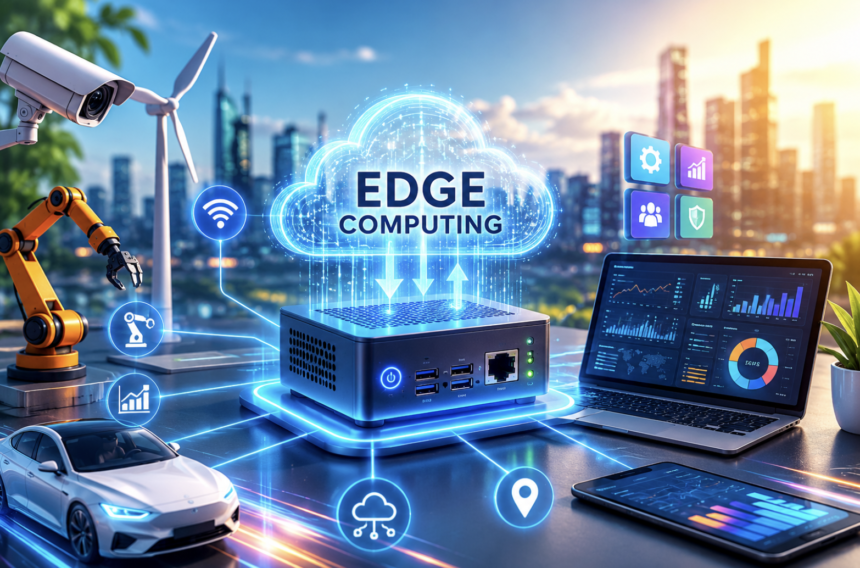
Edge computing refers to the practice of processing data near its source rather than relying entirely on centralized cloud infrastructure. Devices, sensors, machines, and local servers perform data analysis before transmitting only essential information to larger systems. This approach significantly reduces the distance data must travel. Therefore, businesses experience lower latency and faster response times.
Modern enterprises generate enormous volumes of information from multiple sources, including:
- IoT devices
- Smart sensors
- Manufacturing equipment
- Mobile applications
- Retail systems
- Connected vehicles
- Healthcare monitoring devices
- Smart city infrastructure
Instead of overwhelming cloud networks, edge computing handles critical processing locally. Consequently, organizations can make decisions in milliseconds rather than minutes.
Why Real Time Data Analytics Matters More Than Ever
Business environments move faster than ever before. Customer expectations continue to rise, while market conditions change rapidly. Real-time data analytics enables companies to analyze information as it arrives. As a result, decision-makers gain immediate visibility into operations, customer behavior, and emerging opportunities.
Organizations using real-time analytics can:
- Detect problems instantly
- Improve customer experiences
- Optimize supply chains
- Reduce operational costs
- Increase productivity
- Enhance security monitoring
- Respond faster to market changes
Without real-time insights, businesses often rely on outdated information. Consequently, delayed decisions can lead to missed opportunities and reduced competitiveness. Edge computing bridges this gap by delivering analytics exactly when businesses need them.
How Edge Computing Enhances Real Time Analytics
Reducing Latency for Faster Decision Making
Latency remains one of the biggest challenges in traditional data processing environments. Every second spent transferring data to distant servers creates delays. Edge computing minimizes this problem by processing information closer to users and devices. Therefore, organizations can act immediately on critical events.
For example, manufacturing systems can detect equipment failures instantly. Likewise, retailers can analyze customer behavior in real time and personalize experiences immediately. Faster decisions often translate directly into higher profits and improved customer satisfaction.
Improving Data Processing Efficiency
Organizations generate petabytes of information every day. Sending all this data to centralized servers can strain networks and increase costs. Edge computing filters and processes information locally. As a result, only valuable insights move to cloud environments. This strategy reduces bandwidth consumption while improving overall system performance. Furthermore, businesses gain better control over growing data volumes.
Supporting Continuous Operations
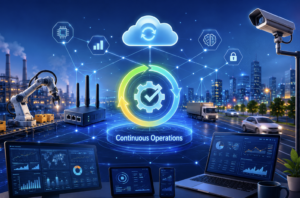
Many industries depend on uninterrupted operations. Network disruptions can cause significant financial losses. Edge computing allows local devices to continue processing data even when cloud connections become unavailable. Therefore, businesses maintain productivity and operational continuity. This capability is especially valuable for manufacturing plants, healthcare facilities, transportation systems, and remote industrial environments.
Key Business Benefits of Edge Computing
Enhanced Customer Experiences
Customer expectations have changed dramatically. People now expect instant responses across every digital channel. Edge-powered analytics helps businesses deliver personalized recommendations, faster transactions, and seamless digital experiences. Consequently, customers remain engaged and loyal to brands that consistently meet their needs.
Lower Operational Costs
Data transmission and cloud storage expenses continue to increase. Processing information at the edge reduces unnecessary data transfers. As a result, businesses lower bandwidth costs while improving resource utilization. Furthermore, organizations can allocate cloud resources more efficiently and maximize technology investments.
Stronger Cybersecurity and Data Protection
Cybersecurity remains a top priority for modern enterprises. Every data transfer introduces potential vulnerabilities. Edge computing processes sensitive information closer to its source. Therefore, organizations can reduce exposure risks and strengthen security frameworks. Additionally, businesses can implement localized security controls that improve protection against evolving threats.
Greater Scalability
As businesses grow, data volumes expand rapidly. Traditional systems often struggle to keep pace. Edge computing supports scalable infrastructure by distributing processing workloads across multiple locations. Consequently, organizations can expand operations without sacrificing performance or responsiveness.
Industry Applications Driving Business Growth
Manufacturing and Industrial Automation
Manufacturers increasingly rely on smart factories and connected equipment. Edge analytics enables predictive maintenance, quality monitoring, and equipment optimization in real time. Therefore, companies reduce downtime and improve production efficiency. This approach supports higher output while minimizing operational disruptions.
Retail and E-Commerce
Retailers generate vast amounts of customer data daily. Edge computing allows businesses to analyze shopping behaviors instantly. As a result, companies can personalize promotions and improve inventory management. Consequently, retailers increase conversions and strengthen customer relationships.
Healthcare Innovation
Healthcare providers require immediate access to critical patient information. Edge-enabled systems process medical data closer to monitoring devices. Therefore, healthcare professionals can respond quickly to changing patient conditions. This capability improves care quality while supporting faster clinical decisions.
Transportation and Logistics
Logistics companies depend on accurate, real-time information. Edge computing enables continuous tracking of vehicles, shipments, and delivery operations. Consequently, organizations optimize routes and improve supply chain visibility. Faster insights lead to improved efficiency and reduced operational costs.
Financial Services
Financial institutions process millions of transactions every day. Edge analytics helps detect fraudulent activities instantly. As a result, organizations strengthen security while protecting customer assets. Additionally, faster transaction processing improves customer trust and satisfaction.
The Relationship Between Edge Computing and Artificial Intelligence
Artificial intelligence and edge computing create a powerful combination. AI algorithms require fast access to data for effective decision-making. Edge environments provide immediate processing capabilities that support intelligent automation.
Together, these technologies enable:
- Predictive analytics
- Smart automation
- Intelligent monitoring
- Personalized experiences
- Real-time recommendations
- Advanced risk assessment
As AI adoption grows, edge computing will become even more important for delivering fast and accurate results.
Challenges Businesses Must Address
Despite its advantages, edge computing presents several implementation challenges. Organizations must manage distributed infrastructure effectively. Additionally, security policies require careful planning across multiple edge locations. Businesses also need skilled professionals who understand edge architectures and real-time analytics systems. However, these challenges are manageable with proper planning and strategic investment. Companies that establish strong implementation frameworks often achieve substantial long-term benefits.
Future Trends Shaping Edge Computing
The future of edge computing looks exceptionally promising. Several emerging trends continue driving adoption across industries:
- Expansion of 5G networks
- Growth of IoT ecosystems
- Increased AI integration
- Smart city development
- Autonomous vehicle innovation
- Advanced industrial automation
- Real-time digital services
As these technologies mature, edge computing will become a central component of digital transformation strategies worldwide. Organizations that invest early will likely gain significant competitive advantages in the years ahead.
Conclusion
Business success increasingly depends on the ability to analyze and act on information instantly. Traditional processing models cannot always meet the growing demand for real-time intelligence. Therefore, organizations are turning to edge computing to unlock faster insights and improved operational performance. By processing data closer to its source, edge computing reduces latency, enhances efficiency, strengthens security, and supports continuous operations. Furthermore, it empowers businesses to deliver superior customer experiences while controlling costs.
As digital ecosystems continue expanding, edge computing will play a defining role in the future of real-time data analytics. Companies that embrace this technology today will be better prepared to drive innovation, improve decision-making, and accelerate sustainable business growth.
Frequently Asked Questions
1. What is edge computing?
Edge computing processes data closer to its source instead of relying solely on centralized cloud servers.
2. How does edge computing improve real-time analytics?
It reduces latency and enables faster processing of incoming data.
3. Why is low latency important for businesses?
Low latency supports faster decisions and improves operational efficiency.
4. Can edge computing reduce cloud costs?
Yes, it lowers bandwidth and storage expenses by processing data locally.
5. Is edge computing secure?
Yes, it can improve security by limiting unnecessary data transfers.
6. Which industries benefit most from edge computing?
Manufacturing, healthcare, retail, logistics, and finance benefit significantly.
7. How does edge computing support AI applications?
It provides faster data processing for real-time AI decision-making.
8. What role does IoT play in edge computing?
IoT devices generate data that edge systems process locally for rapid insights.
9. Can edge computing operate without internet connectivity?
Yes, many edge systems continue processing data during network interruptions.
10. Will edge computing replace cloud computing?
No, edge computing complements cloud computing rather than replacing it.
11. How does edge computing improve customer experiences?
It enables faster services, personalization, and real-time responses.
12. What is predictive maintenance in edge computing?
It uses real-time equipment data to identify issues before failures occur.
13. How does edge computing help retailers?
It supports instant customer analytics and smarter inventory management.
14. Does edge computing support business scalability?
Yes, it distributes workloads efficiently across multiple locations.
15. What is the future of edge computing?
Its adoption will expand alongside AI, IoT, 5G, and smart automation technologies.