
The digital economy is evolving faster than ever. Businesses constantly search for innovative ways to create value, strengthen customer relationships, and generate sustainable revenue. However, a powerful transformation is quietly reshaping ownership itself. NFTs and digital assets have emerged as more than technological trends. Instead, they have become strategic tools that redefine how companies monetize products, services, and experiences.
While many people initially associated NFTs with digital art and collectibles, their role has expanded dramatically. Today, businesses use NFTs to build membership programs, authenticate products, reward customers, and create entirely new markets. Consequently, organizations across industries are discovering opportunities that traditional business models could never offer.
As digital ownership becomes increasingly important, companies that embrace these innovations position themselves for long-term growth. Therefore, understanding NFTs and digital assets has become essential for modern business leaders.
What Are NFTs and Digital Assets in Business?
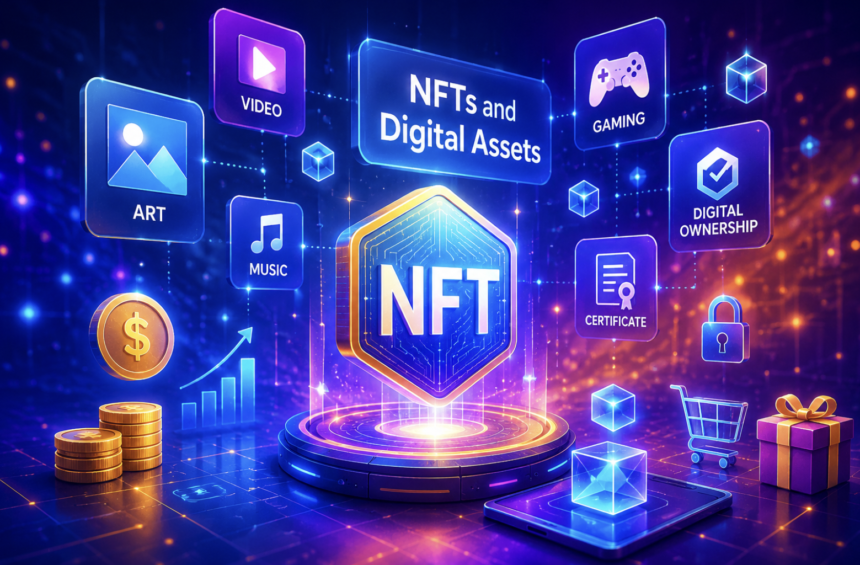
NFTs, or non-fungible tokens, represent unique digital ownership recorded on blockchain networks. Unlike cryptocurrencies, each NFT possesses distinct characteristics and cannot be exchanged equally. Digital assets, meanwhile, include a broader category. They encompass NFTs, tokenized products, virtual goods, digital memberships, intellectual property rights, and blockchain-based certificates. Businesses leverage these assets to establish transparent ownership records. As a result, they gain new methods for delivering value to customers while protecting authenticity.
How NFTs Are Creating New Revenue Streams
Traditional revenue models often depend on one-time transactions. However, NFTs introduce recurring opportunities that continue generating income long after the initial sale.
Digital Membership Programs
Companies increasingly issue NFT memberships that grant exclusive benefits. Customers receive access to premium content, special events, and loyalty rewards. Moreover, NFT memberships can be traded among users. Consequently, businesses maintain active communities while expanding brand visibility.
Secondary Market Royalties
One of the most powerful NFT features involves automatic royalty payments. Whenever an NFT changes ownership, the original creator can receive a percentage of the transaction value. Therefore, businesses earn revenue repeatedly rather than only once. This model creates sustainable income streams while encouraging long-term customer engagement.
Tokenized Products and Services
Many organizations now connect physical products with digital ownership certificates. Luxury brands, manufacturers, and retailers use NFTs to verify authenticity. As a result, customers gain confidence while businesses reduce counterfeiting risks. Additionally, companies can offer digital upgrades, warranties, and exclusive experiences linked directly to tokenized products.
The Rise of Digital Ownership Models
Ownership has traditionally involved physical assets. Nevertheless, blockchain technology introduces entirely new ownership structures.
Fractional Ownership Opportunities
Businesses can divide valuable assets into smaller digital shares. Investors purchase portions rather than entire assets. Consequently, participation becomes accessible to a wider audience. This approach opens opportunities in real estate, intellectual property, entertainment projects, and investment portfolios.
Community Driven Business Ecosystems
NFTs allow customers to become active stakeholders within business communities. Instead of remaining passive buyers, users participate in governance decisions and exclusive initiatives. Therefore, businesses create stronger relationships while fostering long-term loyalty.
Digital Identity and Access Rights
Organizations increasingly use NFTs as secure digital credentials. These assets grant access to online platforms, educational resources, conferences, and subscription services. As a result, businesses reduce fraud while streamlining customer experiences.
NFT Applications Across Different Industries
The practical applications of NFTs extend far beyond creative industries.
Retail and E-Commerce
Retailers use NFTs to verify product authenticity and reward loyal customers. Furthermore, digital collectibles enhance customer engagement campaigns. Consequently, brands strengthen relationships while increasing retention rates.
Real Estate
Property ownership records can be tokenized through blockchain technology. This process simplifies transactions while improving transparency. Moreover, fractional ownership enables broader investment participation.
Education and Professional Certification
Educational institutions issue blockchain-based certificates and credentials. These digital assets remain secure, verifiable, and difficult to forge. Therefore, employers can quickly validate qualifications.
Entertainment and Media
Content creators monetize exclusive experiences through NFT technology. Fans gain unique access to events, digital content, and community interactions. As a result, creators establish direct revenue channels without relying entirely on intermediaries.
Gaming and Virtual Economies
Gaming companies have embraced digital ownership at an unprecedented scale. Players purchase, trade, and own virtual assets across ecosystems. Consequently, gaming environments evolve into thriving digital economies.
Building Stronger Customer Loyalty Through NFTs
Customer retention remains a major business challenge. However, NFTs offer innovative loyalty solutions. Traditional loyalty programs often provide limited engagement. In contrast, NFT-based rewards possess real ownership value. Customers can collect, trade, or utilize digital rewards across platforms. Furthermore, businesses can continuously introduce new benefits. This strategy transforms loyalty programs into dynamic ecosystems rather than static reward systems. As a result, customers remain engaged for longer periods.
The Role of Blockchain in Asset Security
Trust plays a critical role in business transactions. Therefore, secure ownership verification becomes essential. Blockchain technology records transactions on decentralized networks. Consequently, ownership histories remain transparent and tamper-resistant. Businesses benefit from increased accountability and improved operational efficiency. Additionally, customers gain confidence in the authenticity of digital and physical assets.
Challenges Businesses Must Consider
Although NFTs present significant opportunities, businesses should approach implementation strategically.
Regulatory Uncertainty
Regulations continue evolving across different jurisdictions. Therefore, organizations must monitor legal developments carefully.
Market Volatility
Some NFT markets experience price fluctuations. Businesses should focus on utility-driven assets rather than speculative models.
Technology Adoption
Many consumers remain unfamiliar with blockchain technology. Consequently, businesses must prioritize user-friendly experiences.
Security and Risk Management
Digital asset platforms require strong cybersecurity measures. Therefore, organizations should invest in secure infrastructure and operational safeguards.
Future Trends Shaping NFT Business Models
The future of NFTs extends beyond simple ownership certificates.
Integration with Artificial Intelligence
AI-powered digital assets will deliver personalized experiences. As a result, customer interactions become more valuable and relevant.
Cross-Platform Interoperability
Digital assets will increasingly function across multiple platforms. Therefore, users enjoy greater flexibility and utility.
Enterprise Asset Tokenization
Businesses will tokenize contracts, licenses, intellectual property, and operational assets. Consequently, asset management becomes more efficient and transparent.
Metaverse Commerce Expansion
Virtual environments continue attracting investment and innovation. NFTs will serve as foundational ownership tools within these digital economies. As a result, businesses unlock entirely new commercial opportunities.
Why Businesses Cannot Ignore Digital Assets
Digital transformation continues accelerating across every industry. Customers increasingly expect personalized experiences, transparent transactions, and meaningful engagement. Therefore, businesses must evolve beyond traditional ownership frameworks. NFTs and digital assets provide powerful tools for innovation, customer retention, and revenue diversification. Moreover, they create opportunities that conventional business systems cannot easily replicate. Organizations that embrace digital ownership today position themselves for future success. Consequently, they gain a competitive advantage in an increasingly digital marketplace.
Conclusion
NFTs and digital assets have evolved far beyond digital art and collectibles. Today, they represent a transformative force in modern business strategy. Companies use them to generate recurring revenue, strengthen customer loyalty, verify ownership, and unlock innovative business models. Furthermore, blockchain technology provides transparency, security, and trust that traditional systems often struggle to achieve. Although challenges remain, the long-term potential continues expanding across industries.
As digital economies mature, businesses that embrace NFT-powered ownership models will likely lead the next era of innovation. Therefore, understanding and implementing these technologies is no longer optional for forward-thinking organizations. Instead, it has become a strategic necessity for sustainable growth in the modern digital landscape.
Frequently Asked Questions
1. What are NFTs in business?
NFTs are unique blockchain-based assets that represent digital ownership and business value.
2. How do NFTs generate revenue for companies?
They create income through sales, memberships, royalties, and digital experiences.
3. Can NFTs improve customer loyalty?
Yes, NFT-based rewards provide ownership value and exclusive customer benefits.
4. Are NFTs limited to digital art?
No, businesses use NFTs in retail, real estate, education, gaming, and many other sectors.
5. What role does blockchain play in NFTs?
Blockchain securely records ownership and transaction histories.
6. Can businesses earn royalties from NFT resales?
Yes, smart contracts can automatically distribute royalties from secondary sales.
7. What is asset tokenization?
It is the process of converting ownership rights into blockchain-based digital tokens.
8. Are NFTs secure for business transactions?
They are secure when supported by trusted blockchain networks and strong cybersecurity measures.
9. How do NFTs support product authentication?
They provide verifiable digital proof of ownership and authenticity.
10. Will NFTs remain important in the future?
Yes, their applications continue expanding across industries and digital economies.