

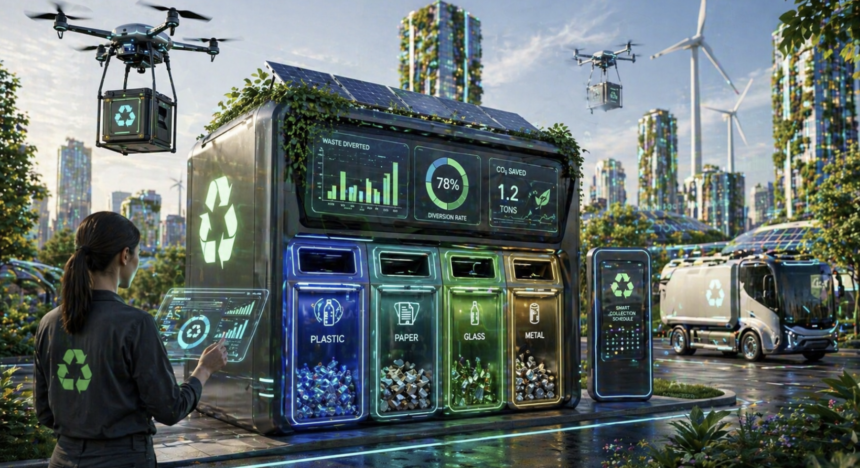
Your kitchen bin tells a story of waste and missed opportunities. Every container, scrap, and package represents value lost forever. MataRecycler rewrites this narrative completely through intelligent recovery. This platform transforms chaotic disposal into organized treasure hunting. It sees assets where others see trash. The revolution begins in your home.
The average household generates over four pounds of waste daily. Most of this ends up in landfills despite being recyclable. MataRecycler changes this equation fundamentally through smart technology. It treats every discard as a potential resource. The system identifies, sorts, and routes materials efficiently. This approach turns environmental responsibility into economic opportunity. Communities worldwide are discovering this transformation.
Decoding the Core Concept
MataRecycler represents a paradigm shift in materials recovery from manual to machine intelligence. Traditional methods rely on human hands and inconsistent judgment calls. This platform employs machine cognition to identify, categorize, and route discards with surgical precision. Sensors scan composition in milliseconds while algorithms determine optimal processing paths. The entire chain becomes a coordinated dance of efficiency and accuracy. Grandmothers can operate it while it handles lab grade complexity.
The Genesis Story
The spark ignited in 2022 when engineers observed landfill overflow crisis reaching critical levels. They noticed contamination rates exceeding forty percent in municipal recycling programs worldwide. Manual sorting couldn’t keep pace with exponential consumption growth patterns. A small team in Scandinavia began prototyping solutions immediately. They fused computer vision with robotic arms for precise handling. Their first prototype sorted five material types with ninety eight percent accuracy immediately.
Why Legacy Systems Collapse
Conventional methods depend on inconsistent human judgment and fatigue prone decisions. One worker’s plastic might be another’s trash based on personal interpretation. Fatigue leads to mistakes that contaminate entire batches. Contaminated loads get rejected by reprocessors and return to landfills. This cycle wastes fuel, time, and potential materials repeatedly. Education campaigns barely move the needle in changing behavior.
The Technology Stack Explained
Near infrared sensors detect material signatures invisible to naked human eyes completely. Spectral analysis distinguishes PET from HDPE plastics instantly without error. Weight sensors measure mass while cameras capture shape and color simultaneously. All data feeds into a central neural network for processing. Decisions happen in under two seconds per item with robotic precision. Soft grippers handle delicate objects without damage.
Intelligent Categorization Engine
The brain runs on continuous learning models that study thousands of samples daily. New packaging designs get identified within hours of market introduction automatically. It recognizes brand logos, resin codes, and contamination levels instantly. Confidence scores trigger secondary verification when needed for accuracy. Accuracy improves perpetually without manual updates or intervention. Seasonal variations adapt automatically through machine learning.
Automated Processing Pipeline
Once sorted, materials travel through compacting stations for volume reduction. Hydraulic presses reduce volume by eighty percent instantly for transport efficiency. Baled commodities receive RFID tags for complete supply chain tracking. Reprocessors get advance notification of incoming loads and quality specs. Logistics optimize automatically based on real time market prices. Quality reports accompany each shipment electronically.
User Interaction Design
A mobile app guides home users through simple photography steps. They photograph items before disposal for instant categorization feedback. Gamification awards points for proper sorting decisions daily. Leaderboards foster healthy neighborhood competition naturally. Municipalities see participation rates soar when communities engage playfully. Universal icons eliminate language barriers completely.
Environmental Victories
Diverting organics prevents methane emissions from landfills significantly. Properly sorted plastics avoid incineration toxins and air pollution. Recovered metals reduce destructive mining demand globally. Paper recycling saves old growth forests from clear cutting. Each percentage point improvement matters at planetary scale enormously. Cities using this platform cut carbon footprints by twelve percent annually.
Financial Upside for Communities
Municipalities save substantially on landfill tipping fees and labor costs. Labor costs drop while throughput rises dramatically without overtime. Recycled commodities command premium prices when contamination free and sorted. Some regions generate net revenue from material sales directly. Taxpayers face smaller waste management bills within three years. Businesses reduce disposal expenses and compliance costs simultaneously.
Real World Deployments
The platform proves its worth across diverse environments and scales globally. Residential buildings show dramatic contamination reduction quickly. Industrial facilities achieve closed loop manufacturing economically. Metropolitan areas transform public services completely. Each implementation provides unique insights for improvement. Success stories multiply across continents daily.
Residential Implementation
A Barcelona apartment complex installed units in trash rooms for resident access. Residents scan QR codes before depositing waste for tracking. Correct sorting unlocks building wide rewards and recognition. Incorrect attempts trigger friendly correction videos instantly. Contamination fell from thirty five to four percent in eight weeks only. Property values rose due to sustainability ratings immediately.
Industrial Scale Usage
A Shanghai electronics factory processes packaging waste on site daily. The system separates foam, cardboard, and various plastics automatically. Sorted materials return directly to suppliers for closed loop reuse. This manufacturing slashes procurement costs by twenty percent annually. Supply chain resilience improves dramatically against disruptions. Competitors struggle to match these efficiency gains.
Metropolitan Integration
Singapore integrated the platform into public bin networks citywide. Solar powered stations compact waste while sorting continuously. IoT sensors alert collection trucks when stations reach capacity. Routes optimize based on real time data and traffic patterns. Street cleanliness improved visibly within months. Citizen satisfaction with municipal services hit record highs.
Measuring What Matters
Key performance indicators include diversion rate percentage and contamination ratio. Processing velocity and cost per ton provide economic metrics. A mid sized city tracked these monthly for accountability. They achieved eighty seven percent diversion within eighteen months consistently. Contamination stayed below two percent throughout the period. Return on investment materialized in twenty six months.
Overcoming Adoption Hurdles
Upfront capital costs scare budget managers across all sectors initially. Leasing models spread payments over five years comfortably. Phased rollouts prove value incrementally without massive risk. Skeptical unions worry about traditional job losses unfairly. Retraining programs shift workers to quality assurance roles immediately. Technology maintenance creates higher paying technical positions.
The Materials Science Breakthrough
Advanced sensors now detect composite materials previously considered unrecoverable. Multi-layer packaging gets separated into pure streams automatically. The system identifies emerging biodegradable polymers versus traditional plastics accurately. This capability prevents contamination of conventional recycling batches. Manufacturers receive data to design more recyclable products. Research partnerships accelerate material innovation cycles significantly. The platform becomes a feedback loop for sustainable design.
Energy Recovery Integration
Organic waste streams connect directly to anaerobic digestion facilities through smart routing. Biogas production generates electricity for local grids continuously. Heat recovery systems capture thermal energy from processing equipment. Combined heat and power installations achieve eighty percent efficiency ratings. Landfill gas capture becomes obsolete as organics are removed completely. Communities achieve energy independence while managing waste sustainably.
Data Security and Privacy
End to end encryption protects user data from collection through processing. Blockchain integration ensures immutable tracking without compromising personal information. Municipalities control data access through permissioned systems. Citizens can opt out of gamification while still using core sorting functions. Third party audits verify security measures quarterly. GDPR compliance extends to waste management data. Transparency builds trust without sacrificing privacy.
Maintenance and Longevity
Predictive algorithms schedule servicing before failures occur unexpectedly. Modular component design allows field replacement within minutes. Stainless steel construction resists corrosion in harsh environments. Mean time between failures exceeds ten thousand hours of operation. Remote diagnostics reduce technician visits by seventy percent. Spare parts inventory stays minimal due to universal designs. Systems operate reliably for fifteen years with proper care.
Training and Workforce Development
Virtual reality simulations teach operators without risking equipment damage. Certification programs create career pathways for displaced workers. Community colleges partner with vendors for curriculum development. Apprenticeships combine classroom learning with hands on experience. Graduates earn forty percent higher wages than previous collection roles. Skills transfer to other smart city technologies easily. The workforce evolves alongside automation.
Scalability Models
Cloud based software scales from single building installations to citywide deployments seamlessly. Containerized hardware ships anywhere in the world economically. Pay per use pricing makes technology accessible to small communities. Enterprise licenses serve multinational corporations with consistent standards. API integrations connect with existing waste management software. White label options allow local branding and customization. Growth happens without technological barriers.
Return on Investment Analysis
Total cost of ownership calculations show payback within three years typically. Savings come from reduced landfill fees, labor efficiency, and material sales premiums. Revenue streams include carbon credit generation and data monetization. Risk mitigation avoids regulatory fines and environmental penalties. Brand value increases for businesses demonstrating sustainability leadership. Insurance costs drop due to reduced workplace injuries. The financial case becomes undeniable.
Community Engagement Strategies
Social media campaigns showcase local heroes who achieve perfect sorting scores. Schools compete in inter district challenges for prizes and recognition. Businesses sponsor neighborhood infrastructure in exchange for branding opportunities. Faith based organizations incorporate environmental stewardship into teachings. Municipal leaders host quarterly town halls to share progress transparently. Media partnerships amplify success stories regionally. Grassroots momentum sustains long term participation.
Regulatory Compliance Framework
Automated reporting satisfies government mandates for diversion rates and contamination levels. Digital certificates prove compliance during inspections instantly. Audit trails document every material movement from source to reprocessor. Data exports integrate with national waste databases seamlessly. Policy makers receive real time insights for evidence based decisions. International standards alignment facilitates cross border material trade. The platform becomes the compliance backbone.
Innovation Roadmap
Next generation sensors will identify chemical composition at molecular levels. Machine learning models will predict waste generation patterns by neighborhood. Integration with smart home devices will enable automatic sorting at generation points. Partnerships with product manufacturers will embed recyclability scores on packaging. Augmented reality apps will guide users through gamified experiences. The technology evolves faster than regulations can keep pace.
The Circular Economy Connection
Linear consumption models extract resources, produce goods, then discard waste. This platform enables circular loops where resources cycle continuously forever. Manufacturers design for disassembly knowing recovery will be efficient. Product lifespans extend through remanufacturing programs. Material banks replace virgin extraction completely. Economic incentives align perfectly with environmental goals.
Policy Implications
Governments worldwide debate extended producer responsibility laws actively. This technology provides compliance mechanisms that actually work efficiently. Mandatory sorting becomes feasible with automated verification systems. Deposit return schemes gain accuracy and reduce fraud. Subsidies target proven outcomes rather than empty promises. Carbon credits reward verified diversion amounts.
Global South Adoption
Developing nations face waste crises without infrastructure budgets available. Mobile sorting units offer affordable entry points for communities. Informal waste pickers gain formal recognition through tracked contributions. Fair compensation systems distribute value equitably among participants. Technology leapfrogs legacy systems entirely without intermediate steps. Community based micro enterprises emerge around material hubs.
Competitive Landscape
Several competitors entered smart sorting recently with different approaches. Rolerek: Dominating Smart Tech with Sustainable Innovation leads in heavy industrial applications worldwide. MataRecycler differentiates through holistic ecosystem orchestration instead of single component focus. Open architecture invites third party innovation across markets. Pricing scales from affluent cities to poor villages affordably. On the ground training and accessible licensing make adoption seamless worldwide.
The Human Element
Technology alone cannot solve waste problems completely without behavior change. This platform motivates through feedback and positive reinforcement daily. Social norms shift when neighbors compete for sorting scores publicly. Pride replaces guilt as the primary emotional driver. Children educate parents after school programs introduce concepts. Community leaders champion local initiatives with visible support.
Future Evolution
Chemical recycling integration represents the next evolution phase for plastics. The platform will identify materials suitable for molecular depolymerization automatically. Emerging materials like Sodiceram: Next-Generation Sodium-Infused Ceramic … present new sorting challenges that AI models learn. Food waste streams will connect to anaerobic digesters for energy generation. Carbon capture units may attach to processing hubs for net zero operations.
Final Thoughts
MataRecycler reimagines discards as valuable community assets daily. It bridges the gap between consumption patterns and environmental responsibility effectively. Communities gain tools to heal ecosystems while strengthening local economies simultaneously. The path forward requires courage to abandon failing traditional methods quickly. Adoption curves steepen as success stories multiply across regions. Tomorrow’s cleaner world starts with today’s sorting decisions.
Frequently Asked Questions
1. What materials can the system identify?
It recognizes plastics, metals, glass, paper, cardboard, and organic waste. Accuracy exceeds ninety five percent for most categories.
2. Is special training required for operators?
No, The interface uses intuitive icons and guided workflows. Eight year olds have mastered it in testing scenarios.
3. How much space does a unit require?
Compact models fit in standard shipping containers. Large facilities use modular configurations that scale linearly.
4. Can it handle hazardous waste?
No, The platform focuses on municipal solid waste. Specialized systems manage batteries, chemicals, and medical materials.
5. What happens if power fails?
Backup batteries maintain critical functions for six hours. Solar options provide off grid operation in remote locations.
6. Who maintains the technology?
Certified technicians service hardware quarterly. Software updates deploy automatically via cloud connections. Local partners handle repairs.
7. Does it work in extreme climates?
Yes, Units operate from minus twenty to fifty degrees Celsius. Weatherproof enclosures protect sensitive components.
8. How do we finance installation?
Municipal bonds, green grants, and vendor financing programs exist. Many regions recoup costs through material sales within three years.