


Every successful security operation depends on one critical factor that many organizations still overlook. A security guard may complete scheduled rounds, supervisors may receive daily reports, and clients may believe everything is running smoothly. However, unseen operational gaps often exist between patrols, incident reports, and management decisions. These hidden blind spots create opportunities for theft, vandalism, unauthorized access, and costly liability claims. Unfortunately, many security managers only discover these weaknesses after an incident has already occurred.
Modern security operations demand far more than traditional patrol logs and handwritten reports. Clients expect immediate updates, complete transparency, and proof that security personnel actively protect their facilities around the clock. Businesses that fail to provide this level of visibility risk losing client confidence and damaging their reputation. Real-time operational visibility has become the foundation of professional security management. Instead of reacting after incidents happen, organizations can identify risks instantly, coordinate responses within minutes, and maintain complete oversight of every guard, patrol, and security event.
In today’s competitive industry, visibility is no longer an optional upgrade. It has become the standard that separates industry leaders from firms struggling to keep up.
What Is Real-Time Security Operations Visibility?
Real-time security operations visibility refers to the ability to monitor security activities as they happen. Managers receive instant updates about patrols, incidents, guard locations, completed checkpoints, and emergency responses through a centralized digital platform. Instead of waiting until the end of a shift, supervisors gain continuous awareness of field operations. Every movement becomes part of a live operational picture.
This approach allows decision-makers to identify developing threats before they become major incidents.
Why Traditional Security Reporting No Longer Meets Modern Expectations
Security companies relied on paper logs for decades. Guards documented patrols manually before submitting reports after completing their shifts. Although this method once satisfied clients, today’s environment requires faster communication and stronger accountability. Several challenges continue to affect organizations using delayed reporting systems.
Delayed Incident Awareness
A suspicious activity may occur at 9:15 PM. However, management might not receive complete details until hours later. By that time, valuable evidence may already disappear. Witnesses may leave. Security footage may become harder to analyze. Opportunities to stop escalating threats become extremely limited.
Limited Operational Oversight
Without live monitoring, supervisors cannot verify whether guards complete assigned patrol routes correctly. Missed checkpoints often remain unnoticed until someone reviews reports later. Unfortunately, discovering mistakes after an incident offers little value.
Inconsistent Documentation
Manual reporting depends heavily on memory. As time passes, important observations become less accurate. Small details often disappear from reports. Those missing details can become significant during investigations or insurance claims.
Reduced Client Confidence
Today’s clients want transparency. They expect evidence that their security provider actively monitors every property. Delayed updates create uncertainty. When clients cannot verify security performance, trust gradually declines.
The Growing Demand for Smarter Security Operations
Technology has transformed nearly every industry. Security management is experiencing the same evolution. Organizations now expect security providers to deliver real-time information through cloud-based platforms, mobile applications, and centralized dashboards. Several market trends continue driving this transformation.
Increasing Liability Risks
Businesses face growing legal responsibilities after security incidents. Detailed digital records help organizations demonstrate that proper procedures were followed. Comprehensive documentation also strengthens legal protection.
Higher Client Expectations
Commercial property owners, hospitals, universities, residential communities, and industrial facilities increasingly request live operational updates. Clients appreciate seeing security activities instead of simply receiving reports the following day. Transparency builds stronger partnerships.
Faster Emergency Response
Every second matters during emergencies. Whether responding to trespassing, workplace violence, fire alarms, or suspicious packages, immediate communication dramatically improves outcomes. Real-time information enables faster coordination among guards, supervisors, emergency responders, and clients.
Better Workforce Accountability
Digital monitoring encourages consistent performance. Guards understand that completed patrols, checkpoint scans, and incident reports receive immediate verification. This accountability often improves overall operational quality.
The Hidden Costs of Poor Operational Visibility
Many security firms underestimate the financial impact of delayed reporting. The true costs extend well beyond individual incidents.
Lost Contracts
Clients rarely tolerate repeated communication failures. When organizations believe their provider lacks operational control, they often seek alternative security companies. Replacing long-term contracts requires significant marketing investments and additional sales efforts.
Higher Insurance Expenses
Insurance providers increasingly evaluate operational documentation. Organizations demonstrating accurate patrol verification and incident reporting may strengthen their position during claims. Poor documentation creates uncertainty that may increase costs.
Damaged Reputation
News spreads quickly throughout the security industry. One poorly managed incident can affect future business opportunities. A reputation for slow response or missing information discourages potential clients. Building trust again takes years.
Employee Productivity Loss
Supervisors using outdated systems spend valuable time calling guards, reviewing paperwork, and searching for missing information. Digital visibility eliminates much of this unnecessary administrative workload. Managers spend more time improving operations instead of locating reports.
How Real-Time Guard Tracking Improves Security Performance
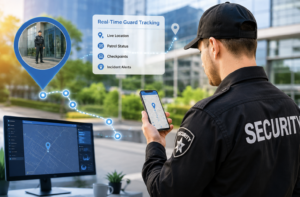
Guard tracking provides continuous awareness of patrol activities. Instead of assuming guards completed assigned routes, supervisors receive verified confirmation. Modern patrol systems combine GPS technology, NFC checkpoints, QR code verification, and mobile reporting. Each completed checkpoint automatically updates the central dashboard. Managers immediately know whether patrol schedules remain on track. If a checkpoint becomes overdue, alerts notify supervisors instantly. This immediate awareness allows corrective action before operational gaps create larger risks. The result is stronger coverage across every protected location.
Why Mobile Incident Reporting Changes Everything
Traditional incident reports often require lengthy paperwork. Modern mobile applications simplify the entire process. A guard can report suspicious activity within seconds. The application automatically records important information. This includes:
- GPS location
- Date and time
- Photographs
- Video evidence
- Audio recordings
- Written observations
- Officer identification
Because the information uploads immediately, supervisors begin coordinating responses without delay. The result is faster investigations and better decision-making.
Centralized Security Dashboards Improve Decision-Making
Modern security operations involve multiple moving parts. Managers oversee guards across numerous locations while handling emergencies, client communication, scheduling, and compliance. A centralized dashboard brings every operational element together. Instead of switching between different systems, supervisors monitor everything from one screen. They can instantly view active patrols, open incidents, missed checkpoints, emergency alerts, completed tours, staff availability, and response progress.
This comprehensive overview supports quicker and more informed decisions. Rather than reacting to incomplete information, managers operate with full situational awareness.
How Artificial Intelligence Is Transforming Security Operations
Artificial intelligence continues to reshape modern security management. Instead of relying only on human observation, intelligent systems analyze operational data continuously.
As a result, managers can identify unusual activity much faster. AI-powered platforms recognize patterns that might otherwise go unnoticed. For example, repeated incidents at one location, frequent missed patrol checkpoints, or abnormal guard movement may indicate an emerging security concern. Moreover, predictive analytics helps supervisors allocate resources more efficiently. Rather than increasing patrols everywhere, they can focus attention on high-risk areas. Consequently, security firms improve protection while reducing unnecessary operational costs.
As AI technology advances, security teams will gain even greater insight into daily operations.
Why Cloud-Based Security Platforms Are Becoming Essential
Cloud technology has changed how security companies manage their operations. Previously, reports remained stored on local computers or paper files. Therefore, accessing information required physical office visits or manual record searches. Today, cloud-based security platforms provide secure access from virtually anywhere. Managers can review live patrol activity from smartphones, tablets, or laptops. Likewise, clients receive instant updates without waiting for scheduled reports.
Cloud systems also improve collaboration between field officers, dispatch teams, supervisors, and executives. Most importantly, automatic backups reduce the risk of losing valuable operational records.
The Role of GPS, NFC, and QR Code Verification
Technology plays a critical role in proving that security guards perform assigned duties correctly. GPS tracking confirms guard locations during patrols. Consequently, supervisors know where officers are without making unnecessary phone calls. NFC checkpoints require guards to scan designated tags installed throughout a property. Because each scan records the exact time and location, patrol verification becomes highly reliable. Similarly, QR codes provide another simple verification method. Guards scan unique codes placed at inspection points, creating an instant digital record.
These technologies eliminate uncertainty while improving accountability across every security assignment.
How Real-Time Visibility Strengthens Compliance and Audits
Regulatory compliance has become increasingly important across many industries. Healthcare facilities, financial institutions, government buildings, manufacturing plants, and critical infrastructure all require accurate security documentation. Digital security platforms simplify compliance by automatically recording every patrol, checkpoint, incident, and response. Instead of gathering paperwork before an audit, organizations generate complete digital reports within minutes.
Additionally, timestamped records provide strong evidence during investigations or legal proceedings. As regulations continue evolving, automated documentation will remain a valuable competitive advantage.
Improving Client Relationships Through Greater Transparency
Strong client relationships depend on trust. Fortunately, real-time visibility allows security firms to demonstrate their performance every day. Many modern platforms include secure client portals that display patrol completion, incident updates, officer activity, and response timelines. Clients appreciate having direct access to operational information. Rather than requesting updates by email or phone, they can verify security activities independently.
This level of transparency reduces misunderstandings and increases long-term client satisfaction. Furthermore, organizations that consistently communicate operational performance often experience higher client retention rates.
Training Security Officers for a Digital Environment
Technology alone cannot improve security operations. Well-trained personnel remain the foundation of every successful security program. Guards should understand how to use mobile reporting applications efficiently. They also need proper training on GPS verification, digital evidence collection, emergency communication, and cybersecurity awareness.
Supervisors benefit from dashboard training, incident prioritization, and data interpretation skills. Regular refresher courses help employees remain confident with evolving technology. Continuous learning ensures that security investments deliver maximum value.
Best Practices for Building a Real-Time Security Operation
Organizations seeking better operational visibility should follow a structured implementation strategy. Begin by evaluating current reporting workflows. Identify delays that reduce response efficiency. Next, replace paper documentation with mobile reporting solutions. Introduce GPS, NFC, or QR checkpoint verification across every patrol route. Develop a centralized operations dashboard for supervisors.
Create automated notifications for missed patrols and emergency incidents. Provide clients with secure access to live operational updates whenever appropriate. Finally, review system performance regularly and update procedures as operational needs change. Small improvements made consistently often produce significant long-term results.
Future Trends Shaping Security Operations
Security technology continues advancing rapidly. Artificial intelligence will automate even more operational analysis. Machine learning will improve threat prediction. Wearable technology may allow officers to transmit live health and safety information. Body-worn cameras will integrate directly with incident reporting platforms. Drone surveillance will support guards across larger facilities. Meanwhile, Internet of Things (IoT) sensors will automatically alert security teams about environmental changes, unauthorized access, or equipment failures.
Organizations that embrace these innovations will remain better prepared for future security challenges.
Why Real-Time Visibility Creates a Competitive Advantage
Security companies compete on reliability, responsiveness, and professionalism. Real-time operational visibility strengthens all three. Managers make faster decisions. Guards remain more accountable. Clients receive better communication. Incidents receive quicker responses. Documentation becomes more accurate. Insurance claims become easier to support. Compliance audits require less preparation. Most importantly, organizations build stronger client trust.
Over time, these advantages contribute to higher client retention, stronger referrals, and sustainable business growth.
Conclusion
The security industry is entering a new era where information moves as quickly as the threats organizations face. Traditional reporting methods can no longer provide the speed, transparency, or accountability that modern clients expect. Real-time operational visibility empowers security managers to monitor guard activities, verify patrol completion, coordinate emergency responses, and maintain complete oversight from a single platform.
By combining mobile reporting, GPS tracking, checkpoint verification, cloud technology, and intelligent analytics, security firms transform reactive operations into proactive protection. These tools reduce operational blind spots, improve compliance, strengthen client confidence, and support faster decision-making during critical situations.
Organizations that invest in real-time visibility today position themselves for long-term success. They protect their clients more effectively, improve operational efficiency, and build a reputation for reliability in an increasingly competitive market. As technology continues to evolve, real-time security operations will become the benchmark for excellence rather than an optional feature. The future belongs to security providers that can see every operation as it happens and respond with confidence.
Frequently Asked Questions
1. What is real-time security operations visibility?
It is the ability to monitor guards, patrols, and incidents instantly through a centralized digital system.
2. Why is real-time guard tracking important?
It verifies patrol completion, improves accountability, and reduces security blind spots.
3. How does mobile incident reporting help security teams?
It allows guards to submit accurate reports immediately with photos, GPS, and timestamps.
4. Can real-time visibility reduce security risks?
Yes, it helps identify threats faster and supports immediate corrective action.
5. What technologies improve security patrol verification?
GPS tracking, NFC checkpoints, QR codes, and mobile security applications.
6. How does cloud technology benefit security companies?
It provides secure access to live operational data from any location.
7. Why do clients prefer real-time security updates?
They gain instant visibility into patrol activities and incident responses.
8. Does real-time monitoring improve compliance?
Yes, it automatically creates accurate digital records for audits and investigations.
9. Can artificial intelligence improve security operations?
Yes, AI identifies patterns, predicts risks, and enhances operational decision-making.
10. What is the biggest advantage of real-time operational visibility?
It enables proactive security management instead of delayed incident response.