

Every successful company shares one powerful characteristic. Employees feel valued, respected, and genuinely heard. Salary, benefits, and office perks certainly matter. However, they cannot replace meaningful communication between leadership and employees. Businesses that regularly listen to their workforce consistently outperform competitors in productivity, innovation, and employee retention.
Unfortunately, many organizations still rely on outdated annual surveys that rarely produce meaningful improvements. Employees eventually stop participating because they never see real change. Consequently, businesses lose valuable insights that could strengthen culture and improve performance.
A modern workplace feedback platform changes this reality. Instead of simply collecting opinions, it transforms employee experiences into practical strategies that improve engagement, leadership, collaboration, and business success. However, not every solution delivers equal value. Selecting the best employee engagement survey software requires careful planning. The ideal platform should provide actionable insights, simplify communication, encourage participation, and support future organizational growth.
This guide explores the most important factors every organization should evaluate before investing in a workplace feedback solution. Additionally, it covers several essential considerations many businesses overlook when making their decision.
Why Workplace Feedback Platforms Matter More Than Ever
Today’s workforce expects transparency, collaboration, and continuous communication. Employees no longer want their opinions collected once a year. Instead, they expect organizations to actively listen and respond throughout their employment journey. Organizations using the best employee experience management tool gain several competitive advantages. These include:
- Better employee engagement
- Higher productivity
- Reduced turnover
- Stronger leadership
- Improved workplace culture
- Faster conflict resolution
- Better customer satisfaction
- Greater innovation
Most importantly, organizations make smarter decisions because they rely on real employee insights instead of assumptions.
Choose a Platform That Delivers Actionable Employee Insights
Collecting feedback means very little without understanding what employees truly need. A high-quality workplace feedback platform should identify patterns instead of presenting overwhelming amounts of raw data. Decision-makers need dashboards that highlight recurring concerns, emerging trends, and opportunities for improvement.
Artificial intelligence can further improve analysis by detecting hidden workplace issues before they become larger organizational problems. Meaningful insights allow leaders to:
- Understand employee sentiment
- Detect morale issues early
- Recognize top-performing teams
- Identify leadership gaps
- Improve employee wellbeing
The more practical the insights become, the easier leadership can implement meaningful changes.
Prioritize an Easy and Engaging User Experience
Employee participation depends heavily on simplicity. Complicated survey interfaces discourage users from completing questionnaires honestly. Long forms, confusing navigation, and technical barriers reduce response rates significantly. The best employee engagement survey software should provide:
- Mobile-friendly surveys
- Clean navigation
- Simple question formats
- Quick completion times
- Accessible dashboards
Employees appreciate surveys that require only a few minutes while managers benefit from intuitive reporting tools that require minimal training. Simple experiences encourage higher participation across every department.
Protect Privacy and Build Employee Trust
Honest feedback only happens when employees trust the process. If staff members worry about being identified, they will naturally avoid discussing workplace concerns openly. A secure employee feedback platform should offer:
- Anonymous surveys
- Data encryption
- Role-based permissions
- Compliance with privacy regulations
- Confidential reporting
When employees know their identities remain protected, they provide more honest responses. Greater trust naturally produces higher participation and more accurate organizational insights.
Align Employee Feedback with Business Objectives
Feedback should never exist separately from business strategy. Instead, organizations should connect employee experiences directly to measurable company goals. Effective workplace feedback software helps businesses understand how employee satisfaction influences:
- Customer experience
- Revenue growth
- Innovation
- Productivity
- Employee retention
- Team collaboration
- Leadership performance
When organizations connect culture with measurable outcomes, executives gain stronger support for employee-focused initiatives. Every survey then becomes a strategic business investment instead of a routine administrative task.
Look Beyond Traditional Employee Surveys
Annual engagement surveys alone cannot capture today’s rapidly changing workplace environment. Modern organizations require continuous listening strategies. The best employee experience management tool includes multiple feedback methods, including:
- Pulse surveys
- Onboarding feedback
- Exit surveys
- Stay interviews
- Employee recognition
- Performance conversations
- Wellbeing assessments
- Lifecycle surveys
These tools create a complete picture of the employee experience throughout every stage of employment. Organizations can respond quickly instead of waiting months to identify problems.
Evaluate Advanced Reporting and Analytics
Data only creates value when people understand it. Modern workplace feedback platforms should convert complex information into clear visual reports. Useful reporting features include:
- Interactive dashboards
- Department comparisons
- Trend analysis
- Heat maps
- Custom reports
- Real-time analytics
- Executive summaries
Managers can immediately identify strengths and weaknesses without spending hours interpreting spreadsheets. Visual reporting also improves communication between HR, executives, and department leaders.
Ensure the Platform Can Scale with Business Growth
Organizations constantly evolve. New employees, international offices, remote workers, acquisitions, and changing structures all increase platform requirements. Scalable employee engagement software should support:
- Unlimited employee growth
- Multiple office locations
- Various organizational structures
- Multiple languages
- Global reporting
- Flexible permissions
- Custom workflows
Choosing scalable software prevents expensive migrations as businesses continue expanding. Future-ready technology saves significant operational costs over time.
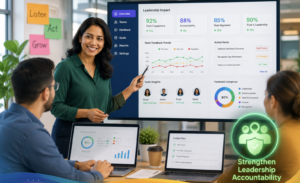
Strengthen Leadership Accountability
Employee feedback becomes meaningful only when managers take action. The best workplace feedback platforms help managers understand exactly where improvements are needed. Instead of presenting simple satisfaction scores, advanced systems provide:
- Team-specific insights
- Improvement recommendations
- Leadership coaching suggestions
- Action planning tools
- Progress tracking
Managers become more accountable because employees can see measurable improvements following their feedback. This creates stronger trust throughout the organization.
Use Artificial Intelligence to Improve Decision-Making
Artificial intelligence has transformed employee experience management. Modern platforms now analyze enormous amounts of workplace data within seconds. AI-powered features often include:
- Sentiment analysis
- Predictive turnover forecasting
- Burnout detection
- Automatic recommendations
- Smart survey distribution
- Text analysis
- Behavioral trends
These technologies help organizations identify future challenges before they affect employee performance. Instead of reacting to workplace issues, businesses become proactive.
Support Hybrid and Remote Workforces
Workplace flexibility continues growing worldwide. Consequently, feedback platforms must support employees regardless of location. Modern solutions should provide:
- Cloud accessibility
- Mobile applications
- Remote survey delivery
- Global communication tools
- Multi-device compatibility
Remote employees deserve equal opportunities to share their experiences. Inclusive communication strengthens organizational culture across distributed teams.
Integration with Existing Business Systems
One commonly overlooked factor involves software integration. The best employee experience management tool connects seamlessly with existing systems such as:
- Human Resource Information Systems (HRIS)
- Payroll software
- Microsoft Teams
- Slack
- Performance management software
- Learning management systems
- Business intelligence platforms
Integrated systems reduce duplicate work while improving reporting accuracy. Organizations also gain a centralized view of employee information.
Measure Employee Wellbeing Alongside Engagement
Employee wellbeing directly affects organizational performance. Stress, burnout, workload imbalance, and poor work-life balance often reduce productivity long before managers notice visible signs. Modern feedback platforms should regularly measure:
- Mental wellbeing
- Job satisfaction
- Workload management
- Career development
- Manager support
- Team relationships
Early detection enables organizations to prevent larger workforce problems. Healthy employees contribute more consistently to long-term success.
Customization Makes Feedback More Relevant
Every organization has unique goals. Therefore, feedback software should allow complete customization. Businesses should personalize:
- Survey questions
- Branding
- Reporting dashboards
- Department views
- Performance metrics
- Automated reminders
Customized surveys produce more meaningful responses because questions directly reflect organizational priorities.
Continuous Improvement Creates Long-Term Success
Employee expectations constantly evolve. Technology also changes rapidly. Organizations should select workplace feedback platforms that receive regular updates and introduce innovative features. Reliable software providers consistently improve:
- Security
- User experience
- AI capabilities
- Reporting functions
- Integration options
- Mobile performance
Continuous innovation protects businesses from outdated technology.
Common Mistakes to Avoid When Choosing Employee Feedback Software
Many organizations invest in platforms without evaluating long-term needs. Avoid these common mistakes:
- Choosing software based only on price
- Ignoring employee experience
- Overlooking data privacy
- Buying unnecessary features
- Failing to evaluate scalability
- Skipping software demonstrations
- Ignoring customer support quality
- Not involving HR and leadership together
- Focusing only on survey creation
Avoiding these mistakes increases the likelihood of selecting software that supports sustainable organizational growth.
Benefits of Selecting the Right Employee Feedback Platform
Organizations that choose the right solution experience measurable improvements across every department. Key advantages include:
- Stronger employee engagement
- Better workplace communication
- Higher employee retention
- Increased productivity
- Improved customer experiences
- Faster organizational decision-making
- Greater innovation
- Better leadership development
- Enhanced company culture
- Sustainable business growth
Most importantly, employees become active contributors to organizational success rather than passive participants.
Conclusion
Choosing the right workplace feedback platform extends far beyond purchasing survey software. It represents a long-term investment in employee satisfaction, organizational culture, leadership effectiveness, and business growth. Companies that actively listen to their employees consistently make smarter decisions because they rely on real workplace insights rather than assumptions.
The best employee engagement survey software combines powerful analytics, artificial intelligence, continuous listening, intuitive reporting, strong security, scalability, and seamless integrations. Furthermore, it transforms employee voices into practical action plans that improve engagement across every level of the organization.
Businesses should also remember that collecting feedback is only the beginning. Real success comes from acting on employee insights, measuring progress, and continuously improving the workplace experience. Organizations that embrace this approach build stronger teams, inspire greater loyalty, and create a culture where employees genuinely want to contribute their best every day.
Frequently Asked Questions
1. What is a workplace feedback platform?
A workplace feedback platform is software that collects, analyzes, and manages employee feedback to improve organizational performance.
2. Why is employee feedback important?
Employee feedback helps organizations improve engagement, productivity, leadership, and workplace culture.
3. What features should the best employee feedback software include?
It should offer anonymous surveys, analytics, reporting, AI insights, integrations, and scalability.
4. How often should companies collect employee feedback?
Most organizations benefit from continuous feedback supported by regular pulse surveys.
5. Can anonymous surveys improve participation?
Yes, anonymous surveys encourage honest responses and significantly increase employee trust.
6. What is employee engagement survey software?
It is a digital solution designed to measure employee satisfaction, motivation, and workplace engagement.
7. How does AI improve employee feedback platforms?
AI identifies trends, predicts workplace issues, analyzes sentiment, and recommends practical improvements.
8. Should small businesses invest in employee feedback software?
Yes, businesses of every size benefit from understanding employee experiences and improving workplace culture.
9. What is an employee experience management tool?
It is a platform that manages employee feedback throughout the entire employee lifecycle.
10. Can feedback software reduce employee turnover?
Yes, timely insights help organizations address workplace concerns before employees decide to leave.
11. Is mobile accessibility important for workplace surveys?
Yes, mobile-friendly surveys improve participation and make feedback easier for all employees.
12. How does reporting help business leaders?
Clear reporting enables faster decisions by presenting meaningful workplace insights through visual dashboards.
13. What role does data security play in feedback platforms?
Strong security protects employee confidentiality and increases confidence in the feedback process.
14. Can feedback platforms integrate with HR software?
Yes, many modern platforms integrate with HRIS, payroll, collaboration, and performance management systems.
15. How do companies benefit from continuous employee listening?
Continuous listening helps organizations solve problems early and build a stronger, more engaged workforce.