

Your money can disappear quietly without you noticing where it went. One coffee becomes several. A few online purchases become a large statement. Meanwhile, subscriptions continue charging in the background. Then a bill arrives, and you wonder where your money went. This is why smart money management starts with tracking your money consistently. You cannot improve spending habits if you never see your financial patterns.
Fortunately, tracking money does not require complicated financial knowledge. You can use an app, spreadsheet, calendar, banking tool, or simple notebook. The important part is consistency. A good money-tracking system shows your income, expenses, upcoming bills, savings, and spending habits. It also helps you make better decisions before your balance becomes a problem.
In this guide, you will discover five practical ways to track your money effectively. You will also learn how to organize expenses, monitor subscriptions, prepare for irregular costs, and build a system that actually lasts.
What Does Smart Money Management Really Mean?
Smart money management means making intentional decisions about how you earn, spend, save, and organize your money. However, it does not mean avoiding every enjoyable purchase. Instead, it means knowing what your money needs to accomplish before spending it. For example, your income may need to cover rent, utilities, groceries, transportation, savings, debt payments, and entertainment.
Without a plan, these expenses can compete for the same money. Tracking creates visibility. Once you know where your money goes, you can identify unnecessary spending and protect important financial priorities. Moreover, regular tracking can help you recognize patterns before they become expensive habits.
1. Use a Budgeting App to Automate Money Tracking
A budgeting app can make money management easier because it reduces manual work. Many modern financial apps allow users to connect accounts and organize transactions automatically. Depending on the service, transactions may receive categories such as groceries, transportation, entertainment, or utilities. This approach can save time. Instead of recording every purchase manually, you can review automatically collected transactions and correct categories when necessary. Some budgeting tools also provide spending limits, bill reminders, savings goals, and financial summaries.
Therefore, an app can become a central dashboard for your personal finances. However, automation should not mean ignoring your finances. Review your transactions regularly to make sure categories remain accurate. Also, check unfamiliar transactions immediately.
A useful routine involves reviewing your money at least once each week. During that review, check your current balance, recent transactions, upcoming bills, and spending progress. This simple habit can prevent small mistakes from becoming larger financial problems.
2. Create a Simple Money-Tracking Spreadsheet
A spreadsheet remains one of the most flexible methods for smart money management. You can create one using a basic spreadsheet program and customize it around your financial situation. Start with columns for the date, income or expense, category, amount, payment method, and notes. Then add separate sections for recurring bills and savings goals.
For example, your monthly expense categories might include housing, food, transportation, education, entertainment, shopping, subscriptions, and debt payments. The major advantage is control. You decide exactly what information appears in your tracker. You can also create formulas that calculate monthly spending automatically.
For instance, you could compare your planned grocery budget with your actual grocery spending. That comparison reveals whether your budget reflects reality. A spreadsheet also works well for irregular expenses. You can create a section for annual costs such as insurance, school expenses, gifts, repairs, or travel. Then divide those expected costs across several months. As a result, large annual payments become easier to prepare for.
3. Track Every Bill and Recurring Payment
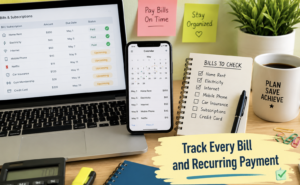
Tracking daily purchases matters, but recurring payments deserve special attention. Why? Because recurring charges can continue unnoticed for months. Subscriptions, memberships, internet services, insurance payments, cloud storage, and other automatic charges can slowly increase monthly expenses. Create a recurring bill list that includes each payment’s name, amount, due date, and payment account. Then review the list every month. Do not stop after recording the payment. Ask whether you still use the service.
If you rarely use a subscription, canceling it can immediately improve your monthly cash flow. Also, watch for price increases. Some services change their pricing over time, while annual renewals can create unexpected charges. Set reminders several days before important payments. This gives you enough time to move money between accounts or adjust other spending.
Furthermore, separate fixed bills from variable expenses. Rent may remain relatively stable, while electricity, groceries, and transportation costs can change. Understanding that difference makes monthly planning more realistic.
4. Monitor Your Spending With a Weekly Money Check-In
You do not need to spend an hour every day reviewing your finances. A short weekly check-in can provide enough information to stay organized. Choose one consistent day each week. During that session, review your recent transactions and compare them with your budget. Look for unusual spending. Did you spend more on food than expected? Did several small purchases appear in your statement? Did an unexpected bill reduce your available balance? These questions help you understand what happened instead of simply looking at your remaining money.
Next, check upcoming expenses. Look ahead for bills, appointments, travel costs, school expenses, or other planned purchases. Then adjust your spending accordingly.
For example, if a larger payment is due next week, you may decide to reduce unnecessary purchases this week. This creates a proactive approach to money management. Instead of reacting after your account becomes low, you make decisions before problems occur.
5. Use a Calendar or Planner for Financial Organization
Digital tools are useful, but simple methods can work extremely well. A calendar can provide a visual overview of your financial commitments. Mark important bill dates, salary dates, subscription renewals, debt payments, and savings transfers. You can also use different symbols or labels for different financial events.
For example, one symbol can represent bills while another represents savings contributions. A paper planner provides a similar benefit. Writing financial commitments down can make them easier to remember. This method works especially well for people who prefer physical organization.
However, calendars work best when combined with regular financial reviews. A reminder only helps if you act on it. Therefore, check your calendar during your weekly money session.
How to Track Cash Spending More Effectively
Cash spending can create a major tracking challenge. Unlike card transactions, cash purchases may not automatically appear in your financial records. The solution is simple. Record cash purchases immediately. You can use a notes app, spreadsheet, budgeting app, or small notebook. Do not rely on memory. A few unrecorded purchases can make your spending report inaccurate.
If you frequently use cash, create a dedicated cash category in your tracker. Then record withdrawals and individual purchases separately. This gives you a clearer picture of where your physical money goes.
Don’t Forget Small Purchases
Small purchases often appear harmless. However, repeated small expenses can become significant over an entire month. Imagine buying a small snack several times each week. Add occasional coffee, delivery fees, impulse purchases, and convenience spending. The individual transactions may seem insignificant. Together, they can represent a meaningful part of your monthly spending.
Therefore, track small purchases alongside major expenses. The goal is not to eliminate them. Instead, tracking helps you decide whether they fit comfortably within your priorities.
Build an Emergency Fund Into Your Money Tracker
Smart money management should include more than monthly spending. Emergency savings can protect your budget when unexpected expenses appear. Medical costs, urgent repairs, job changes, family emergencies, or sudden travel can disrupt your financial plans. Add an emergency fund category to your tracker.
Then treat savings like a regular financial commitment. Even small contributions can build the habit. You can also create a separate savings goal for specific expenses.
For example, you might save for education, a vehicle, travel, technology, or annual insurance payments. This approach separates planned savings from everyday spending. Consequently, your financial goals become easier to monitor.
Track Your Net Cash Flow Each Month
One useful financial metric is monthly cash flow. Cash flow shows how much money comes in compared with how much goes out. Start by recording your total monthly income. Then subtract your total expenses. If more money comes in than goes out, you have positive cash flow. If expenses exceed income, you have negative cash flow.
Tracking this figure every month can reveal important trends. One negative month may have a reasonable explanation. Several negative months require closer attention. Likewise, consistently positive cash flow can create opportunities for additional saving, investing, or debt reduction.
Review Your Spending Categories Regularly
Your budget should change as your life changes. A category that worked last year may not work today. Perhaps transportation costs increased. Maybe your housing expenses changed. You may also have new subscriptions or different financial goals. Review your categories every few months. Remove categories you no longer need. Combine categories that create unnecessary complexity. Add categories for important new expenses. A flexible system is easier to maintain than a rigid one.
Protect Your Financial Information
Tracking your money digitally also creates a security responsibility. Use strong, unique passwords for financial accounts. Enable multi-factor authentication whenever available. Avoid accessing sensitive financial accounts through unsecured public networks. Also, review account notifications regularly. Unexpected login alerts or unfamiliar transactions deserve immediate attention. Furthermore, only use reputable financial tools and check their privacy practices before connecting accounts. Good money management should protect both your finances and your financial information.
Which Money-Tracking Method Is Best?
There is no universal answer. The best method is the one you can maintain consistently. An app works well if you value automation. A spreadsheet suits people who want detailed control. A dedicated bill tracker can simplify recurring payments. A calendar works well for visual reminders. A notebook may be ideal for people who prefer handwriting. You can also combine methods.
For example, use an app for daily transactions and a calendar for major bills. Alternatively, use a spreadsheet for long-term savings while relying on banking notifications for payment reminders. The goal is not to create the most complicated system. The goal is to create a system that prevents financial surprises.
A Simple 15-Minute Weekly Money Routine
You can make money tracking easier by following the same process every week. Start by checking your account balances. Next, review recent transactions and correct anything unusual. Then, check upcoming bills and scheduled payments. After that, compare your spending with your monthly budget. Review your savings progress next.
Finally, decide whether you need to change your spending during the coming week. This routine can take around 15 minutes once you become familiar with it. More importantly, it creates a regular connection between your spending decisions and your financial goals.
Common Money-Tracking Mistakes to Avoid
One common mistake involves tracking expenses but never reviewing them. Data only becomes useful when it influences decisions. Another mistake involves creating an overly complicated budget. If tracking takes too much effort, you may eventually stop doing it. Some people also forget annual and irregular expenses. These costs can cause major surprises when they suddenly appear. Finally, avoid treating your budget as a punishment system. A sustainable budget should leave room for reasonable enjoyment. The objective is better control, not constant restriction.
Conclusion: Make Money Tracking a Habit, Not a Chore
Smart money management begins with awareness. When you know where your money goes, you can make better decisions about where it should go next. You do not need expensive software or advanced financial knowledge. Start with one method that feels comfortable. Track your income, bills, everyday expenses, savings, and irregular costs. Then review your information consistently. Over time, this process can reveal spending patterns that were previously invisible. It can also help you prepare for upcoming expenses and make progress toward financial goals.
Most importantly, remember that consistency matters more than complexity. A simple money tracker used every week can be more valuable than an advanced system you abandon after a few days. Start today, keep the process manageable, and let your financial habits improve one week at a time.
FAQ’s
1. What is smart money management?
Smart money management means planning, tracking, saving, and spending money according to clear financial priorities.
2. What is the easiest way to track money?
A budgeting app or simple spreadsheet can provide an easy starting point for tracking income and expenses.
3. How often should I track my money?
A weekly review usually provides enough consistency to identify spending patterns and upcoming financial needs.
4. Should I track small purchases?
Yes, because repeated small purchases can significantly affect your total monthly spending.
5. Can I track money without an app?
Yes, you can use a spreadsheet, notebook, planner, calendar, or another manual tracking method.
6. How can I track recurring bills?
Create a list containing each bill, amount, due date, payment method, and renewal information.
7. Why should I track subscriptions?
Tracking subscriptions helps you identify unused services and recurring charges that may increase your monthly expenses.
8. How does tracking help with saving money?
Tracking reveals unnecessary spending and shows how much money you can realistically direct toward savings.
9. Should savings be included in a budget?
Yes, treating savings as a planned expense can make consistent saving easier.
10. What should I do if my expenses exceed my income?
Review your largest spending categories and identify expenses that you can reduce, postpone, or eliminate.
11. Is cash spending difficult to track?
Cash spending requires manual recording, but writing down purchases immediately keeps your financial records accurate.
12. How long does money tracking take?
A simple weekly money review can take approximately 15 minutes once the routine becomes familiar.