

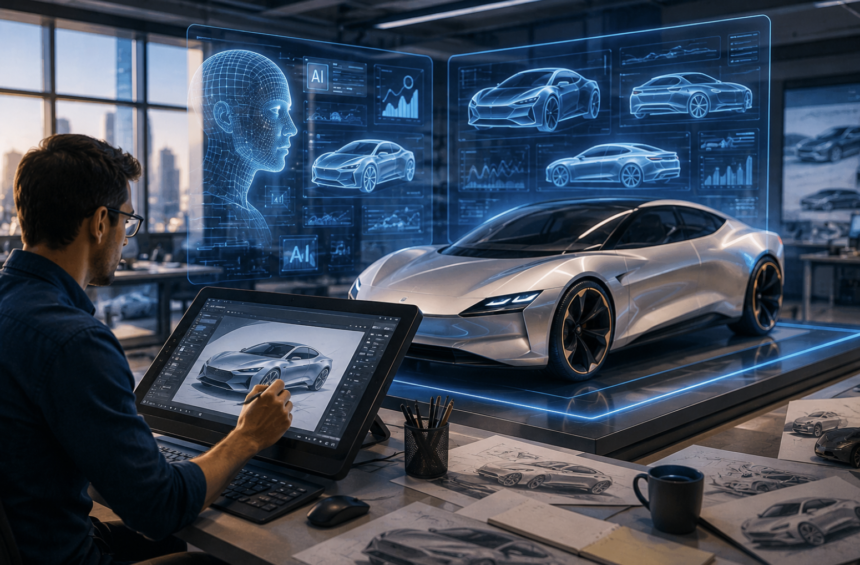
Imagine walking into a showroom and instantly falling in love with a brand-new car. The sleek body, futuristic headlights, luxurious cabin, and intuitive technology feel perfectly matched to your preferences. Surprisingly, that connection may have started years before the vehicle reached the showroom. Behind every modern automotive masterpiece, artificial intelligence quietly analyses billions of data points to predict what drivers will desire next.
The automotive industry has entered a new era where creativity meets advanced machine learning. Instead of relying only on traditional sketches and designer intuition, manufacturers now combine artistic vision with predictive analytics. AI studies customer behaviour, purchasing habits, online searches, regional preferences, and emerging design trends to help create vehicles that resonate with future buyers. Rather than replacing talented designers, artificial intelligence empowers them with valuable insights. This partnership speeds innovation, reduces costly design mistakes, and creates vehicles that better reflect consumer expectations.
As technology continues evolving, the cars of tomorrow are increasingly becoming intelligent products designed through a perfect blend of human imagination and data science.
How AI Is Revolutionising Automotive Design
For decades, automotive styling depended heavily on experienced designers who relied on instinct, creativity, and years of industry knowledge. While those qualities remain essential, AI now introduces an entirely new layer of precision. Manufacturers gather enormous amounts of information every day. Online configurators, dealership visits, warranty claims, customer reviews, driving habits, connected vehicle data, and social media interactions all contribute valuable insights.
Machine learning algorithms process this information within seconds. They recognise hidden patterns that humans would likely overlook. As a result, automotive companies can predict changing preferences before they become mainstream trends. Instead of reacting to customer demands, manufacturers increasingly stay several steps ahead.
Why Big Data Has Become the New Automotive Design Language
Every connected vehicle continuously generates valuable information. This data includes:
- Driver behaviour
- Climate preferences
- Navigation patterns
- Fuel efficiency
- Charging habits for electric vehicles
- Interior feature usage
- Safety system activation
AI transforms these massive datasets into practical design recommendations. For example, if drivers consistently ignore certain dashboard buttons, future vehicles may eliminate them completely. Similarly, if customers frequently choose panoramic roofs during online configuration, manufacturers may introduce them as standard equipment. Data no longer supports design. It actively shapes it.
Predictive Design Is Replacing Traditional Trend Forecasting
Traditional market research often required months of surveys and focus groups. Artificial intelligence changes this process entirely. AI continuously monitors:
- Automotive forums
- Search engine trends
- Vehicle review websites
- Social media platforms
- Online shopping behaviour
- Global economic indicators
This constant monitoring allows manufacturers to identify emerging trends much earlier. For instance, growing interest in sustainable materials, minimalist interiors, or illuminated logos may appear in AI reports long before becoming industry standards. Companies can therefore begin development years before competitors recognise the opportunity.
AI Is Quietly Designing More Attractive Vehicle Exteriors
Modern exterior styling involves far more than artistic creativity. Artificial intelligence evaluates thousands of design combinations within hours. It analyses:
- Front grille proportions
- LED lighting signatures
- Wheel designs
- Aerodynamic surfaces
- Body contours
- Colour combinations
- Roofline angles
Generative AI software can produce hundreds of alternative designs for a single concept vehicle. Design teams then review only the highest-performing options. This dramatically reduces development time while increasing customer appeal. Every curve and contour becomes data-informed without sacrificing creativity.
Aerodynamics and Efficiency Benefit from Artificial Intelligence
Beyond appearance, AI improves vehicle performance. Sophisticated simulation software evaluates airflow across every body panel. Instead of conducting thousands of expensive wind tunnel tests, engineers now rely on AI-generated simulations. These systems optimise:
- Drag reduction
- Cooling efficiency
- Battery performance
- Cabin noise reduction
- Driving stability
Electric vehicles especially benefit because lower aerodynamic drag directly increases driving range. Better efficiency also contributes to lower emissions and improved sustainability.
Smart Interiors Now Learn How Drivers Actually Behave
Today’s vehicle cabins have evolved into intelligent digital environments. Artificial intelligence studies how drivers interact with every control. Eye-tracking systems reveal where drivers naturally look. Touchscreen usage identifies frequently accessed functions. Voice assistant interactions uncover common commands. This behavioural data helps designers simplify the user experience.
Many modern vehicles now feature cleaner dashboards with fewer physical buttons. Frequently used controls receive better placement, while rarely used features move into software menus. The result feels more natural for everyday driving.
AI Is Personalising Every Driving Experience
Personalisation has become one of the industry’s biggest competitive advantages. Artificial intelligence enables vehicles to recognise individual drivers automatically. Modern systems adjust:
- Seat position
- Steering wheel settings
- Climate control
- Mirror alignment
- Ambient lighting
- Infotainment preferences
- Driving modes
Future vehicles may go even further.
AI could predict driver needs before commands are given. The car might automatically prepare navigation for daily commutes or adjust cabin temperature according to weather forecasts.
Social Media Has Become an Unofficial Automotive Design Studio
Millions of automotive photos appear online every day. Artificial intelligence analyses this visual content continuously. It studies engagement with:
- Custom wheels
- Vehicle colours
- Exterior modifications
- Interior lighting
- Performance packages
- Luxury finishes
Manufacturers gain instant feedback from global audiences. Instead of waiting for yearly surveys, they observe real-world reactions immediately. Consequently, social media now influences production vehicles far more than most consumers realise. Cars are increasingly designed for both roads and digital platforms.
Electric Vehicles Are Accelerating AI Innovation
The rapid growth of electric vehicles has increased AI’s importance even further. Battery placement creates entirely new design opportunities. Artificial intelligence helps engineers optimise:
- Weight distribution
- Cooling systems
- Cabin space
- Charging efficiency
- Structural safety
- Energy management
AI simulations reduce development costs while improving overall vehicle performance. Manufacturers can therefore launch innovative EVs much faster.
Artificial Intelligence Is Transforming Vehicle Safety
Safety engineering now benefits enormously from predictive algorithms. AI analyses millions of accident scenarios. It identifies common collision patterns before engineers build physical prototypes. This technology improves:
- Crash structures
- Airbag deployment
- Driver assistance systems
- Pedestrian protection
- Blind spot monitoring
- Emergency braking
Virtual crash testing also reduces development time while increasing passenger protection. Safer vehicles reach consumers more quickly.
Manufacturing Is Becoming Smarter Through AI
Artificial intelligence extends far beyond vehicle design. Factories increasingly rely on AI-driven automation. Machine learning improves:
- Quality inspection
- Production scheduling
- Inventory management
- Supply chain forecasting
- Robotic assembly
- Predictive equipment maintenance
Manufacturers experience fewer delays, reduced waste, and higher production efficiency. Customers ultimately receive better-built vehicles.
Ethical Challenges Behind AI-Driven Automotive Design
Although artificial intelligence delivers remarkable advantages, important questions remain. Manufacturers collect enormous volumes of customer information. Responsible data protection therefore becomes essential. Companies must ensure transparency regarding:
- Consumer privacy
- Data security
- AI decision-making
- Ethical algorithm development
Maintaining public trust will remain critical as automotive AI continues expanding.
The Future of Automotive Design Belongs to Human Creativity and Artificial Intelligence
Artificial intelligence will not eliminate automotive designers. Instead, it strengthens their creative capabilities. Designers still provide imagination, emotion, and artistic direction. AI supplies powerful analytical support.
Together, they create vehicles that better satisfy customer expectations while accelerating innovation. Future automobiles may even evolve continuously after purchase through software updates and adaptive AI systems. Cars will increasingly become personalised digital companions instead of static machines. The automotive industry is no longer driven solely by horsepower or engineering. It is powered by intelligent algorithms that quietly shape how tomorrow’s vehicles look, perform, and connect with their drivers.
Every design decision becomes smarter. Every customer interaction becomes more meaningful. The next time a new vehicle instantly captures your attention, remember that artificial intelligence may have predicted your preferences long before you noticed them.
Conclusion
Artificial intelligence has fundamentally transformed automotive design without replacing the creativity of human designers. Instead, it provides powerful insights that improve styling, safety, efficiency, manufacturing, and personalisation. By analysing vast amounts of behavioural data, AI enables manufacturers to create vehicles that closely match future consumer expectations.
As electric mobility, connected technologies, and autonomous driving continue evolving, artificial intelligence will become even more influential throughout every stage of vehicle development. The future of automotive innovation belongs to the collaboration between human imagination and intelligent algorithms, creating smarter, safer, and more personalised driving experiences than ever before.
Frequently Asked Questions
1. What is AI in automotive design?
AI uses machine learning and data analysis to help manufacturers create better vehicles.
2. Can artificial intelligence replace car designers?
No, AI supports designers instead of replacing their creativity.
3. How does AI improve vehicle safety?
It predicts crash scenarios and enhances advanced safety systems.
4. Why do manufacturers use big data for car design?
Big data reveals customer preferences and emerging market trends.
5. Does AI influence electric vehicle development?
Yes, it improves battery efficiency, aerodynamics, and vehicle performance.
6. How does social media affect automotive design?
AI analyses online engagement to identify popular styling trends.
7. Can AI personalise a vehicle for different drivers?
Yes, AI can automatically adjust settings based on individual preferences.
8. Does AI reduce vehicle development costs?
Yes, virtual simulations reduce testing expenses and accelerate production.
9. Will future cars become smarter through AI?
Yes, future vehicles will continuously improve through intelligent software updates.
10. Why is AI important for the automotive industry’s future?
It enables faster innovation, improved safety, greater efficiency, and highly personalised driving experiences.