

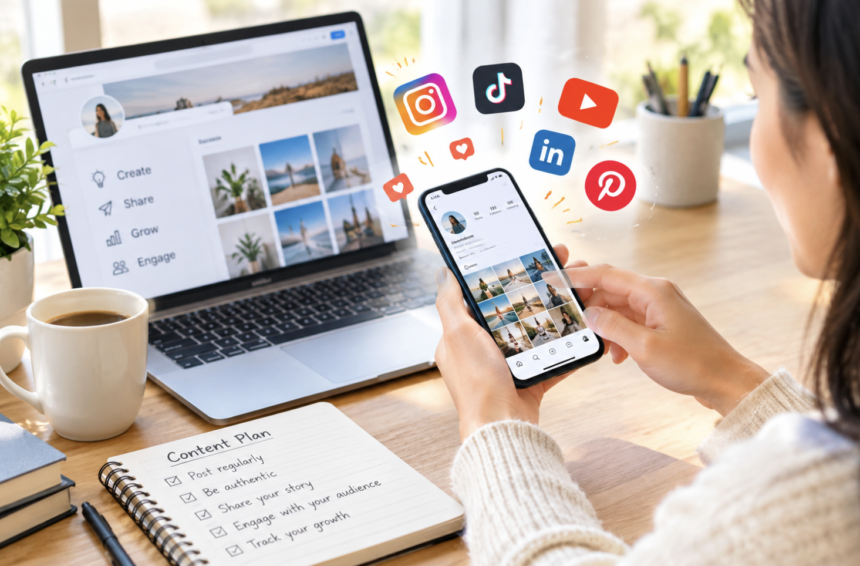
A freelance photographer spent years posting inconsistently across several platforms with little to show for it, until she committed to one clear focus: documenting behind-the-scenes moments from real weddings rather than only polished final shots. Within a year, her following had grown substantially, and inbound enquiries from couples who felt they already knew her style began arriving regularly. This guide covers the practical steps behind building a personal brand that attracts the right opportunities.
Defining What You Want to Be Known For
Before posting anything, it helps to identify a clear, specific area of expertise or perspective rather than attempting to appeal broadly to everyone, since a personal brand built around a defined focus tends to attract a more engaged, relevant audience than one spread thinly across many unrelated topics.
- Identify the specific skill, perspective, or expertise you want associated with your name
- Consider what makes your particular take on that topic different from others already covering it
- Choose a focus narrow enough to feel distinctive but broad enough to sustain regular content
- Revisit and refine this focus periodically as your interests and expertise naturally develop
Choosing the Right Platform for Your Specific Goals
Not every platform suits every personal brand, and spreading effort thinly across several platforms simultaneously often produces weaker results than focusing energy on one or two platforms where a target audience is active. A B2B consultant likely finds more relevant engagement on a professional networking platform than a primarily visual platform built around lifestyle content, and vice versa for a photographer or designer.
Creating Content That Reflects a Consistent Perspective
- Develop a recognisable voice and tone that stays consistent across posts
- Share opinions and experiences rather than only neutral, generic information
- Show the process and thinking behind your work, not only finished results
- Maintain a consistent visual style if the platform is heavily visual in nature
Balancing Authenticity With Professional Boundaries
Building a personal brand benefits from sharing personality and perspective, but it still requires thoughtful boundaries around what stays private, as a following grows and content reaches a wider, less familiar audience. Successful personal brands tend to share enough authentic detail to feel relatable without oversharing information that could later create professional complications.
Engaging With an Audience Beyond Simply Posting
Building a personal brand isn’t a one-way broadcast; responding to comments, engaging thoughtfully with other people’s content, and participating in relevant conversations within a chosen niche all contribute to how an audience perceives and remembers a specific person. Accounts that only post without ever engaging tend to grow a following more slowly than those that actively participate in their broader community.
Measuring Progress Beyond Simple Follower Counts
- Track engagement rate rather than follower count alone as a measure of real connection
- Note how many meaningful conversations or opportunities arise from content shared
- Monitor which specific types of content generate the strongest response
- Set realistic timeframes, since a personal brand typically builds gradually over months
Common Mistakes That Undermine a Personal Brand
Inconsistent posting, switching focus too frequently, and prioritising follower count over engagement all commonly undermine an otherwise promising personal brand. Many people abandon their efforts within a few months, precisely the point at which consistent, focused posting tends to begin generating meaningful traction.
Repurposing Content Across Different Formats
A single piece of original insight, such as a detailed answer to a common question in your field, can often be reshaped into several different content formats, a short video, a written post, and a longer article, extending its reach without requiring an entirely new idea for every piece of content published. This repurposing approach helps maintain consistent posting without the burnout that comes from needing a completely fresh idea every single time, and it also lets the same core message reach audiences who prefer different content formats.
Handling Negative Feedback or Criticism Publicly
As a personal brand grows, some degree of public criticism or disagreement becomes almost inevitable, and how someone responds often matters more to their reputation than the original criticism itself. Responding thoughtfully and professionally, rather than defensively or emotionally, tends to demonstrate exactly the kind of judgement and maturity that strengthens a personal brand rather than damaging it, even when the original criticism itself felt unfair.
Collaborating With Others to Expand Reach
Partnering with other creators or professionals in a related niche, whether through a joint post, an interview, or a simple shout-out, introduces a personal brand to an audience that already trusts the collaborating partner, often producing faster growth than posting in isolation ever manages alone. Choosing collaborators whose audience and values align with your own focus matters more than simply partnering with whoever has the largest following available.
Adapting Your Personal Brand as Your Career Evolves
A personal brand built early in a career often needs to evolve as someone’s skills, interests, and professional focus naturally shift over time, and clinging rigidly to an outdated brand identity can eventually feel disconnected from who someone has become professionally. Successful long-term personal brands tend to evolve gradually and transparently, bringing an existing audience along through the transition rather than abandoning an established presence abruptly and starting over from nothing.
Algorithm Changes and Their Effect on Reach
Social media algorithms change frequently, and a personal brand strategy built entirely around exploiting one specific algorithmic quirk can see its reach collapse suddenly when a platform adjusts how it distributes content. Building a personal brand around consistently valuable content and audience relationships, rather than purely chasing whatever currently performs best algorithmically, tends to weather these inevitable platform changes better than a strategy dependent entirely on gaming a specific, temporary algorithm.
When to Consider Professional Help With Personal Branding
Some professionals reach a point where working with a photographer, a content strategist, or a personal branding consultant makes sense, once a personal brand starts generating real business opportunities that justify the investment. This kind of professional support isn’t necessary for everyone starting out, but it can accelerate growth and polish for someone whose personal brand has already demonstrated traction and would benefit from more consistent, higher-quality execution.
The Legal Side of Sponsored or Paid Content
As a personal brand grows enough to attract paid partnership opportunities, understanding basic legal and disclosure requirements becomes important, including clearly labelling sponsored content in line with advertising standards guidance rather than presenting paid promotion as an organic, unpaid recommendation. Failing to disclose paid partnerships properly can damage audience trust once discovered and, in some jurisdictions, carries regulatory consequences beyond simple reputational harm.
Building an Email List Independent of Social Platforms
Relying entirely on social media platforms to reach an audience leaves a personal brand vulnerable to algorithm changes, account restrictions, or even a platform’s decline in popularity over time, which is why many experienced personal brand builders prioritise building a direct email list they fully control alongside their social media presence. An engaged email list, even a modest one, often converts into professional opportunities more reliably than social media reach alone, since it represents a more direct, algorithm-independent relationship with an interested audience.
Balancing Personal Brand Growth With Actual Skill Development
A personal brand ultimately needs to be backed by skill and substance, since an audience built purely on marketing and content strategy, without corresponding expertise behind it, tends to struggle once followers engage a person for real work or advice. Continuing to develop the underlying expertise a personal brand is built around, not just the content and posting strategy surrounding it, remains essential for the brand’s credibility to hold up over the long term.
Learning From Personal Brands That Successfully Pivoted
Studying professionals who successfully evolved their personal brand from one focus to another, rather than abandoning their existing audience entirely, offers useful lessons for anyone anticipating a similar shift in their own career. Common threads among successful pivots include transparent communication with an existing audience about the change, finding connective tissue between the old and new focus, and allowing the transition to unfold gradually rather than attempting an abrupt, jarring rebrand overnight.
Protecting Your Personal Brand From Impersonation
As a personal brand gains visibility, the risk of impersonation, fake accounts using a person’s name, photos, or content to deceive others, grows correspondingly, making it worth periodically searching for unauthorised accounts and understanding each platform’s process for reporting impersonation. Establishing clear, verified official accounts and occasionally reminding an audience of exactly where to find legitimate content helps reduce confusion and protects both the individual’s reputation and their audience from potential scams exploiting a trusted name.
How Personal Branding Differs Across Different Industries
Personal branding strategies that work well in creative industries, emphasising visual style and personal voice, often need meaningful adaptation for more conservative fields like law or finance, where professionalism and demonstrated expertise typically matter more than personality-driven content. Understanding the specific norms and expectations within a target industry, rather than copying a generic personal branding formula from an unrelated field, produces a far more effective and appropriately calibrated approach.
Sustaining Motivation for Consistent Content Creation
Many people start building a personal brand with enthusiasm that gradually fades once the reality of consistent, ongoing content creation sets in, during periods when engagement feels disappointing despite continued effort. Building a simple, sustainable content creation system, batching content creation in advance rather than starting from scratch under pressure each time, and reconnecting periodically with the original motivation behind building a personal brand all help sustain this effort well past the initial burst of early enthusiasm.
Personal Branding for Career Changers
Someone building a personal brand while transitioning careers benefits from acknowledging the transition openly rather than presenting themselves as already established in the new field, since audiences tend to respond well to authentic journeys and often become invested in following someone’s progress.
How to Handle Imposter Syndrome While Building a Personal Brand
Many professionals building a public personal brand experience imposter syndrome, feeling like a fraud despite real expertise, when comparing their own early content to established figures who have been building their presence for years longer. Recognising that even experienced, respected figures in a field started from zero at some point, and that consistent, honest effort over time matters more than immediate comparison to someone much further along, helps ease this common and understandable discomfort.
Setting Boundaries Around Direct Messages and Public Requests
As a personal brand grows, the volume of direct messages and requests for free advice or favours often grows correspondingly, and establishing clear, sustainable boundaries around how much unpaid time to offer becomes necessary to avoid burnout. Some professionals address this by creating accessible, free resources that answer the most common questions upfront, reducing the volume of individual requests while still providing value to their wider audience.
Personal Branding Consistency Across Platforms
Maintaining a recognisable name, profile image, and general visual style across every platform where a personal brand appears helps an audience recognise and follow that presence consistently, even when someone splits content across several different platforms with different formats and audiences.
How Personal Brands Can Support Broader Career Security
In an uncertain job market, professionals with an established personal brand often find themselves better positioned during a job search, since a visible track record of expertise and industry engagement can open doors that a resume alone might not reach on its own. This added security represents one of the more practical, less discussed benefits of consistent personal brand building, beyond the more commonly cited goals of visibility or influence.
How to Evaluate Which Platform Deserves Your Primary Focus
Reviewing basic engagement metrics honestly across whichever platforms you’ve tried helps identify where your specific content and voice resonate best, information worth using to concentrate effort rather than continuing to split limited time evenly across platforms regardless of where real traction is happening.
Personal Branding Through Guest Contributions
Contributing a guest article or appearing on another creator’s podcast within your field introduces your personal brand to an established audience already primed to trust that platform’s recommendation, often producing faster credibility than building visibility from a completely blank slate alone.
Personal Branding and Public Speaking Opportunities
Accepting opportunities to speak at industry events or on relevant podcasts, even at a modest scale initially, builds a personal brand’s credibility in ways that written content alone often struggles to match, since live speaking demonstrates expertise in a more immediate, memorable format.
Personal Branding and Long-Term Patience
Building, lasting recognition within a field typically takes years rather than months, and professionals who stay consistent through the quieter early period, without expecting immediate results, tend to build a far more durable personal brand than those chasing rapid, short-lived viral moments.
Personal Branding and Newsletter Consistency
A regularly published newsletter, even a short one, gives an audience a predictable reason to stay engaged with a personal brand between other content, and consistency here often matters more to long-term audience retention than any single standout piece of content.
Final Thoughts
A strong personal brand grows from a clear, consistent focus and engagement with an audience, rather than simply posting frequently or chasing follower counts. Identifying a specific area worth being known for, and showing up consistently around that focus, tends to attract far more relevant opportunities than a broad, unfocused approach ever manages to produce.
Frequently Asked Questions
How long does it take to build a meaningful personal brand?
Most people see noticeable traction after roughly six months to a year of consistent, focused posting, though this varies depending on platform, niche, and posting frequency.
Do you need a large following before a personal brand becomes useful professionally?
No, even a modest but engaged following in a specific niche can generate meaningful professional opportunities well before reaching a large overall follower count.
Should a personal brand be kept entirely separate from an employer’s brand?
This depends on individual circumstances and employer policies, though many professionals maintain a personal brand focused on their own expertise while remaining mindful of their employer’s specific social media guidelines.
Is it necessary to show your face to build a personal brand?
No, some successful personal brands focus primarily on written insight, work samples, or a distinctive voice rather than visual presence, though showing up personally can help build a stronger, faster connection with an audience.
How often should someone post to build a personal brand effectively?
Consistency generally matters more than raw frequency, and a realistic, sustainable schedule maintained over months tends to outperform sporadic bursts of high-frequency posting followed by long gaps.
Can a personal brand help someone change careers?
Yes, sharing insight and engaging within a target industry before formally transitioning can build credibility and connections that make a career change smoother.