

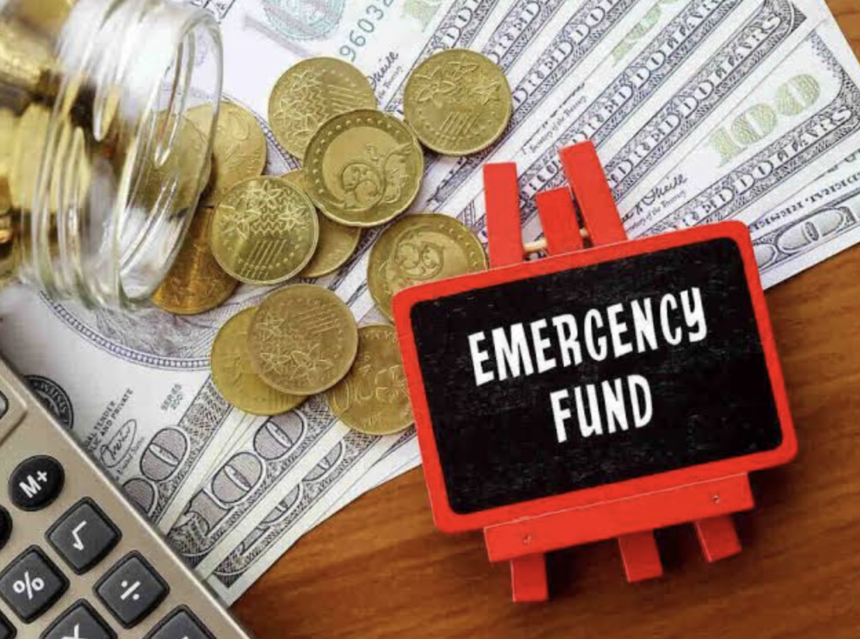
The boiler in a two-bedroom flat in Leeds packed in on a Tuesday morning in February. The repair quote came back at £780, and the tenant had £340 in her current account and a credit card already carrying a balance from Christmas. That gap between “the bill is due now” and “the money is not there yet” is exactly what an emergency fund exists to close. It is not a savings goal for a holiday or a new sofa; it is a buffer that keeps one bad week from turning into a year of debt repayments. Building one is less about having a large income and more about having a system, and that system can be set up in an afternoon.
Why an Emergency Fund Matters More Than You Think
Most people already know they “should” have savings set aside, but the reasoning behind it is worth spelling out because it changes how the fund gets built. An emergency fund is not there to grow your wealth. It is there to absorb shocks so that your other financial plans, your pension contributions, your mortgage payments, your investments, stay untouched when life gets messy. Without one, a single unexpected cost tends to get paid for with a credit card, an overdraft, or a buy-now-pay-later scheme, all of which carry interest and fees that turn a one-off problem into an ongoing one.
The cost of not having a buffer shows up in several common scenarios. Job loss or reduced hours can leave a gap that statutory notice periods and redundancy pay rarely cover, especially in freelance or contract-heavy fields. Emergency repairs to a boiler, a washing machine, or a car tend to arrive without warning and rarely wait for payday.
Medical or dental costs can crop up even with the NHS, since some treatments, prescriptions, and private referrals carry out-of-pocket fees. Family emergencies, from last-minute travel to supporting a relative, can appear with no lead time to save for them, and income volatility hits freelancers and gig workers hardest, since their earnings swing month to month in ways a salaried employee rarely experiences.
An emergency fund turns each of these from a crisis into an inconvenience. The psychological effect matters as much as the financial one: knowing the money exists reduces the daily background stress that comes with living paycheque to paycheque, and that calm tends to lead to better financial decisions elsewhere.
Setting Your Savings Target
The classic advice is three to six months of essential expenses, but that range is a starting point, not a rule. The right number depends on job security, household structure, and how quickly you could replace lost income. Someone with a stable public-sector job and a working partner might comfortably sit at the lower end. A sole trader with irregular contracts, or a single-income household with dependants, is better served by aiming higher, sometimes eight to twelve months.
Start by working out “essential expenses” rather than total spending. Essential means rent or mortgage, utilities, groceries, transport, insurance, and minimum debt repayments, not streaming subscriptions or dining out. Add these up for one typical month and multiply by your target number of months. A practical way to set the target without feeling overwhelmed is to break it into tiers:
- Starter tier: £1,000, enough to cover most one-off repairs or a broken appliance without reaching for a credit card.
- Buffer tier: one month of essential expenses, which absorbs a delayed payment or a short gap between jobs.
- Core tier: three months of essential expenses, the standard safety net for most employed households.
- Extended tier: six or more months, suited to freelancers, single-income families, or anyone in a volatile industry.
Treat each tier as a milestone worth celebrating on its own. Reaching £1,000 changes daily financial anxiety more than the jump from three to six months does, so do not let the size of the final target discourage you from starting.
Choosing Where to Keep the Money
Where the fund lives matters almost as much as how much is in it. The money needs to be reachable within a day or two, safe from market swings, and separate enough from everyday spending that it does not quietly get absorbed into the weekly shop. A few options fit that brief in the UK market.
Easy-access savings accounts from providers like Chase, Marcus by Goldman Sachs, or your own bank’s savings arm offer same-day or next-day transfers with no penalty for withdrawal. A Cash ISA adds a tax-free wrapper around the interest, which becomes more relevant once balances grow, though for many savers the personal savings allowance already covers interest earned on a standard easy-access account.
Some savers use a round-up app like Chip or Plum, which automatically nudges spare change from everyday purchases into a separate pot, building the fund passively. What to avoid is just as important as what to choose:
- Current accounts: too easy to dip into for non-emergencies, which defeats the purpose of ring-fencing the money.
- Stocks and shares ISAs or investment platforms: values can fall exactly when you need to withdraw, which is the opposite of what an emergency fund needs.
- Fixed-term bonds or notice accounts: the withdrawal penalty or delay can leave you stuck during a real crisis.
- Cryptocurrency wallets: volatility makes these unsuitable for money you may need at short notice.
A dedicated easy-access account, ideally with a different bank to your main current account, strikes the right balance between reachability and psychological separation.
Building a Monthly Savings Habit
A target without a system rarely gets reached. The most reliable approach is to automate a transfer the day after payday, before the money has a chance to be spent on anything else. Even a modest, consistent amount beats a larger sum saved sporadically, because habits compound in ways that willpower does not.
Start by reviewing one month of bank statements to find truly discretionary spending: subscriptions you forgot about, food delivery, impulse purchases. Redirecting even part of that toward the fund can add up faster than expected.
Many banking apps, including Monzo and Starling, let you create sub-pots with their own standing orders, which keeps the emergency money visually and functionally separate from spending money, and reduces the temptation to treat it as an extension of the main balance. A simple monthly system might look like this:
- Pay yourself first: set an automatic transfer for the day your salary lands, before bills are paid manually.
- Round up spare change: use a linked app or your bank’s built-in round-up feature to top up the pot without noticing.
- Redirect windfalls: tax refunds, bonuses, cashback, and gift money go straight into the fund rather than everyday spending.
- Review quarterly: check progress every three months and adjust the transfer amount if your income or expenses change.
- Celebrate milestones: mark each tier reached, which keeps motivation high over what can be a year-long process.
Consistency beats intensity here. A £50 monthly transfer that never gets skipped will outperform an ambitious £200 target that collapses after two months.
Common Pitfalls That Derail Progress
Even well-intentioned savers run into the same handful of problems, and recognising them early makes it easier to stay on track. The most frequent mistake is treating the emergency fund as a flexible spending pot for “almost emergencies” like a sale on trainers or a weekend away. Once the line between essential and discretionary blurs, the fund stops doing its job.
Another common issue is setting a target so large it feels unreachable, which leads to giving up before the first milestone. Starting with £1,000 rather than the full three-to-six-month figure keeps momentum alive. A third pitfall is keeping the fund in the same account as everyday spending money, where it gets spent without a conscious decision ever being made. Watch out for these specific traps:
- Lifestyle creep: as income rises, expenses quietly rise with it, and the emergency fund target needs recalculating rather than staying fixed.
- No replenishment plan: after using the fund for a real emergency, many people forget to rebuild it, leaving them exposed the next time.
- Chasing high interest over access: locking money into a better rate but losing same-day access defeats the purpose.
- Ignoring irregular expenses: annual costs like car insurance or Christmas are not emergencies but are often mistaken for them, draining the fund unnecessarily.
- All eggs in one account: keeping the emergency fund at the same bank as a loan or overdraft risks it being used to offset debt automatically in some circumstances.
Reviewing the fund every few months, rather than setting it up once and forgetting it, catches most of these problems before they cause real damage.
Comparing Easy-Access Accounts and Cash ISAs
Once the habit is in place, the next decision is which product holds the money most efficiently. Easy-access savings accounts and Cash ISAs both offer quick withdrawal, but they differ in how interest is taxed and how rates move over time, and picking the wrong one can quietly cost you interest over the course of a year.
A standard easy-access account pays interest that counts toward your personal savings allowance, which for most basic-rate taxpayers covers a substantial amount of interest before any tax is owed. A Cash ISA shelters all interest from tax regardless of how much is earned, which becomes worth prioritising once total savings, across all accounts, grow large enough that the allowance might be exceeded, or for higher-rate taxpayers whose allowance is smaller.
Rates on both product types move with the base rate set by the Bank of England, so comparison sites are worth checking every few months rather than assuming the account you opened last year is still the best available. Points to weigh when comparing:
- Interest rate: even a difference of half a percentage point adds up over a year on a growing balance.
- Withdrawal limits: some “easy-access” accounts cap the number of free withdrawals per year.
- Introductory bonus rates: many providers offer a higher rate for the first twelve months that drops sharply afterward.
- FSCS protection: confirm the provider is covered up to £85,000 per person, per institution.
- App usability: an account you can check and move money from quickly makes the habit easier to sustain.
For most savers building their first fund, a straightforward easy-access account with a competitive rate and no withdrawal penalties is the simplest and most flexible choice, with a Cash ISA becoming more valuable as the balance grows.
Practical Milestones and Shortcuts
Reaching a full emergency fund can feel like a distant goal, so breaking the journey into visible checkpoints keeps motivation from fading. Beyond the tiered targets already mentioned, a few practical accelerators can shorten the timeline without requiring a pay rise.
Selling unused items around the house, from old electronics to clothes that no longer fit, can provide a quick injection toward the starter tier. A short-term side project, whether freelance work, selling a skill online, or seasonal temp work, can be ring-fenced entirely for the fund rather than blended into regular income. Negotiating recurring bills, insurance renewals, broadband contracts, and mobile plans often frees up ongoing monthly savings that can be redirected without any change to lifestyle. Useful shortcuts worth trying:
- A 30-day spending freeze: cutting all non-essential spending for one month and redirecting the total saved straight into the fund.
- Cashback and reward apps: services like TopCashback or Airtime Rewards turn routine purchases into small, automatic contributions.
- Selling on Vinted or eBay: clearing out unused items often raises the initial £1,000 tier in a single weekend.
- Annual bonus or tax refund allocation: committing a fixed percentage of any windfall to the fund before it reaches everyday spending.
- A dedicated “no-spend” tracker: visually marking days with zero discretionary spending builds momentum through visible progress.
None of these replace a steady monthly transfer, but combined with one, they can cut months off the time it takes to feel properly covered.
Final Thoughts
An emergency fund is less a single savings goal and more a shift in how you relate to unexpected costs. The specific number matters far less than the habit of setting money aside automatically, keeping it separate from everyday spending, and resisting the urge to dip into it for anything short of a real crisis.
Start small, aim for the first £1,000, choose an easy-access account or Cash ISA that keeps the money reachable but out of sight, and let consistency do the rest. Within a year or two, what once felt like a stressful gap between a billing and a paycheque becomes a problem you can solve calmly, without reaching for a credit card or an overdraft, and that shift in stability tends to carry over into every other financial decision you make afterward.
Read more about Libertydaily
Frequently Asked Questions
How much should I keep in an emergency fund if I am self-employed?
Self-employed income tends to be less predictable than a salary, so most advisers suggest aiming toward the higher end of the range, often six to twelve months of essential expenses. Building toward this in stages, starting with a £1,000 buffer and expanding from there, keeps the target manageable.
Should I pay off debt before building an emergency fund?
A small starter fund of around £1,000 alongside debt repayment is usually the better order, since it prevents a new emergency from creating fresh debt while you are still clearing the old balance. Once high-interest debt, such as credit cards or store cards, is under control, the full fund can be built up more aggressively, and any remaining lower-interest debt like a student loan can usually wait behind both priorities.
Is a Cash ISA better than a regular savings account for this?
Both work well for an emergency fund because both offer quick access. A Cash ISA becomes more valuable once your total interest is likely to exceed your personal savings allowance, but for smaller balances a competitive easy-access account is just as effective and often simpler to manage.
Can I invest my emergency fund instead of saving it in cash?
Investing carries the risk that values fall exactly when you need to withdraw, which undermines the purpose of the fund. Emergency money should stay in cash-based, easily accessible accounts, with investing reserved for money you will not need at short notice, ideally five years or more away from a planned withdrawal.
What counts as a real emergency versus a want?
A real emergency threatens your basic living situation, health, or ability to earn an income: a boiler failure, a job loss, an urgent car repair needed for work. A sale, a holiday, or a gadget upgrade, however tempting, belongs in a separate savings pot rather than the emergency fund.
How long does it typically take to build a full emergency fund?
Timelines vary widely depending on income and expenses, but most people building from nothing take somewhere between one and two years to reach a full three-to-six-month fund, often reaching the £1,000 starter tier within the first few months if the habit is automated from day one. Side income, bonus allocation, and a temporary spending freeze can all shorten that timeline noticeably without requiring a change in salary.