

Apple and Google run the two operating systems behind almost every smartphone in Britain, so the rules they set for apps, browsers and payments shape what ordinary people can do with their phones. The Competition and Markets Authority, the UK competition regulator, is now deciding how much of that control should be loosened.
In this article, we will explore the commitments both companies have made, the October 2026 proposal on contactless wallets, and what readers can sensibly do while the process continues.
Where the Mobile Platforms Work Stands
The Competition and Markets Authority, usually shortened to the CMA, has spent more than a year examining how Apple and Google run their mobile platforms. A platform here means the combination of an operating system, an app store and the default services that sit on top of them. According to the official GOV.UK page that tracks the programme, which was last updated on 20 October 2026, both companies were designated with strategic market status on 22 October 2025, and that designation lasts for five years. The same page says the investigations that led to the designation opened in January 2025, and that roadmaps setting out the CMA’s intended priorities followed in July 2025.
Strategic market status, often shortened to SMS, is a label created by the UK’s digital markets regime. In general terms, it allows the regulator to place tailored rules on a firm that holds a very strong and entrenched position in a digital activity. Being designated is not a punishment and it is not a finding of wrongdoing. It is a gateway that lets the CMA consider targeted obligations, called conduct requirements, instead of waiting for a lengthy competition case to finish.
A Timeline of the Public Milestones
The GOV.UK page keeps an update history, and it is a handy way to see how quickly the work has moved. The table below lists the dated entries that appear on it, in the order they were published.
| Date | What the page records |
| 10 February 2026 | The programme page was first published |
| 1 April 2026 | Final commitments from Apple and Google were published |
| 19 May 2026 | The section on steering was updated |
| 30 June 2026 | Consultations on steering, and a call for evidence on NFC access, were published |
| 14 August 2026 | Responses to the steering consultations were published |
| 20 October 2026 | A consultation on a proposed NFC access conduct requirement for Apple was published |
Read from top to bottom, the table shows, in under a year of dated entries, a regulator that has moved from broad designation, to voluntary promises, to the first formal proposal for a specific rule. That last step is the news at the heart of this article. Other parts of the programme remain at an earlier stage, and we cover them later. Note that the page records when documents were published, not when any change will reach your handset, so none of the dates above is a launch date for a new feature.
Why UK Readers Should Care
Most people in Britain pick between an iPhone and an Android handset once every few years, and then live with the choices the platform owner has made on their behalf. Those choices decide which payment wallet opens when you double press a button, which browser engine loads a web page, and how easily an app developer can tell you about a cheaper price. The CMA programme is an attempt to widen those choices, and the effects, if they arrive, will be felt by anyone with a smartphone, not only by technology enthusiasts.
How Conduct Requirements Work in General
Before looking at the detail of Apple and Google, it helps to explain the tool the CMA is using. The next few paragraphs are general knowledge about how the UK digital markets regime is designed, not facts from our research on the current case, so details may have changed and readers should check the official CMA pages for the current position.
What a Conduct Requirement Is
A conduct requirement is a rule the regulator can impose on a designated firm, telling it to do something or to stop doing something within the activity covered by its designation. Typical examples in the digital markets world include rules on fair treatment of business users, on transparency, on not favouring the firm’s own services, and on giving rivals access to features on reasonable terms. The regulator normally consults on a proposed requirement first, considers the replies, and then decides whether to impose it, change it or drop it.
Why the Process Includes Consultations
A consultation is a formal invitation for anyone with an interest to send in views and evidence. Companies, developers, trade bodies, consumer groups and individual members of the public can all take part. The regulator weighs those replies when it settles the final wording, which is why a proposal published in a consultation is a draft position and not a finished rule. Readers should treat the proposal in October as the opening of a conversation, not its conclusion.
Voluntary Commitments Versus Formal Rules
There is an important difference between a promise a company makes of its own accord and a legal requirement the regulator imposes. A voluntary commitment can be quicker to put in place and can be tailored by the company, but it relies on the regulator monitoring whether the company keeps its word. A conduct requirement carries the regulator’s formal enforcement powers. The CMA’s mobile work uses both approaches, depending on the topic, and the next section shows where each one applies.
Voluntary Commitments from Apple and Google
According to the GOV.UK page, the CMA proceeded on the basis of voluntary commitments from Apple and Google, and the final versions were published on 1 April 2026. Those commitments cover four areas: how apps are reviewed before they appear in an app store, how apps are ranked and shown to shoppers, how data is safeguarded, and, for Apple only, interoperable access, meaning the ability of other companies’ products to work properly with the iPhone’s features. The page says the package includes transparency and oversight measures.
App Review
App review is the check that each store runs before a developer’s app, or an update to it, goes on sale. Developers have long complained in general terms that the process can be opaque, slow or inconsistent, while the platform owners point to safety and quality as the reasons for it. A commitment on app review is, in broad terms, a promise to make the process clearer and fairer to the businesses that depend on it. The sources we reviewed do not set out the detailed wording of those promises, so we cannot say here exactly what has been pledged.
App Ranking
Ranking decides which apps appear first when you search a store or browse its front page. Because most people look only at the first few results, ranking can make or break a small developer. A commitment on ranking is typically aimed at making sure the platform’s own apps and paying partners do not get an unexplained advantage over rivals. Again, the detail of the pledges is outside the facts we hold, and readers who want it should read the published commitments directly.
Data Safeguarding
Platform owners see a great deal of information about how apps are used, including which apps are popular and how people move between them. In general, the worry in competition cases is that this information could be used to help the platform’s own products at the expense of outside developers. A data safeguarding commitment is a promise to keep that information from being used in that way. The page names the topic but, in the material we reviewed, does not spell out the mechanics.
Interoperable Access for Apple
The fourth area applies to Apple alone. Interoperability means that third party hardware and software can work smoothly with the core features of a phone. The CMA says it is working to open access to NFC on iOS for competing digital wallets, which brings us to the proposal of 20 October 2026. The commitment framework and the NFC proposal sit side by side, and the second one is where the regulator has chosen to go beyond a voluntary promise.
What Happens if the Commitments Fail
The GOV.UK page says the CMA will consider formal requirements if the commitments prove ineffective or are breached. That sentence is the safety net of the whole approach. It means the voluntary route is not a permanent settlement, and that the regulator has stated publicly that it can move to binding rules if the promises do not work in practice.
The Proposed NFC Wallet Rule
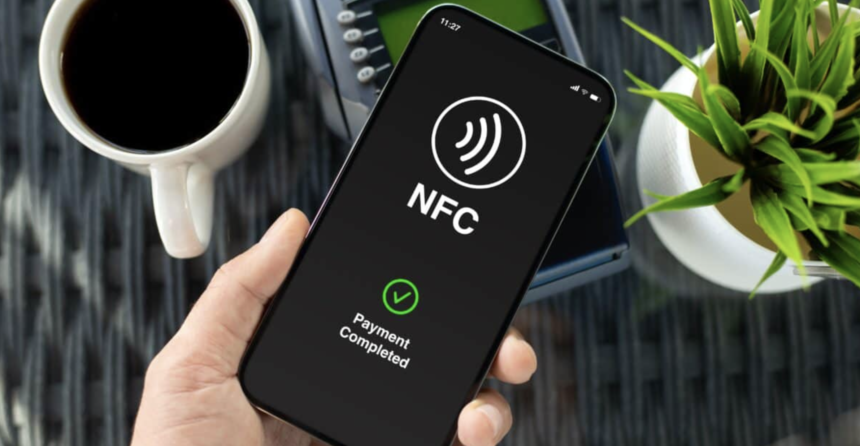
NFC stands for near field communication, the short range radio technology that lets a phone talk to a payment terminal, a ticket gate or a door lock when you hold it very close. When you tap a phone to pay in a shop, NFC carries the exchange between the phone and the terminal. The technology itself is shared and standardised, but access to it on a phone is controlled by the operating system maker.
How a Contactless Wallet Works
A digital wallet is an app that stores representations of your payment cards, and sometimes tickets, passes and keys, then presents them to a reader. In general terms, a wallet needs three things to function at a shop counter: permission to use the phone’s NFC hardware, a secure place to keep the card credentials, and an agreement with the card network or bank. Of those, the first is the one the CMA is looking at. If the operating system restricts NFC access so that only its own wallet can use it for payments, a rival wallet cannot offer the same tap and pay experience, however good it is.
What the CMA Has Proposed
The GOV.UK page says the CMA is working to open NFC access on iOS for third party digital wallet competitors. On 20 October 2026 it published a consultation on a proposed conduct requirement covering that access, with the stated standard that terms should be fair, reasonable, transparent and non-discriminatory. Those four words are common in competition and regulation, and they are often grouped under the shorthand FRAND. In plain terms, they mean that Apple would have to set terms for access that are open to inspection, that do not unfairly favour its own wallet, and that treat comparable rivals in a comparable way.
The call for evidence on NFC access that the CMA published on 30 June 2026 came first. That order of events is worth noticing, because it shows the October proposal grew out of a period of information gathering and was not announced out of nowhere.
What Might Change for Users
If rival wallets did gain access, a person with an iPhone might eventually see more choice in how they pay by tap. We want to be careful here. This is a possible outcome, not a promise, and the sources we reviewed do not say what will change for users in practice or when. A proposal in consultation can be revised, delayed or abandoned, and even a final rule would need to be put into effect by Apple and by wallet providers before any change reached a shop counter.
Who Is Affected
The group most directly affected is firms that want to build or run payment wallets on the iPhone, along with Apple itself. Banks, card issuers and payment companies that might offer their own wallet are the next circle. Ordinary users sit at the edge of that circle for now, and they will mostly learn of any change through app updates or bank announcements, as potential beneficiaries if the rule goes ahead and if companies choose to launch new wallets. Android phones are not the subject of the NFC proposal, according to the page we reviewed, which describes the consultation as concerning Apple’s mobile platform.
Steering and the Rest of the Roadmap
The CMA’s programme is wider than wallets. Several other items remain open, and the GOV.UK page lists them as next steps. Knowing which items are consultations, which are plans and which are promises will help you avoid reading too much into any single headline.
Steering Explained
Steering means allowing an app to tell users about cheaper options available outside the app store. A common example is a subscription app that can sell its service for less on its own website than inside a store, where the store takes a commission. If the app is not allowed to mention the website price, or to link to it, the user may never learn that there is a cheaper route. In general terms, the question regulators ask is whether the platform’s rules stop developers from communicating with their own customers.
According to the page, the CMA consulted on steering conduct requirements for Apple and for Google on 30 June 2026, and it published the responses to those consultations on 14 August 2026. The page text is unclear about the timing of any steering measures, because it mentions the first half of 2026, a period that has already passed, so we cannot say when a decision will arrive. We flag that uncertainty openly and recommend checking the page for updates.
Browsers and the WebKit Restriction
The listed next steps include work on Apple browsers, including removing what the page calls the WebKit restriction. A browser engine is the core software that turns web code into the pages you see. In general knowledge terms, Apple has required browsers on the iPhone to use its WebKit engine, which limits how different from one another iPhone browsers can be. The page names the topic as upcoming work, and our sources give no detail on timing or outcome.
Connected Devices and Other Interventions
The page also lists interoperable access for connected devices on Apple’s platform. Connected devices are products such as smartwatches, earbuds and similar accessories that depend on the phone for some of their features. Alongside these, the page mentions other roadmap interventions and monitoring, including of artificial intelligence. Each of those items is a signal of where the regulator may look next, not a decision.
A Practical Plan for Readers
Most readers do not need to change anything today. The proposals are early, and nothing in the sources we reviewed says that a setting on your phone will behave differently next week. There are still sensible things to do, and the steps below are written as general information, not as financial or legal advice.
Step 1:
Note your phone platform. If you use an iPhone, the NFC proposal is the item most likely to touch you. If you use an Android handset, the steering and app store items are the ones to watch, and the wallet proposal is not aimed at your phone according to the page we reviewed.
Step 2:
Leave your current wallet alone. Your existing cards, passes and tap to pay settings will carry on working as they do now. There is no reason to remove, re-add or switch anything because of a consultation.
Step 3:
Bookmark the CMA programme page on GOV.UK. It carries a dated update history, which makes it easy to see whether anything new has been added since your last visit. Check it every few weeks and not every day, because the entries so far have come at intervals of weeks or months.
Step 4:
Decide whether you want to respond. Consultations are open to individuals as well as to companies. If you have a view on wallets, you can read the proposal and send comments. The closing date is not in the reviewed sources of facts we hold, so find it on the official page before you plan anything.
Step 5:
Be cautious about any message that mentions a new wallet. Whenever a change to payments is in the news, scammers tend to follow with texts and emails. A regulator consultation does not require you to click anything or share card details, and a message claiming otherwise should be treated with suspicion.
A Simple Decision Table
The table below turns the steps into a quick guide to what to do in common situations. It is general information only.
| Your situation | Sensible action now | What can wait |
| You use an iPhone and tap to pay | Keep using your current wallet | Trying any new wallet until one is offered by a firm you trust |
| You use an Android phone | Watch the steering and app store items | The NFC proposal, which concerns Apple |
| You run a small app business | Read the commitments and consider responding | Changing your pricing until rules are final |
| You work in payments or banking | Read the consultation closely and consider a reply | Product plans that depend on a final rule |
| You are simply curious | Bookmark the CMA page | Checking it more than every few weeks |
Open Questions and Data Limits
A good explainer should say plainly where the evidence stops. Here is what we do not know, based on the sources we reviewed, which are the official GOV.UK page and its update history.
The closing date of the NFC consultation is not in our material, so we cannot say how long the public has to respond. The final decision on the proposed requirement is not known, nor is whether the wording will change after the replies are read. We have no information on fees, meaning whether Apple could charge wallet providers for access and how much. We also do not know what will change for users in practice, or when. Anyone who tells you they know those answers today is guessing.
On timing, there is a conflict inside the page itself that we should state openly. The material on steering mentions the first half of 2026 as a timeframe, yet the consultations on steering were only published at the end of June 2026 and the responses in August 2026. We have therefore not picked a date for any steering measure and we suggest treating the timing as unclear until the CMA says otherwise.
What to Ignore
Ignore headlines that say Apple has been forced to open the iPhone or that cheaper payments have arrived. A consultation proposal is not a final rule. Ignore social media posts that give specific dates for new wallets, because the sources we reviewed give none. Ignore any claim that the commitments are already known to have failed, since the page says only that the CMA will consider formal requirements if they prove ineffective or are breached.
What to Watch
Watch for the closing date and the final decision on the NFC proposal, for any publication of steering measures, and for movement on browsers and connected devices. The page also lists monitoring that includes artificial intelligence, so future updates may broaden beyond today’s topics. Because the page is updated at irregular intervals, a quick look every few weeks is enough.
A Note on General Knowledge
Several explanations in this article, such as how NFC wallets work, what steering means in practice and how conduct requirements usually progress, come from general knowledge and not from the dated facts on the official page. Technology and regulation change, so details may have changed since we wrote this, and readers should check the official source for the current position. Nothing here is legal or financial advice.
Frequently Asked Questions
Will Apple Let Me Use Other Wallets Soon?
Not yet, and the sources we reviewed give no date. The CMA published a consultation on 20 October 2026 on a proposed rule to open NFC access on iOS to third party wallet competitors, but a proposal can change. Even after a final decision, wallet providers and Apple would need time to put it into practice.
Does the NFC Proposal Apply to Android Phones?
According to the GOV.UK page, the consultation concerns Apple’s mobile platform and NFC access on iOS. Google was designated alongside Apple and has given commitments of its own, but the NFC proposal described on the page is directed at Apple. Android users may be more interested in the steering and app store items.
How Can I Respond to a CMA Consultation?
Consultations are published on the GOV.UK site, with instructions on how to submit views. Individuals, businesses and organisations can all take part in general. Check the official consultation page for the closing date, because it is not in the material we reviewed.
Is Apple or Google Being Fined?
Nothing in the sources we reviewed mentions a fine. Strategic market status is a designation, not a penalty, and the CMA proceeded on the basis of voluntary commitments from both companies. The page does say that formal requirements will be considered if the commitments prove ineffective or are breached.
Will Apps Get Cheaper Because of Steering Rules?
That is possible but not promised. Steering means letting apps tell users about cheaper options outside the app store, and the CMA consulted on steering requirements in June 2026, publishing responses in August. The timing of any measures is unclear on the page, and any price change would depend on what developers choose to do.