

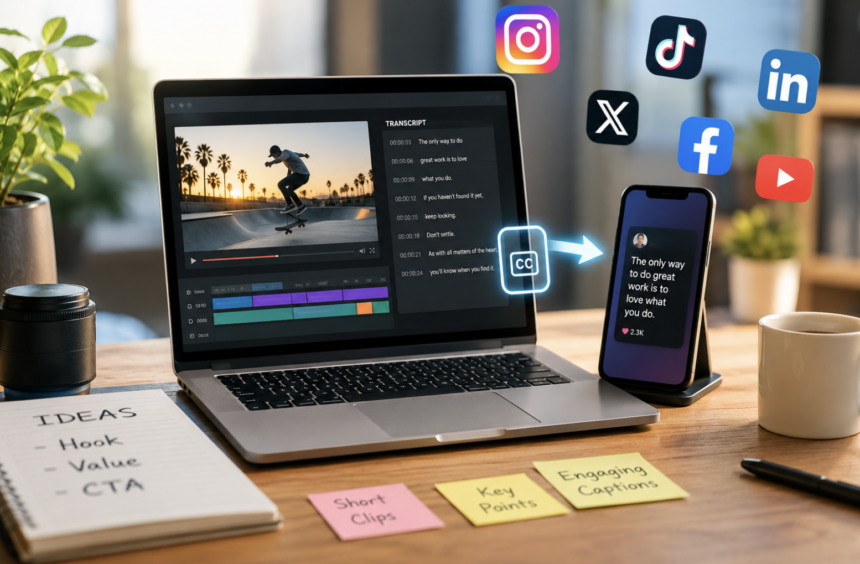
A great video can attract attention for seconds, but its value should not end when the video stops playing. Every spoken sentence can become a caption, blog section, social post, email, or search-friendly resource. That opportunity makes video to text for social media marketing an increasingly valuable content strategy in 2026.
Instead of creating every piece of content from scratch, marketers can extract useful information from existing videos. Then, they can reshape that information for different audiences and platforms.
However, effective transcription involves more than converting speech into words. Marketers must edit transcripts, identify valuable insights, add captions, improve accessibility, and adapt content for each platform. With the right workflow, one video can support an entire content campaign.
Why Video to Text Matters for Social Media Marketing
Social media users consume content in many different ways. Some watch videos with sound, while others scroll silently during work breaks or public commutes. Therefore, marketers need content that remains useful without depending entirely on audio. A transcript creates a written version of the video’s message. Meanwhile, captions allow viewers to follow spoken information directly inside the video.
Search engines also benefit from clear text surrounding multimedia content. Although transcription does not guarantee higher rankings, useful text can provide additional context for discoverability. More importantly, transcripts help marketing teams extend the lifespan of existing content.
A single webinar could become several LinkedIn posts. It could also produce an email newsletter, short-video scripts, blog ideas, and frequently asked questions. Consequently, transcription can reduce repetitive content production while increasing the number of usable marketing assets.
The Biggest Benefits of Video Transcription for Social Media
Reach More Silent Viewers
Many people encounter social videos while their devices remain muted. Captions allow these users to understand the message without activating sound. Therefore, subtitles can make important information accessible during silent viewing situations. Captions also help viewers understand unfamiliar accents or fast conversations.
Create More Content From Existing Videos
A transcript provides a searchable content source for marketers. For example, a 30-minute interview might contain dozens of useful statements. Writers can identify those statements and transform them into short posts.
Furthermore, the transcript can provide material for newsletters, articles, carousel posts, and promotional copy. This approach turns one content asset into multiple distribution opportunities.
Improve Content Accessibility
Video transcription can make content more accessible to people who cannot hear audio clearly. Captions also help viewers who prefer reading while watching. In addition, written transcripts provide another way to consume educational or informational material. Accessibility should therefore become part of a broader content strategy rather than an afterthought.
Support Multilingual Marketing
Businesses targeting international audiences often need translated content. A transcript creates a practical starting point for translation. Instead of translating an entire video manually, marketers can first convert speech into text.
They can then translate the transcript and create subtitles for different markets. As a result, brands can localize campaigns without producing separate videos from scratch.
Save Content Production Time
Manual transcription can consume hours, especially with interviews, webinars, and podcasts. AI-powered transcription tools can create an initial draft much faster. Editors can then focus on accuracy, tone, and content strategy. Therefore, automation can reduce repetitive work while keeping human review in the process.
How AI Is Changing Video to Text Workflows in 2026
AI transcription has moved beyond basic speech recognition. Modern platforms can identify speech, separate speakers, recognize multiple languages, and organize long recordings into usable text. Some tools can also summarize conversations and identify important sections.
This development changes the marketer’s role. Instead of spending most of the time typing, marketers can spend more time deciding what content deserves attention. However, AI-generated transcripts still require human review.
Names, technical terms, brand references, numbers, and industry-specific language can create mistakes. Background noise can also affect transcription quality. Therefore, the strongest workflow combines automation with editorial judgment.
Best Video Formats to Convert Into Text
Almost any spoken video can become a valuable text source.
Webinars and Online Events
Webinars often contain detailed explanations and expert opinions. Transcribing them creates a long-form resource that teams can reuse for multiple campaigns.
Interviews and Podcasts
Interviews contain natural questions, answers, opinions, and memorable statements. These elements can become social hooks or article sections.
Product Demonstrations
Product videos can produce detailed explanations of features and benefits. Marketing teams can transform those explanations into product descriptions, FAQs, tutorials, and social captions.
Educational Videos
Tutorials contain step-by-step information that works particularly well in written formats. A transcript can become a guide, checklist, blog post, or knowledge-base article.
Customer Testimonials
Customer videos can contain authentic statements about product experiences. With appropriate permission and editing, selected statements can support social proof campaigns.
A Smarter Video-to-Text Workflow for Social Media
Creating useful text requires more than pressing a transcription button.
Step 1: Select the Right Video
Start with videos containing meaningful spoken information. Prioritize interviews, educational recordings, demonstrations, webinars, and expert discussions. Avoid spending time transcribing videos that contain little useful dialogue.
Step 2: Generate the Initial Transcript
Upload the video to a suitable transcription platform. Some services support direct uploads, while others accept links from supported platforms. Choose a tool based on language coverage, file limits, speaker recognition, export options, and processing speed.
Step 3: Review the Transcript Carefully
Never publish an unreviewed AI transcript. Check names, numbers, product terms, company names, quotations, and technical vocabulary. Also remove unnecessary filler words when creating polished marketing copy.
The goal should not always be word-for-word perfection. Instead, create an accurate and readable representation of the original message.
Step 4: Identify Content Opportunities
Read the transcript for strong ideas. Look for surprising statements, useful statistics, expert opinions, questions, customer problems, and actionable advice.
Then separate those ideas into individual content opportunities. One transcript can support several social media posts when marketers identify its strongest themes.
Step 5: Create Captions and Subtitles
Convert the reviewed transcript into properly timed captions. Use formats such as SRT or VTT when appropriate. For short-form platforms, marketers can also create visually engaging burned-in captions. Keep captions readable and avoid placing too much text on the screen at once.
Step 6: Adapt Content for Each Platform
Never assume that one transcript should become the same post everywhere. LinkedIn may favor professional insights and concise analysis. Instagram can work well with short captions, carousels, and visually highlighted statements.
TikTok and Reels usually benefit from quick hooks and short text segments. YouTube descriptions can use transcripts to support chapters, summaries, and additional context. Therefore, platform-specific editing is essential.
How to Turn One Transcript Into Multiple Social Posts
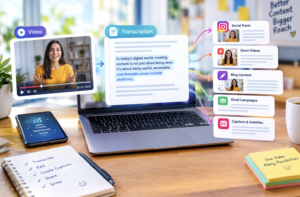
A transcript becomes especially powerful when marketers treat it as a content database. Start by extracting the strongest statement from the video. Turn that statement into a short social hook. Next, identify a problem discussed in the recording. Use it as the opening for an educational post. Then, extract several related points and create a carousel structure.
You can also turn an expert explanation into a short video script. Finally, convert the major ideas into an email or longer blog article. This method creates a connected content ecosystem rather than isolated posts.
SEO Advantages of Converting Video Into Text
Video transcription can support SEO when marketers use the resulting content intelligently. Written material gives search engines additional context about the subject of a multimedia asset. However, simply publishing a massive transcript does not automatically create strong SEO performance.
Instead, marketers should organize important information around search intent. Use descriptive headings, relevant keywords, concise paragraphs, and helpful explanations.
Also consider adding structured FAQs when the video answers common audience questions. The transcript should support the user experience rather than exist only for search engines.
How to Optimize Transcripts for Search Intent
Start by identifying the main topic discussed in the video. Then determine what users might search when looking for that information.
Include relevant terms naturally throughout the edited content. Avoid repeating keywords unnecessarily because readability should remain the priority.
Furthermore, divide long transcripts into logical sections. Use headings that describe the actual information beneath them. This structure helps readers scan the page quickly.
Choosing a Video Transcription Tool
Different marketing teams have different requirements. Some need rapid AI transcription for daily social content. Others need multilingual support for international campaigns. When selecting software, examine its supported file formats and maximum file size. Also check whether it supports speaker identification and timestamped exports.
Language coverage can become especially important for global brands. Editing features matter as well because marketers should correct transcripts before publication.
Additional features such as summaries, translation, keyword search, and collaboration can further simplify the workflow. The best tool is not necessarily the one with the longest feature list. Instead, choose the platform that fits your actual production process.
Common Mistakes to Avoid With Video Transcription
Publishing the Raw Transcript
Spoken language often contains repetition and filler words. A raw transcript can therefore feel difficult to read. Always edit the text before publishing it as an article or social post.
Ignoring Brand Voice
A transcript reflects natural speech, not necessarily your written brand style. Adjust wording while preserving the speaker’s original meaning.
Skipping Human Review
AI can make subtle mistakes that change meaning. Always review important information before publication.
Using One Version Everywhere
Different platforms have different audiences and content expectations. Adapt the message instead of copying identical text across every channel.
Forgetting Permissions
Marketers should have appropriate rights before repurposing interviews, customer videos, or third-party recordings. Content reuse should respect ownership, privacy, and applicable agreements.
How to Measure the Results
Transcription itself is not the final marketing goal. Measure whether the resulting content improves meaningful outcomes. Track video engagement, caption usage, social interactions, website visits, content shares, and conversions. For search-focused content, monitor impressions, clicks, rankings, and organic traffic.
For repurposed social posts, compare engagement between transcript-based content and traditionally produced posts. These measurements help identify which types of videos create the strongest marketing opportunities.
The Future of Video-to-Text Content Marketing
Video and written content are no longer separate marketing worlds. AI makes it easier to move information between formats. A spoken explanation can become a written guide. A written guide can become a video script. A customer interview can become a social campaign. This creates a more efficient content loop.
In 2026, successful marketers will increasingly focus on extracting maximum value from every content asset. Video transcription fits naturally into that strategy because it transforms spoken information into flexible, reusable material.
Conclusion
Video to text for social media marketing offers a practical way to expand the value of existing video content. Instead of allowing valuable information to disappear after publication, marketers can turn spoken conversations into searchable and reusable assets.
The process starts with accurate transcription. Then, careful editing, caption creation, content repurposing, and platform optimization create additional opportunities. Most importantly, marketers should treat transcripts as raw strategic material rather than finished content.
With AI assisted tools and human editorial review, one video can support an entire campaign across social media, search, email, and other channels. The smartest approach is simple: create valuable video once, then find more ways to make that value work.
Frequently Asked Questions
1. What is video-to-text transcription?
Video-to-text transcription converts spoken dialogue from a video into written text.
2. Why should marketers transcribe social media videos?
Transcripts help marketers create captions, posts, articles, emails, and other reusable content.
3. Can video transcripts improve SEO?
Useful transcripts can provide search engines with additional textual context around video content.
4. Is AI transcription accurate enough for marketing?
AI transcription can save substantial time, but marketers should review important text before publishing.
5. Can transcripts create social media posts?
Yes, marketers can extract quotes, insights, questions, and key ideas from transcripts.
6. Can video transcripts support multilingual marketing?
Yes, transcripts can provide a convenient foundation for translating subtitles and written content.
7. What videos should marketers transcribe first?
Webinars, interviews, tutorials, podcasts, demonstrations, and expert discussions usually offer strong opportunities.
8. Should marketers publish the entire transcript?
Not always, because editing and restructuring usually create a more readable experience.
9. Can transcription help create video captions?
Yes, reviewed transcripts can be synchronized with video timestamps to create subtitle files.
10. How can marketers repurpose one video?
One video can produce social posts, captions, blog content, newsletters, quotes, FAQs, and short-video scripts.
11. Does transcription make videos accessible?
Captions and transcripts can make video information easier to consume for people with different viewing needs.
12. What should marketers check after AI transcription?
Review names, numbers, technical terminology, speaker labels, punctuation, and statements that affect meaning.
13. Is manual transcription better than AI transcription?
Manual transcription can offer careful accuracy, while AI transcription usually provides much greater speed and scalability.
14. Can transcription reduce content production costs?
Yes, repurposing existing videos can reduce the need to create every marketing asset from scratch.
15. What is the biggest transcription mistake marketers make?
The biggest mistake is treating an unedited transcript as finished marketing content.