


The world around us is in constant flux, a swirling vortex of technological leaps, evolving economies, and societal shifts that redefine our daily lives. Yet, for generations, the bedrock of our educational systems has remained remarkably static, often struggling to keep pace with the very future it aims to prepare us for. But what if there was a “new school” of thought, a transformative approach designed not just to adapt to change, but to champion it? This is the essence of Nova Scola, a powerful concept emerging as the vital blueprint for tomorrow’s learning, promising to ignite potential and cultivate a generation ready to thrive in an ever-unfolding future.
The Great Awakening: What is Nova Scola and Why It Matters Now More Than Ever
Redefining the “New School”
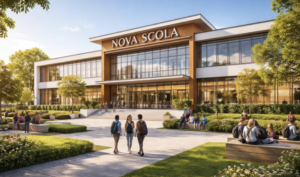
The term Nova Scola, rooted in Latin, simply translates to “new school.” However, its meaning extends far beyond a literal institution; it represents a profound philosophical shift in how we approach education, knowledge, and intellectual growth. It is a mindset that champions the continuous renewal of learning, ensuring that education remains dynamic, relevant, and responsive to the complex demands of our contemporary world. We are moving away from rigid, one-size-fits-all models towards something far more adaptive and human-centered.
A Call for Educational Evolution
In an age defined by rapid technological advancements, shifting job markets, and complex global challenges, traditional educational frameworks often fall short. They were largely designed for an industrial era, focusing on rote memorization and standardized testing, which can leave students disengaged and ill-equipped for the complexities of modern life. Nova Scola emerges as a direct response to this critical gap, advocating for an educational system that not only imparts knowledge but also cultivates essential 21st-century skills like adaptability, creativity, and critical thinking. It’s about empowering learners to lead change, not just react to it.
Igniting Potential: The Foundational Philosophy of Nova Scola Education
Learning That Truly Resonates
At its very heart, the philosophy of Nova Scola revolves around the powerful idea that learning should be deeply meaningful and personally relevant. It moves beyond merely filling minds with information, instead focusing on developing the whole person through active engagement, questioning, and critical analysis. This fundamental shift ensures that students engage deeply with content, fostering a profound understanding rather than passive absorption of facts.
The Pillars of a Progressive Pedagogy
The Nova Scola approach is built upon a set of core principles that redefine the educational experience, prioritizing holistic growth and future readiness. We emphasize personalized learning, recognizing that every student possesses unique strengths, weaknesses, and learning styles, thus tailoring instruction to individual needs. This is complemented by a strong focus on holistic development, nurturing emotional intelligence, creativity, and problem-solving alongside traditional academic subjects. Furthermore, critical thinking is valued over mere memorization, encouraging learners to analyze, interpret, and apply knowledge across disciplines.
Cultivating Future-Ready Individuals
Nova Scola also champions project-based and real-world problem-solving, encouraging students to apply their knowledge in practical, experiential settings and collaborative environments. The curriculum is inherently interdisciplinary, connecting subjects like science, humanities, and technology to mirror the complex nature of real-world challenges. Moreover, a strong emphasis on collaboration and community engagement fosters dialogue, teamwork, and partnerships among students, educators, and the wider community, building crucial interpersonal skills and cultural awareness. This comprehensive approach ensures that our learners are not just prepared for examinations, but for the full complexity of modern life.
The Digital Renaissance: Technology and Real World Immersion in Nova Scola
Technology as a Learning Ally
In the Nova Scola framework, technology is not just an add-on; it is a central, transformative force that reshapes the learning landscape. We embrace digital platforms, interactive tools, and AI-powered solutions to make education more accessible, engaging, and deeply personalized for every learner. This strategic integration allows for adaptive learning systems that cater to individual paces and interests, ensuring knowledge becomes an interactive journey rather than a static read.
Immersive Digital Environments
Modern learning environments under the Nova Scola model look dramatically different from traditional classrooms, moving beyond rigid rows of desks. We utilize virtual classrooms with interactive whiteboards, breakout rooms for group projects, and live polling tools, enabling real-time collaboration among students from diverse backgrounds. AI-powered adaptive platforms analyze student performance data in real time, identifying patterns of strength and difficulty that would be challenging for a human teacher to track across an entire class. This purposeful use of technology enhances human connection and creativity, making learning deeper, more engaging, and profoundly memorable.
Bridging the Gap to Reality
Nova Scola understands that true learning extends beyond classroom walls, emphasizing real-world immersion and practical application. Our approach integrates practical skills alongside academic knowledge, focusing on competencies such as communication, critical thinking, collaboration, and digital literacy, which are essential for success in today’s competitive global environment. By incorporating interdisciplinary subjects and emerging fields, the curriculum remains flexible and responsive to societal needs, ensuring students are prepared for evolving career landscapes and can even create their own opportunities through innovation and entrepreneurship.
Proof in Practice: The Measurable Impact of the Nova Scola Difference
Tangible Benefits for Learners
The Nova Scola approach is not merely a theoretical ideal; it consistently demonstrates real, measurable results in diverse educational settings worldwide. We observe a significant increase in higher student engagement, marked by a noticeable drop in apathy and a surge in curiosity and intrinsic motivation among learners. This heightened engagement directly correlates with improved academic performance, as students in Nova Scola-inspired programs often exhibit stronger critical thinking skills and better long-term retention of knowledge.
Fostering Well-Rounded Individuals
Beyond academic metrics, the holistic nature of Nova Scola contributes significantly to students’ overall well-being. We see evidence of better emotional health and resilience, as the focus on social-emotional skills equips students to manage stress, navigate challenges, and bounce back from setbacks more effectively. This comprehensive development prepares individuals not only for academic and professional success but also for active and responsible participation in society, fostering global citizenship and cultural awareness. The ability to adapt and think critically ensures our learners are ready for diverse environments and embrace lifelong learning.
Charting the Course: Navigating the Roadblocks and Embracing the Nova Scola Revolution
Overcoming Implementation Hurdles
While the vision of Nova Scola is undeniably inspiring, its practical implementation is not without its share of challenges. One of the primary concerns we face is resistance to change from deeply entrenched traditional educational systems, including institutions, educators, and even some learners who are accustomed to conventional methods. Transitioning to a more flexible and personalized approach demands significant shifts in infrastructure, substantial training for educators, and a profound change in mindset across all stakeholders.
Ensuring Equity and Balance
Another critical challenge for Nova Scola is ensuring equity and access to the digital resources and technological tools that are central to its model. We must actively address potential disparities to guarantee that all learners, regardless of their socioeconomic background or geographical location, have equal opportunities to benefit from this transformative approach. Furthermore, striking the right balance between innovation and a solid educational framework is essential; too much emphasis on novelty without clear objectives and standards can lead to inconsistency. Developing new, effective assessment methods that align with Nova Scola’s principles, moving beyond standardized testing, also remains an ongoing endeavor.
The Unfolding Future: Why Nova Scola is the Blueprint for Tomorrow’s Education
A Vision for Continuous Evolution
Nova Scola is not merely a temporary trend; it represents a fundamental and enduring shift in educational philosophy, positioning itself as the definitive blueprint for tomorrow’s learning. As technology continues its relentless march forward, the integration of cutting-edge tools like artificial intelligence and machine learning holds immense potential to further enhance personalized learning experiences, providing even more precise and effective support for every student. These technologies can also empower educators with data-driven insights, enabling them to refine their teaching practices and optimize learning outcomes.
Global Reach and Collaborative Horizons
We anticipate that the influence and adoption of Nova Scola principles will continue to grow on a global scale, fostering a more interconnected and collaborative educational landscape. Digital platforms facilitate connections between learners from different parts of the world, allowing them to share ideas, collaborate on projects, and develop a profound sense of global citizenship. This international collaboration enriches the learning experience immeasurably, preparing students to thrive in an increasingly interdependent world. The future of Nova Scola hinges on our collective willingness to embrace this continuous evolution, recognizing education as a fluid, dynamic process rather than a fixed system.
FAQ’S
1. What does Nova Scola mean?
Nova Scola is a Latin phrase meaning “new school,” representing a modern educational philosophy.
2. Is Nova Scola a specific school?
It’s primarily a philosophy or framework, though some institutions adopt the name to reflect these principles.
3. What are the core principles of Nova Scola?
Key principles include personalized learning, technology integration, project-based learning, and holistic skill development.
4. How does Nova Scola differ from traditional education?
It moves beyond rote memorization and standardized testing to emphasize critical thinking, adaptability, and real-world application.
5. What role does technology play in Nova Scola?
Technology is central, enabling personalized learning, interactive experiences, and global collaboration through digital tools and AI.
6. What are the benefits of the Nova Scola approach?
Benefits include higher student engagement, improved academic performance, and better social-emotional skills.
7. Are there challenges in implementing Nova Scola?
Yes, challenges include resistance to change, ensuring equitable access to technology, and developing new assessment methods.
8. How does Nova Scola prepare students for the future?
It cultivates critical thinking, creativity, digital literacy, and adaptability, skills essential for tomorrow’s workforce.
9. Does Nova Scola support lifelong learning?
Absolutely, it instills a mindset of continuous growth and adaptation, essential for remaining relevant in an evolving world.
10. What is meant by “interdisciplinary curriculum” in Nova Scola?
It means connecting subjects to solve problems from multiple perspectives, mirroring real-world complexities.