

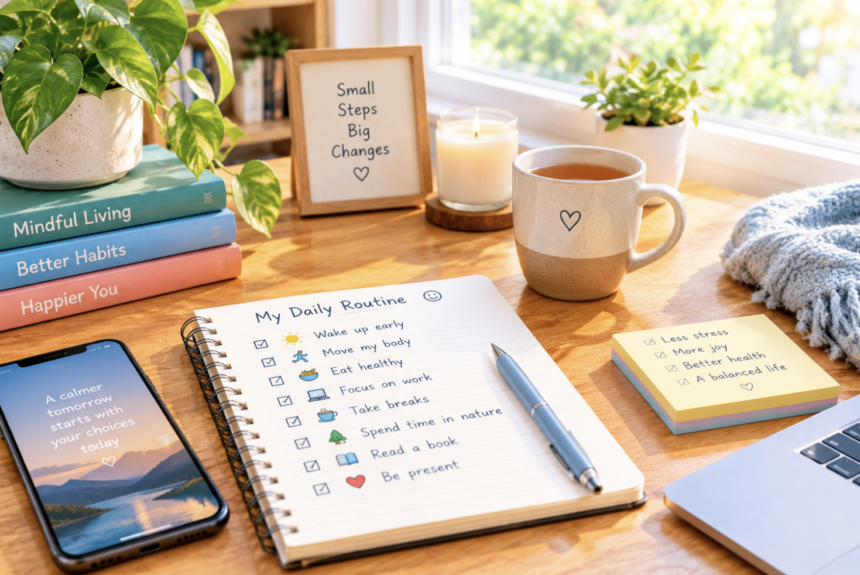
A marketing executive used to start every morning by scrolling through emails before her feet even hit the floor, rushing through breakfast while mentally drafting the day’s first three meetings. After a period of burnout forced a reassessment, she rebuilt her mornings around a slower pace: a proper breakfast eaten without a screen, a short walk before opening her laptop. Productivity didn’t suffer; if anything, her focus improved. This guide explores the principles behind slow living and how to build them into an ordinary week.
What Slow Living Means
Slow living is an approach to daily life that prioritises intentionality and presence over speed and constant busyness, encouraging people to do fewer things with full attention rather than many things partially.
- It’s not about doing everything slowly, but about choosing deliberately what deserves time and attention
- It often involves reducing unnecessary commitments rather than adding new activities
- It emphasises quality of experience over quantity of activities completed
- It can apply to work, meals, relationships, and how someone spends leisure time
Where the Slow Living Movement Originated
Slow living traces much of its modern popularity back to the slow food movement, which began in Italy in the 1980s as a reaction against the spread of fast food and the erosion of traditional, unhurried meals shared with others. That original focus on food gradually expanded into a broader philosophy applied to work, travel, parenting, and general lifestyle choices, united by a shared resistance to the assumption that faster is always better.
Practical Ways to Slow Down a Typical Morning
- Wait to check email or social media until after completing a morning routine
- Eat breakfast without a screen, even if only for ten minutes
- Build in a short buffer before the day’s first obligation rather than rushing straight into it
- Choose one calming activity, like stretching or reading, to start the day intentionally
Applying Slow Living Principles to Work
Slow living doesn’t require quitting a demanding job or abandoning ambition, but it can mean protecting focused blocks of time for deep work rather than allowing constant interruption, and resisting the urge to fill every open calendar slot automatically. Some professionals build in short breaks between meetings specifically to avoid the mental fatigue that comes from back-to-back calls without any recovery time.
Rethinking Meals as an Opportunity to Slow Down
Meals offer one of the most accessible entry points into slow living, since eating without a screen and paying attention to the actual experience of a meal, rather than treating it purely as fuel to consume quickly between tasks, is available to nearly everyone regardless of schedule. Even a single meal eaten mindfully each day can serve as a helpful anchor point within an otherwise fast-paced schedule.
Slow Living Doesn’t Mean Doing Less at Any Cost
- It’s about intentional choices, not blanket rejection of speed or efficiency
- Some tasks benefit from being done quickly and efficiently
- The goal is applying deliberate attention where it matters most, not everywhere equally
- Balance matters more than rigid adherence to any single philosophy
Overcoming the Guilt of Slowing Down
Many people trying to embrace a slower pace report feeling guilt, in cultures that closely associate busyness with productivity and personal worth. Recognising that constant busyness doesn’t reliably correlate with better outcomes, and that focused, unhurried attention often produces stronger results than frantic multitasking, can help ease this guilt over time.
Building a Slower Relationship With Technology
Much of what pulls daily life away from a calmer pace traces back to how technology is designed to capture and hold attention, through notifications, infinite scrolling feeds, and features specifically engineered to encourage frequent checking. Adopting slow living principles around technology often means turning off non-essential notifications, setting specific times to check messages rather than responding instantly to every alert, and being honest about which apps add value versus which ones simply consume time out of habit.
How Slow Living Intersects With Sustainable Consumption
Many people practising slow living naturally gravitate toward more sustainable consumption habits, choosing fewer, higher-quality purchases over frequent, disposable ones, and taking time to consider whether a purchase serves a real need before buying. This connection isn’t coincidental; both slow living and sustainable consumption share a common thread of resisting the pressure toward constant, unreflective acquisition in favour of more deliberate, considered choices.
Finding Community Support for a Slower Pace
Slowing down can feel isolating in a culture that still largely rewards visible busyness, which is part of why many people find it easier to sustain slow living habits alongside others pursuing something similar, whether through an informal friend group or an online community built around the philosophy. Sharing progress, challenges, and small wins with others attempting a similar shift tends to make the change feel less like swimming against a strong current entirely alone.
Slow Living and Its Effect on Physical Health
Beyond the mental and emotional benefits often associated with slow living, research on chronic stress suggests that constantly rushing through daily life can contribute to measurable physical health effects over time, including elevated cortisol levels and disrupted sleep patterns. Building in deliberate moments of slower pace throughout an ordinary day isn’t simply a pleasant lifestyle preference; it may support better physical health outcomes over months and years of sustained practice.
Adapting Slow Living Principles for Busy Parents
Parents juggling work, childcare, and household responsibilities sometimes assume slow living simply isn’t realistic for their situation, but many find that applying the principles selectively, protecting one unhurried family meal a week, or building in a short daily walk, still produces meaningful benefit even without a complete lifestyle overhaul. Small, sustainable adjustments tend to work far better for busy parents than attempting to adopt every slow living principle simultaneously, which often proves unsustainable and gets abandoned within weeks.
How Travel Habits Connect to the Slow Living Philosophy
Slow travel, spending extended time in fewer destinations rather than rushing through a packed itinerary covering many places briefly, has become a popular extension of slow living principles into how people plan holidays and time off. Travellers embracing this approach often report a deeper, more memorable connection to the places they visit compared to a whirlwind trip packed with rushed sightseeing, even though slow travel typically means seeing fewer discrete locations overall.
The Historical Roots of Resistance to Constant Busyness
Concerns about the pace of modern life predate the current slow living movement, with philosophers and writers across many centuries periodically warning against the erosion of leisure and reflection in favour of constant productive activity. Understanding this longer historical context helps frame slow living not as a fleeting modern trend but as a recurring response to a tension that has accompanied periods of rapid technological and economic change throughout history.
Measuring Whether Slow Living Is Working for You
Rather than adopting slow living principles purely because they sound appealing, periodically reflecting on whether specific changes have produced a sense of improved wellbeing helps distinguish practices worth continuing from ones that aren’t delivering meaningful benefit for a particular individual’s circumstances. What works well for one person’s temperament and life situation won’t necessarily suit another’s, making this kind of honest, ongoing personal evaluation more useful than following a rigid, one-size-fits-all set of rules.
Slow Living in the Context of Professional Ambition
Some professionals worry that embracing a slower pace signals reduced ambition or commitment to their career, but many high performers report that protecting focused time and avoiding constant reactive busyness improves the quality of their work rather than limiting their professional achievement. Reframing slow living as a strategy for sustainable, high-quality output over the long term, rather than a rejection of ambition altogether, helps address this common and understandable concern.
Slow Living Applied to Financial Decision-Making
The same principles of intentionality that define slow living can extend usefully into financial decisions, encouraging a pause before major purchases rather than impulsive spending, and a more deliberate approach to reviewing subscriptions, recurring costs, and overall spending patterns. This slower, more considered approach to money often produces both better financial outcomes and a reduced sense of financial anxiety, since decisions made with reflection tend to align better with someone’s actual values and priorities than reactive, impulsive spending choices.
Common Obstacles That Derail a Slow Living Practice
- External pressure from a fast-paced workplace culture that doesn’t accommodate a slower approach
- Social comparison driven by others’ visibly busy, achievement-focused lifestyles
- Difficulty distinguishing between necessary urgency and habitual, unnecessary rushing
- How long habit change typically takes to feel natural
Slow Living and Its Relationship to Creativity
Many people report that creative thinking flourishes more readily during unhurried, unstructured time than during periods of constant busyness and rapid task-switching, a pattern some researchers connect to how the brain processes and connects ideas differently during relaxed, wandering attention compared to focused, urgent activity. Protecting unstructured time, free from a specific agenda or goal, may therefore serve a practical creative purpose beyond simply feeling pleasant, for anyone whose work depends on original thinking or problem-solving.
Applying Slow Living Principles to Social Media Consumption
Beyond simply reducing notifications, some people practising slow living choose to curate their social media consumption more deliberately, unfollowing accounts that consistently trigger comparison or anxiety and following ones that align with a calmer, more intentional daily rhythm. This curation process, revisited periodically as interests and needs change, helps ensure that time spent on social media supports rather than undermines the broader slower pace someone is working to build into their daily life.
A Quick Note on Slow Living During High-Pressure Life Seasons
Certain life seasons, like a major deadline or a family emergency, don’t accommodate a slower pace, and recognising these as temporary rather than abandoning slow living principles entirely helps someone return to a calmer rhythm once the pressing circumstances have passed.
Slow Living and Its Connection to Environmental Awareness
Many people who adopt slow living principles report a growing awareness of their broader environmental impact, partly because slowing down naturally creates more space to notice and question consumption habits previously followed on autopilot without much reflection. This connection isn’t universal or automatic, but the overlap between slow living communities and environmentally conscious lifestyle choices appears often enough to suggest a meaningful, if not perfectly predictable, relationship between the two.
Teaching Slow Living Principles to the Next Generation
Parents interested in passing on slow living values to children face the challenge of doing so within a broader culture that often moves in the opposite direction, filled with scheduled activities, constant digital stimulation, and cultural messaging that equates busyness with success. Modelling a calmer pace consistently, rather than simply explaining the concept, tends to influence children more effectively, since children generally absorb behavioural patterns more readily from what they observe than from what they’re told.
A Quick Note on Slow Living and Seasonal Rhythms
Some people find it easier to embrace a slower pace by aligning daily habits more closely with natural seasonal rhythms, allowing energy and activity levels to shift gradually across the year rather than maintaining an identical, unchanging pace regardless of season, weather, or available daylight.
Slow Living Within Different Cultural Contexts
Slow living principles resonate differently across different cultural contexts, with some societies already embedding many of these values into existing traditions around mealtimes, rest, and work-life balance, while others operate within cultural norms that make adopting a slower pace feel like a more deliberate departure from prevailing expectations. Recognising this cultural variation helps explain why slow living advice originating from one cultural context doesn’t always translate directly or easily into another.
Slow Living and the Practice of Single-Tasking
Multitasking, long assumed to be an efficient way to accomplish more, has been shown in research to often reduce overall quality and increase completion time compared to focusing on one task fully before moving to the next, making single-tasking a practical, evidence-backed slow living habit worth deliberately cultivating.
A Quick Note on Slow Living and Weekend Planning
Overscheduling weekends with back-to-back activities can undermine the very rest a weekend is meant to provide, and deliberately leaving unstructured blocks of time, even just a single free afternoon, often restores a sense of calm that a fully packed schedule tends to quietly erode.
A Quick Note on Slow Living and Household Rituals
Establishing small, repeated household rituals, such as a shared Sunday breakfast or a brief evening walk, gives a slower pace a reliable anchor within an otherwise busy week, making the practice easier to sustain than relying purely on spontaneous, unplanned moments of calm.
A Quick Note on Slow Living and Decision Fatigue
Reducing the number of minor daily decisions, such as planning meals in advance or simplifying a wardrobe, frees up mental energy for the decisions that matter, a practical benefit that complements the broader slow living emphasis on intentional attention.
A Quick Note on Slow Living and Gift-Giving Habits
Some people extend slow living principles into how they approach gift-giving, favouring fewer, more thoughtfully chosen gifts over a larger quantity of hastily selected items, a shift that often ends up meaning more to the recipient than volume ever consistently manages to achieve.
Final Thoughts
Slow living offers a practical antidote to the constant busyness many people mistake for productivity, encouraging intentional attention rather than rushing through each day on autopilot. Starting with one small, consistent change, rather than attempting a complete lifestyle overhaul overnight, tends to produce habits that last.
Frequently Asked Questions
Is slow living only realistic for people with flexible schedules?
While flexibility helps, many slow living principles, like eating without a screen or building in a short morning buffer, can be applied even within a demanding, fixed schedule.
Does slow living mean giving up ambition or career goals?
No, slow living is compatible with ambitious goals; it’s more about how someone pursues those goals day to day than about abandoning them altogether.
How long does it take to notice benefits from slowing down?
Many people report feeling calmer within days of making small changes, though building lasting habits around a slower pace typically takes several weeks of consistent practice.
Can slow living principles apply to raising children?
Yes, many parents apply slow living principles by reducing over-scheduled activities and prioritising unstructured time, allowing children more space for independent play and rest.
Is slow living the same as minimalism?
They overlap but aren’t identical; minimalism focuses primarily on reducing physical possessions, while slow living focuses more broadly on pace and intentionality across all areas of life.
What’s a simple first step toward slow living?
Choosing one daily activity, such as a morning coffee or an evening walk, to do without a phone or other distraction is a manageable starting point many people find sustainable.