

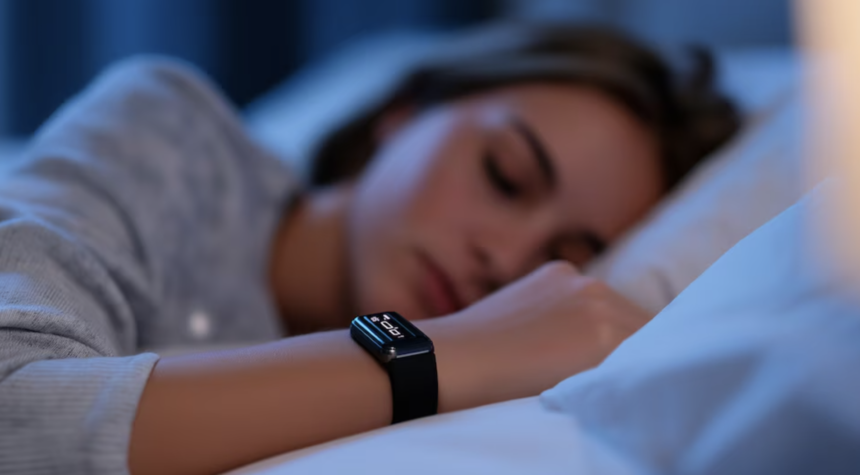
Wake up wearing an Oura Ring or a Whoop band and the app greets you with a sleep score, a readiness percentage, and a breakdown of light, deep, and REM sleep down to the minute. It looks precise, almost clinical, which is exactly why so many people trust the number without asking how it was calculated. The truth is more nuanced: consumer sleep trackers are truly useful for spotting patterns and trends, but the minute-by-minute sleep stage breakdown they present with such confidence is an estimate built from movement and heart rate data, not a direct read of what your brain is doing. Knowing the difference changes how much weight to put on that morning score.
How Sleep Trackers Measure the Night
Every consumer sleep tracker, whether a ring, a wristband, or a smartwatch, relies on a small set of sensors to infer sleep stages, since none of them can directly measure brain activity the way a clinical polysomnography study does in a sleep lab. The core method is called actigraphy: tracking movement through an accelerometer to detect periods of stillness that likely correspond to sleep, combined with photoplethysmography, a light-based sensor that measures heart rate and, in more advanced devices, blood oxygen saturation.
From these raw signals, an algorithm estimates when you fell asleep, when you woke up, and which stage of sleep you were likely in at any given moment. Heart rate variability, the tiny fluctuations in time between heartbeats, plays an especially large role in distinguishing REM sleep from deep sleep, since the two stages produce noticeably different patterns. Skin temperature, respiratory rate, and even ambient light or sound in some setups add further data points that refine the estimate. The sensors and signals most trackers rely on include:
- Accelerometer data: detects movement and stillness to establish the broad sleep and wake windows.
- Heart rate and heart rate variability: used to infer sleep stage transitions and overall nervous system activity.
- Skin temperature: tracked as a secondary signal, since body temperature naturally drops during deeper sleep.
- Blood oxygen saturation: measured by some devices to flag potential breathing disruptions during the night.
- Respiratory rate: monitored by a growing number of trackers as an additional marker of sleep quality.
None of these signals alone confirms a sleep stage with certainty; the algorithm combines them using machine learning models trained against lab-based sleep studies, which is why accuracy varies noticeably between brands and even between software updates on the same device.
Comparing Oura, Whoop and Apple Watch
The three most widely used sleep tracking devices, the Oura Ring, the Whoop band, and the Apple Watch, take notably different approaches to both hardware and the experience of using the data day to day. Comparing them highlights how much design choices affect both comfort and the kind of insight a user gets in return.
The Oura Ring is worn on the finger, which some users find more comfortable overnight than a wrist-worn device, and it has built a reputation around detailed sleep and readiness scoring alongside a well-regarded battery life of several days per charge. Whoop takes a subscription-based model, selling the band at a low upfront cost while charging an ongoing monthly fee for full access to its data and coaching features, and it leans heavily into recovery scoring aimed at athletes and people training seriously.
Apple Watch integrates sleep tracking into a broader smartwatch ecosystem, meaning it also handles notifications, workouts, and payments, but its sleep-specific detail has historically lagged behind dedicated sleep-first devices, even as recent updates have narrowed that gap. A few practical differences worth weighing before choosing between them:
- Form factor: a ring sits differently on the body overnight than a wristband or watch, and comfort is highly individual.
- Battery life: rings tend to last several days per charge, while smartwatches often need nightly charging around other daily use.
- Business model: Whoop’s subscription fee adds an ongoing cost that ring and watch owners typically avoid.
- Ecosystem integration: Apple Watch works seamlessly with the rest of Apple’s health and fitness features, which matters for existing iPhone users.
- Data depth: Oura and Whoop tend to offer more granular recovery and readiness metrics than a general-purpose smartwatch.
No single device is correct for everyone; the right choice depends heavily on whether sleep tracking is the primary goal or one feature among many a smartwatch is expected to cover.
Accuracy Limits and What the Data Misses
The gap between what a consumer tracker reports and what a clinical sleep study would find is the most important thing to grasp before trusting a sleep score too literally. Validation studies comparing popular trackers against polysomnography, the gold-standard lab-based method involving brain wave, eye movement, and muscle activity sensors, consistently find that consumer devices are reasonably good at detecting total sleep time and overall sleep versus wake periods, but noticeably less reliable at distinguishing specific sleep stages, especially light sleep from REM.
Movement-based detection also struggles with certain situations: lying still while awake, reading in bed, or resting without sleeping can register as sleep, while restless but truly sleeping periods can register as wake time. People who sleep next to a partner, a pet, or in a shared bed introduce further noise into movement-based readings, since a device cannot always distinguish whose movement it is detecting. Common accuracy limitations worth keeping in mind:
- Sleep stage precision: total sleep time tends to be fairly reliable, but exact REM and deep sleep percentages carry wider margins of error.
- False sleep detection: lying still while awake can be misread as light sleep by movement-based sensors.
- Shared bed interference: a partner’s or pet’s movement can distort readings, especially for wrist-worn devices.
- Firmware and algorithm changes: the same device can report different results for identical nights after a software update.
- Individual variation: accuracy differs across body types, skin tones affecting optical sensors, and underlying health conditions.
None of this means the data is worthless; it means the absolute numbers deserve some scepticism while the trends over weeks and months remain the more trustworthy signal.
Sleep Stages, Scores and What They Mean
Every major sleep tracker distils a night into some version of a composite score, Oura’s Sleep Score, Whoop’s Recovery Score, or Apple’s simpler sleep duration summary, each blending multiple metrics into a single number that is easy to glance at but harder to interpret correctly. Grasping what feeds into that score helps separate a truly useful signal from a number that fluctuates for reasons unrelated to actual rest.
Sleep duration and consistency, going to bed and waking at similar times, typically carry significant weight in most scoring systems, since irregular sleep timing disrupts circadian rhythm even when total hours look adequate. Time spent in deep and REM sleep is usually treated as a positive contributor, reflecting the stages associated with physical recovery and memory consolidation, respectively. Restlessness, measured through movement and waking events during the night, tends to pull scores down even if total sleep time was otherwise reasonable. Elements commonly folded into a composite sleep score:
- Total sleep duration: how many hours of estimated sleep occurred relative to time spent in bed.
- Sleep efficiency: the percentage of time in bed that is truly spent asleep, penalising long periods of lying awake.
- Deep and REM proportions: estimated time in restorative sleep stages, weighted as a positive contributor to the score.
- Restlessness or wake events: frequency of movement or brief awakenings during the night.
- Bedtime consistency: how closely sleep and wake times match a person’s typical pattern night to night.
Treating the score as a rough weekly average rather than a strict nightly verdict avoids the common trap of over-reacting to a single low number that may simply reflect one unusually restless night.
Costs and Subscription Fees to Expect
Sleep tracking devices vary widely in upfront and ongoing cost, and the total cost of ownership often looks quite different once subscription fees are factored in over a year or two. The Oura Ring’s hardware cost sits in the low hundreds of pounds, and it briefly required a monthly subscription for full feature access before shifting its model, so checking current terms before buying matters. Whoop follows a subscription-first model, with the band itself sold at a low or sometimes nominal price while a required monthly membership fee covers ongoing access to the full feature set, meaning the device is effectively unusable without an active subscription.
Apple Watch carries no additional subscription for its core sleep tracking features, since it is bundled into the standard Health app, though the watch’s upfront hardware cost is comparable to or higher than a dedicated ring in many configurations. Budget alternatives, including fitness bands from Fitbit or Xiaomi, offer basic sleep tracking at a fraction of the cost of premium devices, though typically with less detailed metrics and shorter battery life between charges. Cost factors worth comparing before committing to a device:
- Upfront hardware price: ranges from around £30 for budget bands to several hundred pounds for premium rings and watches.
- Subscription requirements: some devices require an ongoing fee for full functionality, effectively adding an annual cost.
- Replacement cycle: battery degradation and wear mean most devices need replacing every two to four years.
- Bundled features: a smartwatch’s broader functionality, payments, notifications, workouts, may offset its higher price for some users.
- Trial periods and return policies: checking return windows before buying protects against a device that proves uncomfortable overnight.
Weighing the full multi-year cost, not just the sticker price, gives a clearer picture of which device represents the better value for a given budget and set of priorities.
Getting More Value From the Data
Owning a sleep tracker and glancing at the morning score is only the shallow end of what the device can offer. The deeper value comes from reviewing trends over weeks rather than reacting to any single night, and most apps, including Oura and Whoop, offer a trends or history view that is easy to overlook in favour of the flashier daily summary screen.
Cross-referencing sleep data with a simple log of daily habits turns a tracker from a passive gadget into a diagnostic tool. Noting workout timing, alcohol intake, caffeine cut-off time, and stress levels alongside the sleep data, even informally in a notes app, tends to reveal patterns within a couple of weeks that would otherwise stay hidden in the noise of day-to-day variation. Many trackers also offer built-in tagging features for exactly this purpose, letting users label a night with relevant context directly in the app.
A few habits help extract more value from the data. Reviewing weekly rather than daily matters most, since a single bad score often reflects one unusual night rather than a real decline, and tagging lifestyle factors such as alcohol, late meals, or stressful days alongside the sleep data reveals cause-and-effect patterns that a bare number never shows on its own. Comparing like with like also helps, since weekday and weekend sleep often differ naturally, so measuring similar days against each other gives a fairer read than a flat weekly average.
When something looks truly off for more than a couple of weeks, exporting the trend data to share selectively with a doctor can support a far more informed conversation than describing symptoms from memory alone. Approaching the data with curiosity rather than daily judgement tends to produce more lasting behaviour change than chasing a perfect score every single morning.
Weighing Trackers Against Simple Habits
A sleep tracker can highlight patterns, but it cannot fix sleep on its own, and it is worth asking whether the same improvement could come from simpler, free habits before spending on premium hardware. Many of the behaviours known to improve sleep quality, a consistent bedtime, reduced screen exposure before bed, a cooler bedroom, and limited caffeine after early afternoon, require no device at all, only consistency.
Where a tracker adds real value is in making otherwise invisible patterns visible: noticing that sleep quality consistently drops after a late workout, or that alcohol reliably reduces REM sleep the same night it is consumed, is the kind of pattern recognition that a diary alone rarely captures with the same precision.
For people without any obvious sleep issues, a tracker mostly confirms what good habits already produce, while for people struggling with unexplained fatigue, the data can prompt a more informed conversation with a doctor. Situations where a tracker tends to add the most value:
- Identifying trigger patterns: linking specific habits, alcohol, late meals, screen time, to measurable changes in sleep quality.
- Building consistency: visible streaks and trends can reinforce a regular bedtime more effectively than willpower alone.
- Flagging potential sleep disorders: unusually low blood oxygen readings or highly fragmented sleep can prompt a useful conversation with a doctor.
- Tracking recovery after illness or travel: seeing sleep quality return to baseline provides reassurance during recovery periods.
For most people, pairing a tracker with a few consistent habits produces better results than either approach used alone, since the device supplies the feedback loop that makes habits easier to sustain over time.
Final Thoughts
Sleep trackers offer a truly useful window into patterns that are otherwise invisible, linking habits like late caffeine, alcohol, or inconsistent bedtimes to measurable changes in rest. The mistake is treating the nightly score as a precise clinical verdict rather than an estimate built from movement and heart rate data. Used well, a tracker becomes a feedback loop that reinforces better habits over weeks and months, not a source of daily anxiety over a number that fluctuates for reasons that are often unremarkable. Choose a device that fits your lifestyle and budget, then focus on the trend line rather than any single night’s result.
Frequently Asked Questions
Are sleep trackers accurate enough to trust completely?
They are reasonably reliable for total sleep time and overall sleep versus wake detection but less precise for exact sleep stage breakdowns like REM or deep sleep percentages. Treating the data as a useful trend indicator rather than a clinically precise measurement gives the most realistic picture of what the numbers really represent.
Which is better for sleep tracking, a ring or a smartwatch?
Rings like the Oura Ring often offer longer battery life and a form factor some people find more comfortable overnight, while smartwatches bundle sleep tracking with broader daily functionality like notifications and workouts. The better choice depends on whether sleep tracking is the main priority or one feature among several the device needs to handle.
Do I need a subscription to use a sleep tracker?
It depends on the device. Whoop requires an active subscription for its band to function at all, while the Apple Watch includes core sleep tracking at no extra cost through its built-in Health app, and Oura’s model has shifted over time, so checking current terms before purchase is worthwhile.
Can a sleep tracker detect sleep apnoea or other disorders?
Most consumer trackers are not medical devices and cannot diagnose sleep apnoea, though some flag irregular blood oxygen patterns that may prompt a user to seek a proper clinical assessment. A formal diagnosis still requires a sleep study conducted or reviewed by a medical professional.
Why does my sleep score vary so much between similar nights?
Scores can shift due to normal night-to-night variation in movement, heart rate, and restlessness, as well as firmware or algorithm updates that change how the same underlying data gets interpreted. Looking at weekly or monthly trends rather than reacting to a single night’s number gives a more stable picture of actual sleep quality.
Is it worth buying an expensive sleep tracker if my sleep already feels fine?
If sleep already feels restful and consistent, a tracker mainly offers confirmation and long-term trend data rather than solving an active problem. It can still be useful for catching early warning signs of change, but for someone with no complaints, a free sleep diary or simple habit tracking may deliver similar value at no cost.