

For most of us, a driving licence is a practical necessity. It gets people to work, school and hospital appointments, and for many it is also needed to earn a living. Yet licences are easy to neglect. Photocards expire, addresses change, notices arrive in the post and penalty points accumulate quietly until one more offence puts the whole licence at risk.
This guide explains how penalty points work in Great Britain, how long they last, what to do when a notice arrives, how to challenge a decision, and how to keep your licence details up to date. It also covers photocard renewal and getting a licence back after a ban.
The rules are set by Parliament and administered by the Driver and Vehicle Licensing Agency (DVLA), the police and the courts. Fees and some procedures change, so the guide points you to GOV.UK for the current figures rather than quoting amounts that may date. Northern Ireland has its own licensing authority, the Driver and Vehicle Agency, so readers there should check its website as well.
Checking Your Driving Record Online
Before you worry about points, find out what is recorded against your name. The DVLA allows you to view your driving record online, free of charge, through GOV.UK. It shows the type of licence you hold, the categories of vehicle you may drive, any endorsements and penalty points, and any disqualifications or medical restrictions. To use the service you normally need:
- Licence number: this is the sixteen-character number on the front of your photocard, which contains elements of your name and date of birth.
- National Insurance number: the system uses it to confirm who you are, so have it ready.
- Postcode: the postcode on your licence record must match the one you enter, which is a good reason to keep your address up to date.
- Email or phone: the service may send a security code to your device, so make sure the details are correct.
The record includes endorsement codes. These are short combinations of letters and numbers describing the offence, such as SP30 for exceeding a statutory speed limit or CU80 for using a mobile phone while driving. The record also shows the date of the offence, the number of points and when they expire. If something looks wrong, such as an offence you do not recognise or a date that appears incorrect, contact the DVLA through GOV.UK and ask for it to be checked against the court or police record.
The same service lets you create a licence check code to share your record with a third party. Hire companies, employers and some insurers use these codes to confirm your entitlement without needing to see a physical document. A code is time-limited, usually valid for 21 days, so generate it close to when it is needed.
The paper counterpart was abolished in 2015, so endorsements are now held only on the DVLA’s electronic record. An old counterpart carries no legal weight, so rely on the online record instead.
It is sensible to check your record once a year, even if you have no recent offences. Errors, though uncommon, can happen, and checking gives you time to challenge them. It also lets you see when points will fall away, which can be useful when you renew car insurance.
Tracking How Long Points Last and When They Add Up
Penalty points, formally called endorsements, are added to a driving record when a driver is convicted of, or accepts a fixed penalty for, certain motoring offences. The number varies with the seriousness of the offence. Some minor offences carry a few points, while serious ones, such as drink-driving or dangerous driving, carry more and can also bring a ban.
Most points remain valid for four years from the date of the offence, not from the date of conviction. Some serious offences, including certain drink-driving and drug-driving offences, stay on a licence for eleven years. Check the code on your record or on GOV.UK for the period applicable to your offence.
The more important question is how points combine. A driver who reaches twelve or more points within a period of three years can be disqualified under what is known as the totting-up system. The three-year period is measured between offence dates, so older offences can drop out of the calculation even though they remain visible on the record for longer. These are the main rules to keep in mind:
- Totting up: twelve or more points from offences committed within three years normally leads to a minimum disqualification, usually at least six months for a first ban, and longer if you have been disqualified before in the recent past.
- New drivers: if you collect six or more points within two years of passing your first driving test, your licence is revoked and you must apply for a provisional licence and pass both theory and practical tests again.
- Offences before the test: points picked up before passing the test also count towards the six-point limit, which surprises many learner drivers.
- Points from different courts: the system adds all endorsements together, regardless of where the offences occurred in Great Britain.
- Disqualification on a single offence: the most serious offences can lead to an immediate ban without any totting up.
Points affect more than your licence. Insurers ask about convictions, usually over a set look-back period, and failing to declare them correctly can invalidate a policy or lead to a refused claim. Declare everything that is asked, for the full period requested, and ask your broker if you are unsure what counts. Employers who need you to drive may also have policies about points, so check your contract.
A worked scenario shows how this can unfold. A driver collects three points for speeding in March one year, three points for a red light in the autumn, and a further six points for using a phone at the wheel two years later. All three offence dates fall within three years, so the total is twelve and a ban comes into play. If the third offence had been committed just over three years after the first, the first would no longer count towards totting up, though it would still appear on the record. The dates matter, and your own record will tell you exactly where you stand.
Paying a Fixed Penalty or Going to Court

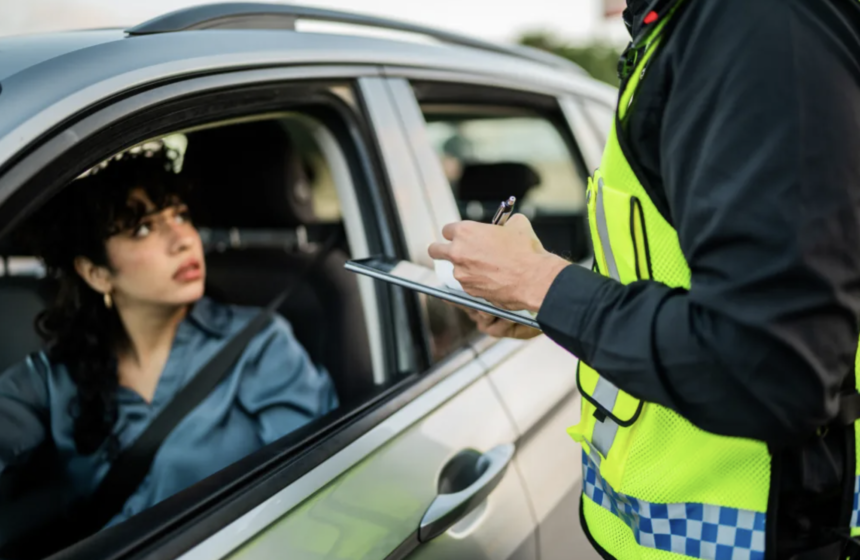
When the police stop you or send a notice, the next step depends on the offence. For many minor offences, the police may offer a fixed penalty notice. This sets out the offence, the fine and the number of points. Accepting it normally means you pay the fine and the points go onto your licence without a court appearance.
You usually have a limited time to pay, commonly 28 days, though the notice states the exact period. Missing it can lead to the fine increasing or the case being sent to court. Read the notice immediately and note the deadline in your diary. The sequence can look like this:
- Read the notice, checking your name, vehicle registration, the date, time and place, and the offence described.
- Decide whether you accept it. If you do, follow the payment instructions exactly and keep proof of payment.
- If you wish to contest it, do not pay. Follow the instructions on how to ask for a court hearing, within the stated time.
- If you are offered a speed awareness course, think carefully before accepting, since it usually means admitting the offence.
- If you receive a court summons or single justice procedure notice, respond by the date given, because ignoring it can lead to a conviction in your absence.
Speed awareness courses are offered at the discretion of the police, based on the speed recorded and your history. They normally cost a course fee and, if completed, avoid points. Courses are usually not available more than once within a three-year period, so use the option carefully. If you accept the offer and fail to attend or complete it, the original penalty, including points, can apply.
If the case goes to a magistrates’ court, you can plead guilty or not guilty. In many straightforward cases you can plead online or by post. Fines in magistrates’ courts are linked to income, so you will be asked to provide details of your finances. If you do not supply them, the court may assume a higher income. A guilty plea at an early stage generally results in a reduction in the sentence, so consider legal advice before deciding how to plead.
Do not ignore court paperwork. Missing a hearing can result in a case proceeding in your absence, additional penalties and difficulty reopening the matter later. If you cannot attend, contact the court at once and explain.
Reporting Who Was Driving When a Notice Arrives
A common scenario is a letter arriving at the address of the registered keeper, asking who was driving at the time of an alleged offence. This usually follows a speed camera or other automated detection. The process has strict timings and consequences, and mishandling it can create a bigger problem than the original offence.
Two terms are worth knowing. A notice of intended prosecution is a warning that you may be prosecuted for certain offences, and for many offences, including speeding, it generally has to be served within 14 days of the alleged offence. A request for driver information, made under road traffic law, requires the registered keeper to identify the driver, and the response is normally required within 28 days of receiving the request. When you receive such a letter, keep these points in mind:
- Act promptly: note the date you received it and respond within the deadline stated on the form.
- Be accurate: provide the correct name and address of the driver. If you were the driver, say so. If someone else was driving, supply their full details.
- Do not guess: if you cannot say who was driving, explain what steps you took to find out. Keeping a record of who uses the car, especially in shared households, helps.
- Never name a false driver: doing so is a serious offence that can lead to prosecution for perverting the course of justice.
- Keep copies: retain the notice, your reply and proof of posting or sending.
Failing to provide driver information when required is an offence in its own right and can carry penalty points and a fine, sometimes more severe than the original charge. Do not treat the letter as optional.
Company and leased vehicles add a layer of complexity. A business that owns a vehicle will usually be asked to identify the driver, and a log of who has each vehicle and when makes that simple. Leasing and hire firms generally pass notices on to whoever had the vehicle, so keep your contact details current with them.
If you disagree that the offence occurred, for example if the vehicle details are wrong or you believe the location is mistaken, say so in your response, and keep evidence such as photographs, receipts or dashcam footage. Equally, do not assume that a technical defect in the paperwork will remove the case. Courts consider the facts and the law, and relying on a technicality without advice is risky.
Appealing a Conviction or a Sentence
If you have been convicted in a magistrates’ court and think the decision or the penalty is wrong, you may be able to appeal. Time limits are strict. An appeal to the Crown Court against a conviction or sentence normally has to be lodged within 21 days of the decision. Late applications are possible but need good reasons.
An appeal can be against the conviction itself, the sentence, or both. If you pleaded guilty, the scope for appealing the conviction is narrower. The Crown Court may confirm, reduce or increase the sentence, so take advice before starting, especially if the original penalty was light.
Different routes apply if you did not know about the proceedings. If a case was heard without your knowledge, for instance because a summons went to an old address, you may be able to make a statutory declaration to the court stating that you did not receive notice. This usually has to be done within 21 days of becoming aware of the conviction, and the court may reopen the case. Again, speed matters.
Grounds for appeal depend on your circumstances. Examples include mistaken identity, errors in procedure, evidence that was wrongly admitted or a sentence that is out of line with similar cases. Disagreeing with the law or feeling that a penalty is unfair is not enough on its own. A solicitor who deals with motoring cases can tell you whether there are realistic grounds.
Legal aid is rarely available for motoring offences, so costs are a consideration. Some solicitors offer fixed-fee consultations, and free initial advice may be available through law centres, Citizens Advice or your insurer’s legal expenses cover, if you have it. Check your motor and home insurance policies for such cover before paying. Whatever route you take, gather your evidence early:
- The notice or summons and any letters from the court.
- Photographs of the location, road signs or markings.
- Dashcam or CCTV footage, saved promptly because it is often overwritten. 4. Witness names and contact details.
- Records of your vehicle’s use, service and any mechanical problems that may be relevant.
Keep your tone polite and precise in all correspondence, and keep copies of what you send. If you decide not to proceed, make sure you meet the original deadlines for payment so that the position does not worsen.
Avoiding a Ban and Protecting a New Licence

Preventing a ban is nearly always easier than arguing against one. If you already hold points, a few habits can reduce the risk of reaching twelve. The same applies to new drivers, for whom the threshold is much lower. Practical steps include:
- Know your dates: write down when each set of points will expire and when your three-year window closes, using your online record.
- Use speed awareness courses wisely: if offered, and if you accept the offence, this can keep points off your licence, though it usually cannot be repeated within a short period.
- Reduce temptation: put your phone out of reach while driving, use cruise control or a speed limiter where available, and plan journeys to avoid rushing.
- Keep your documents current: insurance, MOT and vehicle tax lapses can lead to further penalties, and some carry points.
- Get advice early: if you are at risk of a ban, speak to a solicitor before a hearing, not after.
If you face a totting-up ban, you can ask the court not to disqualify you on grounds of exceptional hardship. The court will consider whether the consequences for you or others, such as losing a job or being unable to care for a dependant, are exceptional rather than the usual inconvenience of a ban. This argument is difficult to win, courts expect strong evidence, and the same hardship cannot normally be used again within three years. Treat it as a last resort, not a plan.
New drivers need extra care. Within two years of passing your first test, six points means revocation. After that, you can drive only on a provisional licence with L plates and must pass the theory and practical tests again. The practical effect is that a new driver with a modest number of offences can lose the licence they spent months obtaining. Be especially cautious on speed limits, mobile phones and seat belts.
Insurance and employment add practical consequences. A ban can affect your job, especially if you drive for work or commute in an area with limited public transport. Talk to your employer early if there is a risk, and ask about alternatives. If you hold a licence for a different category, such as large vehicles or passenger-carrying vehicles, additional rules and conduct requirements may apply, so check with the relevant regulator.
Remember that points are recorded against the driver, not the vehicle, and that sharing a car with family members does not move points between people. Anyone who offers to take points for you is inviting serious criminal charges for everyone involved.
Renewing a Photocard and Updating Your Details
A photocard driving licence is valid for ten years, after which the photograph must be renewed even though your entitlement to drive may continue. The DVLA offers an online renewal service, and a postal form is available for those who prefer it. Fees are set by the DVLA and vary according to the type of application, so check GOV.UK for the current charge. You will usually need:
- Identity details: your licence number and National Insurance number, if you have one, plus addresses for the past three years.
- A recent photograph: if renewing online, the service may use the photograph from your passport record or ask you to upload one that meets the guidelines.
- Payment method: a debit or credit card for the fee online, or a cheque or postal order for a paper application.
- Eyesight confirmation: you must be able to read a number plate from the required distance, currently 20 metres, with glasses or contact lenses if you use them.
Renewal at age 70 follows different rules. From the age of 70, a licence must be renewed every three years, and the renewal is free. You will receive a reminder from the DVLA before your 70th birthday, but if it does not arrive, do not wait. Contact the DVLA, because driving without a valid licence is an offence and can invalidate insurance.
You must tell the DVLA when certain details change. Changes of name or address should be reported promptly, and failing to do so can result in a fine. Notify the DVLA if you develop a medical condition or disability that affects driving, such as epilepsy, certain heart conditions, diabetes treated with insulin or serious sight problems. The DVLA may ask for medical information and decide whether you can keep driving, sometimes with conditions. Being honest protects both you and other road users, and failure to disclose is an offence.
If your licence is lost, stolen or damaged, you can apply for a replacement using the online service. If you suspect theft, report it to the police as well. If you move abroad or live outside Great Britain, rules vary, and in some countries you can exchange your licence, while in others you must take a new test. Check the position for the country concerned before you travel. Set a calendar reminder three months before the expiry date printed on the licence. Renewal is usually quick, but applying early avoids being unable to hire a car or prove your entitlement.
Applying for a Licence Back After a Ban

When a disqualification ends, your licence does not always return automatically. Depending on the circumstances, you may need to apply to the DVLA to have your entitlement restored. For shorter bans, this is usually a straightforward application. For serious offences, especially drink-driving, you may have to pass additional checks. The general process runs as follows:
- Check the end date of your disqualification on your court paperwork and on your driving record.
- Apply to the DVLA before the ban ends if the rules allow, because processing takes time and you cannot drive until you hold a valid licence.
- Provide any extra information requested, such as medical details or evidence of attendance at a rehabilitation course.
- If your ban was long, or imposed under the new driver rules, you may need to take a theory and practical test again.
- Arrange insurance before driving, and declare the conviction accurately when you do so.
A court can also consider an application to reduce a ban after a set proportion of it has passed, though not every disqualification is eligible. The court will look at your conduct since the ban, your character and the nature of the offence. Take legal advice before applying, since a refused application can generally not be repeated for a period.
Never drive while disqualified. Doing so is a serious offence that can bring further penalty points, a fine, a longer ban or even imprisonment, and it usually invalidates any insurance.
When your licence returns, treat it as a fresh start. Check your driving record for accuracy, inform your insurer, and consider an additional training course to refresh your skills. If you rely on driving for work, keep a record of your licence status for your employer.
If you have lost your licence because of a medical condition rather than an offence, the process is different. The DVLA will usually consider reports from your doctor or specialist and may require you to show that the condition is controlled. Follow the instructions closely and keep copies of everything you send.
Final Thoughts
Penalty points and licence renewal share one theme: attention to detail and deadlines. A quick annual look at your driving record, a diary entry for your photocard expiry, and prompt responses to any police or court letter prevent most of the problems motorists face. When something does go wrong, early action and honest, accurate replies give you the best chance of a good outcome.
If you are at risk of a ban, seek advice from a motoring solicitor or a free advice service before a hearing. Use official sources, GOV.UK and the DVLA, for current fees, forms and timescales, and be wary of unofficial websites that charge extra for services you can do directly.
This guide is general information and not personal legal or financial advice. Your own circumstances, and the rules in force at the time, will determine your position.
Frequently Asked Questions
How long do penalty points stay on my licence?
For most offences, points stay on a licence for four years from the date of the offence. Some serious offences, such as certain drink-driving and drug-driving convictions, stay for eleven years. Check the code on your online record for the exact period.
How many points lead to a ban?
Twelve or more points from offences committed within three years normally leads to disqualification, usually for at least six months. New drivers face revocation at six points within two years of passing their first test.
Can I avoid points by attending a speed awareness course?
Sometimes. The police decide whether to offer a course, and it is usually available only once in a set period. You normally have to accept the offence, pay a course fee and complete the course on time to avoid points.
Do I have to tell my insurer about penalty points?
Yes, if you are asked, and you should give the information for the full period requested. Insurers are entitled to ask about convictions, and giving inaccurate answers can lead to higher premiums, a cancelled policy or a refused claim.
How often do I need to renew my driving licence?
A photocard needs its photograph renewed every ten years. From age 70, the licence itself needs renewing every three years, free of charge. Apply through GOV.UK and allow time for processing.
What happens if I do not tell the DVLA about a change of address?
You risk missing important post, and failing to notify the DVLA can lead to a fine. Update your details online as soon as you move, and check that the address on your insurance matches.