

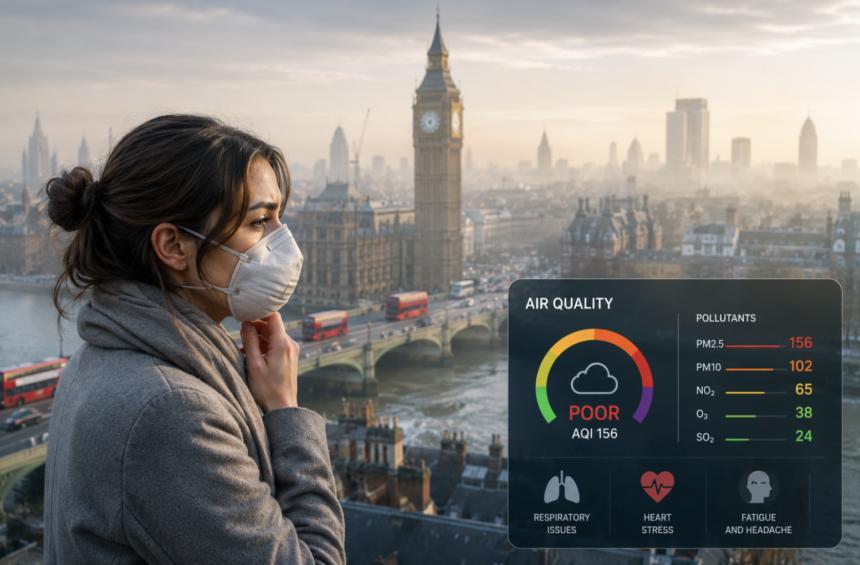
Air surrounds us every second, yet most people rarely think about what they breathe. Unfortunately, the air across many parts of the United Kingdom contains invisible pollutants that silently affect millions of lives every day. Unlike sudden illnesses, the damage caused by polluted air develops gradually.
However, its consequences often appear much earlier than expected. Today, doctors and researchers continue to discover alarming links between air pollution and the early development of chronic diseases. Conditions once associated with old age are now affecting younger adults, while children face growing health risks before reaching adulthood. Consequently, air pollution has become more than an environmental concern. It is now one of the greatest public health challenges facing modern Britain.
The United Kingdom has introduced several initiatives to improve air quality. Nevertheless, pollution levels remain dangerously high in many urban areas. Therefore, understanding the problem and taking meaningful action has never been more important.
In this comprehensive guide, we explore how UK air pollution is silently accelerating illness, who faces the greatest risks, what causes the problem, and how individuals and governments can work together to create cleaner, healthier communities.
Understanding the Growing Air Pollution Crisis in the UK
Air pollution has become one of the leading environmental threats across the United Kingdom. Every day, millions of people inhale microscopic pollutants without realizing the long-term effects. The primary sources include road traffic, industrial emissions, construction projects, domestic heating systems, and agricultural activities. Together, these pollutants create harmful air that affects both urban and rural communities. Major cities including London, Birmingham, Manchester, Glasgow, and Leeds frequently record elevated levels of nitrogen dioxide (NO₂), particulate matter (PM2.5 and PM10), and ozone.
These tiny particles easily enter the lungs. More importantly, many travel directly into the bloodstream, where they trigger inflammation throughout the body. Scientists now understand that there is no completely safe level of exposure. Even relatively low concentrations can gradually damage multiple organs over time.
Why Air Pollution Is No Longer Just a Future Problem
For decades, air pollution was viewed as a slow-moving environmental issue. Today, medical evidence tells a very different story. Researchers increasingly report that polluted air accelerates biological aging. Instead of waiting until old age, many people develop chronic illnesses years earlier than previous generations. This shift means younger adults now experience diseases traditionally associated with retirement age. As pollution continues to rise in many locations, healthcare systems face increasing pressure from patients requiring long-term treatment much earlier in life.
How Polluted Air Damages the Human Body
Every breath introduces oxygen into the body. Unfortunately, polluted air also carries harmful chemicals and microscopic particles. Once inhaled, these pollutants settle deep inside the lungs. Some particles become trapped in lung tissue, while smaller ones pass into the bloodstream. From there, pollutants travel throughout the body. They contribute to:
- Chronic inflammation
- Oxidative stress
- Blood vessel damage
- Immune system disruption
- Cellular aging
- DNA damage
Over time, these biological changes increase the likelihood of numerous serious diseases.
Respiratory Diseases Are Appearing Earlier Than Ever
The lungs experience the first and most direct impact of polluted air. Fine particles continuously irritate delicate airway tissues. As exposure continues, inflammation becomes persistent and lung function gradually declines. Doctors have observed increasing diagnoses of:
- Asthma
- Chronic bronchitis
- Chronic Obstructive Pulmonary Disease (COPD)
- Recurrent chest infections
- Reduced lung development in children
Children growing up in polluted environments often fail to achieve full lung capacity. Consequently, many carry reduced respiratory function into adulthood. Young adults who have never smoked also develop breathing problems that previously appeared mainly among elderly smokers. This dramatic change highlights the growing severity of long-term pollution exposure.
Heart Disease and Stroke Risks Continue to Increase
Many people associate air pollution only with breathing problems. However, its effects extend far beyond the lungs. Tiny pollutants entering the bloodstream trigger widespread inflammation. As a result, blood vessels gradually become damaged. This process contributes to:
- High blood pressure
- Narrowed arteries
- Blood clot formation
- Heart attacks
- Stroke
- Heart failure
Researchers increasingly find links between polluted environments and cardiovascular disease among adults in their thirties and forties. Previously, these conditions were largely associated with much older populations.
The Brain Also Suffers From Dirty Air
Emerging evidence reveals that polluted air affects neurological health as well. Microscopic particles may reach the brain directly through the bloodstream and nasal passages. Scientists believe ongoing exposure contributes to:
- Memory loss
- Reduced concentration
- Poor cognitive performance
- Anxiety
- Depression
- Dementia
- Alzheimer’s disease
Children remain especially vulnerable. Growing brains require clean environments for healthy development. However, repeated exposure to pollutants may reduce attention span, learning ability, and academic performance. These early disadvantages can continue throughout adulthood.
Air Pollution Weakens the Immune System
Healthy immune systems constantly defend the body against bacteria and viruses. Unfortunately, polluted air interferes with these natural defenses. Continuous exposure increases inflammation while reducing the body’s ability to fight infections. Consequently, individuals may experience:
- Frequent respiratory infections
- Longer recovery times
- Increased allergy symptoms
- Greater susceptibility to viruses
Researchers also continue studying how pollution influences autoimmune diseases and chronic inflammatory disorders.
Children Face the Greatest Long-Term Health Risks
Children breathe faster than adults. Additionally, their lungs continue developing throughout childhood. These factors make young people significantly more vulnerable to polluted air. Long-term exposure may cause:
- Reduced lung growth
- Persistent asthma
- Increased allergies
- Developmental delays
- Higher infection rates
- Poorer physical fitness
Pregnant women exposed to high pollution levels may also experience complications affecting unborn babies. Health experts increasingly emphasize protecting children from pollution whenever possible.
Older Adults Experience More Severe Health Complications
Older adults often live with existing medical conditions. Therefore, pollution places additional stress on already vulnerable organs. Exposure frequently worsens:
- Heart disease
- COPD
- Diabetes complications
- High blood pressure
- Respiratory infections
Hospital admissions typically rise during periods of poor air quality. Sadly, mortality rates also increase among elderly populations during severe pollution events.
Low-Income Communities Carry a Larger Burden
Air pollution does not affect everyone equally. Lower-income neighborhoods frequently sit near busy roads, factories, industrial estates, or logistics centers. Residents often experience greater exposure every day. Unfortunately, these communities may also face:
- Limited healthcare access
- Poor housing quality
- Reduced green spaces
- Higher stress levels
Together, these factors amplify pollution-related health inequalities across the country.
Indoor Air Pollution Deserves Equal Attention
Many people assume indoor spaces provide complete protection. Unfortunately, indoor air can become equally harmful. Common indoor pollutants include:
- Dust mites
- Mold spores
- Tobacco smoke
- Cleaning chemicals
- Cooking fumes
- Volatile Organic Compounds (VOCs)
Poor ventilation allows pollutants to accumulate throughout homes and workplaces. Consequently, individuals may develop headaches, allergies, breathing difficulties, fatigue, and chronic irritation despite spending most of their time indoors.
The Economic Cost of Poor Air Quality
Air pollution affects much more than individual health. Its financial consequences stretch across society. Healthcare providers spend billions treating pollution-related illnesses. Meanwhile, businesses experience:
- Increased sick leave
- Lower productivity
- Reduced workforce performance
- Higher insurance costs
- Greater employee turnover
Governments must also invest heavily in emergency healthcare, environmental monitoring, and pollution control programs. Without meaningful improvements, these economic burdens will continue increasing.
Current UK Policies Are Helping, but Progress Remains Slow
The United Kingdom has introduced several measures designed to reduce emissions. Examples include:
- Clean Air Zones
- Ultra Low Emission Zones
- Stricter vehicle standards
- Renewable energy investments
- Industrial emission regulations
These policies have delivered measurable improvements in some regions. However, many experts argue they remain insufficient. Population growth, urban expansion, increasing transport demand, and continued fossil fuel dependence continue slowing national progress. Stronger enforcement and broader investment remain essential.
Technology Can Help Build Cleaner Cities
Innovation offers promising opportunities for reducing pollution. Several technologies already demonstrate significant benefits. Electric vehicles reduce exhaust emissions.
Renewable energy decreases reliance on coal and gas. Smart traffic systems reduce congestion. Cleaner industrial equipment lowers factory emissions. Air quality sensors provide real-time monitoring across cities. Meanwhile, advanced filtration technologies continue improving indoor environments. Together, these innovations create healthier communities while supporting sustainable economic growth.
Urban Green Spaces Improve Public Health
Nature remains one of the most effective pollution fighters. Trees naturally absorb carbon dioxide while filtering airborne particles. Green infrastructure also lowers urban temperatures and improves mental wellbeing. Cities can benefit by expanding:
- Public parks
- Green roofs
- Community gardens
- Tree-lined streets
- Urban forests
These natural solutions provide long-term environmental and health benefits simultaneously.
Simple Ways to Reduce Daily Exposure
Although government action remains essential, individuals can also lower personal risk. Helpful strategies include:
- Choose walking routes away from heavy traffic whenever possible.
- Check daily air quality forecasts before outdoor exercise.
- Use certified air purifiers inside the home.
- Improve household ventilation while avoiding polluted outdoor periods.
- Keep indoor spaces free from cigarette smoke.
- Plant suitable indoor greenery where appropriate.
- Support cleaner transport by walking, cycling, or using public transportation.
- Reduce unnecessary vehicle use whenever possible.
Even small lifestyle adjustments can significantly reduce long-term exposure.
Why Collective Action Matters More Than Ever
Air pollution affects everyone regardless of age, income, or occupation. Therefore, lasting solutions require cooperation across every level of society. Governments must strengthen environmental legislation. Industries should continue investing in cleaner technologies. Communities can support greener urban planning. Individuals also play an important role through sustainable lifestyle choices. When these efforts combine, cleaner air becomes achievable. Future generations deserve healthier environments rather than increasing health risks.
Conclusion
Air pollution has become one of the most significant public health challenges facing the United Kingdom. Unlike many visible threats, polluted air silently damages the body every day, often without immediate symptoms. Unfortunately, the consequences appear much sooner than many people realize. Respiratory disease, cardiovascular illness, neurological disorders, weakened immunity, and reduced life quality increasingly affect younger populations across Britain. Consequently, improving air quality has become essential for protecting both current and future generations.
Although meaningful progress has begun through cleaner technologies and environmental policies, much more remains necessary. Governments, businesses, healthcare professionals, and individuals all share responsibility for reducing pollution exposure. Cleaner air means healthier lungs, stronger hearts, sharper minds, lower healthcare costs, and longer healthy lives. Every positive step taken today contributes to a safer and more sustainable future for everyone across the United Kingdom.
Frequently Asked Questions
1. What is the biggest source of air pollution in the UK?
Road traffic remains one of the largest contributors to harmful air pollution.
2. Can air pollution cause chronic diseases?
Yes, long-term exposure significantly increases the risk of several chronic illnesses.
3. Who is most vulnerable to polluted air?
Children, older adults, pregnant women, and people with existing health conditions face the highest risks.
4. Does indoor air pollution affect health?
Yes, indoor pollutants can cause respiratory irritation and long-term health problems.
5. Can air pollution affect the brain?
Yes, studies link polluted air with memory loss and cognitive decline.
6. Are UK cities improving air quality?
Some cities have improved, but many still exceed recommended pollution levels.
7. Can trees reduce air pollution?
Yes, trees naturally absorb pollutants and improve overall air quality.
8. Do air purifiers help indoors?
Yes, quality air purifiers can reduce many harmful indoor airborne particles.
9. Is exercising during heavy pollution harmful?
Yes, intense outdoor exercise increases pollutant inhalation during poor air quality.
10. Can individuals make a difference?
Yes, sustainable daily choices collectively contribute to cleaner air and healthier communities.