

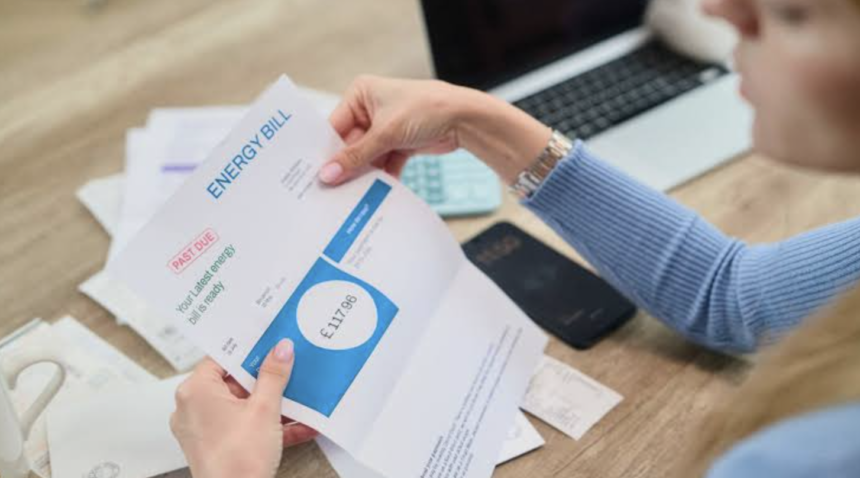
The energy price cap sets the most that suppliers can charge per unit on default tariffs, and the next level will be announced on 25 November 2026. Around it sit several Budget changes, including a 100 pound payment and a shake-up of standing charges, and not all of them are settled.
In this article we will explore what is confirmed, what is only expected, and what to do before the announcement.
Where the Energy Price Cap Stands Now
Ofgem says the cap for 1 October to 31 December 2026 raised prices by 4 percent for a typical dual-fuel household paying by Direct Debit. It attributes the rise to higher wholesale gas prices linked to the Middle East conflict. Prepayment customers on default tariffs are covered by the same cap.
The average default-tariff Direct Debit rates are 26.32p per kWh for electricity, with a daily standing charge of 54.83p, and 7.97p per kWh for gas, with a 29.68p daily standing charge. Be careful with the labels. The electricity figures exclude VAT, which the government removed from electricity bills from 1 October 2026 to 31 March 2027, while the gas figures include 5 percent VAT.
That mismatch is why Ofgem warns that today’s costs cannot be compared directly with earlier periods. Its page also gives no annual cap figure in pounds.
Confirmed and Expected Changes in One Table
Different sources use different levels of certainty, so here is each item sorted by status. The Budget items come from a Which? summary dated 28 October 2026, a single secondary source, so check the official Budget documents on GOV.UK.
| Item | Status | Date | What the sources say |
| Current Ofgem cap | Confirmed | 1 October to 31 December 2026 | Up 4 percent for a typical Direct Debit household |
| Next cap announcement | Confirmed schedule | 25 November 2026 | Covers 1 January to 31 March 2027; Ofgem may publish earlier |
| 100 pound payment | Announced | From January 2027 | About 20 million households in council tax bands A to D, paid into bank accounts |
| Standing charge change | Announced, price effect expected | Date not given | Gas standing charges removed, costs moved into unit rates |
| Electricity VAT cut | Extended, cap effect expected | Until July 2027 | Expected to cut about 50 pounds off the cap from April 2027 |
| January cap level | Not known | 25 November 2026 | One projection only, covered below |
Budget Changes That Touch Your Bills
The 100 Pound Payment
The payment is a one-off, aimed at about 20 million households in council tax bands A to D. It is due to reach bank accounts from January 2027. The sources do not say whether you need to apply, so wait for official guidance on GOV.UK.
The Standing Charge Change
The government plans to remove gas standing charges and move those fixed costs into the per-kWh price. It estimates that 60 percent of households would save about 45 pounds a year. The same summary says firms will likely raise per-kWh prices, which is an expectation rather than a result.
As general guidance, your own gain or loss depends on how much gas you use, so 45 pounds is a group estimate, not a promise.
The Electricity VAT Cut
VAT on electricity was zero from 1 October 2026 and was due to return at 5 percent on 31 March 2027. The Budget keeps the cut until July 2027. Which? reports this is expected to take about 50 pounds off the energy price cap from April 2027.
A Sensible Order of Action Before 25 November
Nothing here needs a rushed decision. Points beyond Ofgem’s own advice are general guidance.
Step 1: take meter readings now and again on the day of the announcement, so you have your own record of usage either side of the change. Step 2: check whether a fixed deal of yours ends this winter and what you would pay on the default tariff instead.
Step 3: wait for the figure on 25 November before comparing fixes against the cap, using an Ofgem-accredited comparison site. Step 4: if a fix then looks clearly cheaper, Ofgem lists changing or fixing your tariff, changing payment type or switching supplier as the routes. Some suppliers also offer cheaper weekend electricity, mainly to smart meter or low-carbon technology users.
Step 5: if you cannot pay, contact your supplier early. Ofgem says suppliers must help if asked. Warm Home Discount and other support exist, and GOV.UK has the eligibility rules. Do not rush into a fix because of a forecast.
What the Sources Do Not Tell Us
The Ofgem page gives no annual cap figure, so none is given here. A preview article from before the Budget reported that Cornwall Insight projected the cap would rise about 16 percent in January, to nearly 2,000 pounds a year for households. That is a single projection from a single preview, made before the Budget measures were announced, and it should not be read as the answer.
No January cap figure is given as fact in this article, because none exists until Ofgem publishes on 25 November. Whether suppliers raise unit rates, and by how much, is not yet known, and the Budget summary gives no start date for the standing charge change.
Conclusion
The solid facts are short: the current cap rose 4 percent, the next one is announced on 25 November 2026, and the 100 pound payment is due from January 2027.
Everything about unit rates, the standing charge shift and the cap level from April is expectation. Keep your readings, check your fixed deal, and compare only once the real figure is out. For anything about your own eligibility, check GOV.UK, Ofgem or your supplier.
Frequently Asked Questions
When Is the Next Energy Price Cap Announced?
Ofgem will announce the cap for 1 January to 31 March 2027 on 25 November 2026. It may publish earlier than that. The announcement sets the level for default tariffs only.
Will the Energy Price Cap Go up in January?
Nobody can say for certain until Ofgem publishes. One pre-Budget projection from Cornwall Insight suggested about 16 percent, but it is a single projection. Treat it as a guess, not a fact.
Who Gets the 100 Pound Energy Payment?
According to the Which? Budget summary, it goes to about 20 million households in council tax bands A to D. It is a one-off paid into bank accounts from January 2027. Check GOV.UK for how it will be delivered.
Does the Energy Price Cap Cover Prepayment Meters?
Yes, Ofgem says prepayment customers on default tariffs are covered by the cap.
Should I Fix My Energy Tariff Before the Cap Changes?
There is no need to rush. Ofgem lists fixing as one option, but compare any deal with the new cap once it is announced on 25 November. A forecast alone is not a reason to commit.