

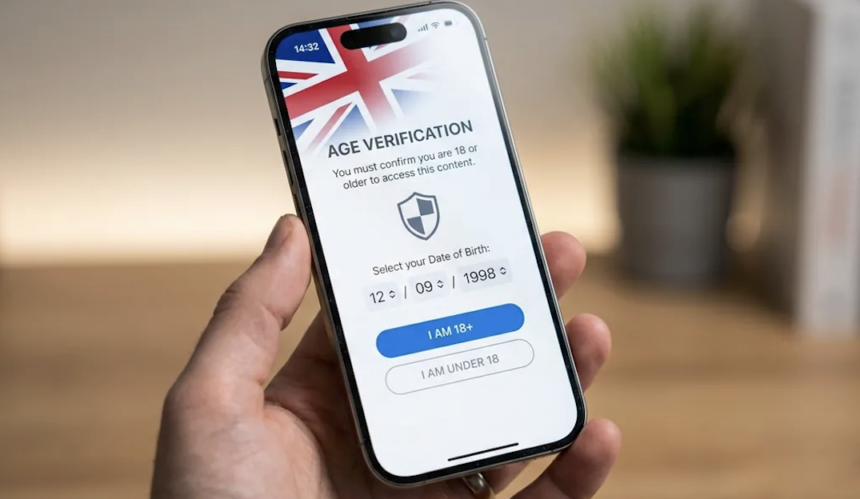
Apple age verification is becoming a major global trend, and it is no longer limited to one market. As more governments introduce online safety laws, Apple is being pushed to confirm the ages of users before allowing access to adult-rated apps, mature content, and certain account features.
The UK has taken the lead in public attention, but Apple has now confirmed that similar age verification systems are also active in Singapore and South Korea. This signals a wider shift in how tech companies must handle digital identity, child safety, and access to restricted content.
For users, the process may feel like a small extra step. For Apple, however, it marks a deeper change in how accounts are managed across different countries. And for parents, developers, and lawmakers, it reflects a growing effort to make online spaces safer for younger audiences.
Why Apple Age Verification Is Expanding
Age checks are becoming more common because regulators want stronger protections for minors online. Governments are especially focused on content that may not be suitable for children, including adult apps, mature media, and private communication tools.
Apple sits in the middle of this debate because it controls access to many digital services through the App Store and Apple accounts. If a law says adults must be verified before viewing or downloading certain content, Apple has to build systems that meet those legal requirements.
In simple terms, the company is adapting country by country.
This rollout also shows that online safety rules are no longer just about websites. App stores, streaming platforms, and device ecosystems are now under pressure too.
Apple Age Verification in the UK
The UK has become the most talked-about example of Apple’s new approach. A preview of the feature appeared earlier in a recent developer beta before Apple officially released it more widely.
For some users, the process has been smooth and fast. In many cases, Apple can estimate whether someone is over 18 based on the age of their Apple account. That means a user may only need to tap a button and continue.
However, not every experience has been perfect. Some users reported delays, failed checks, or timeouts during the process. To improve access, Apple now supports several additional verification methods in the UK.
Accepted Age Verification Methods in the UK
Users in the UK can confirm their age through:
- A credit card
- A scanned driver’s license
- PASS-accredited proof of age cards
Supported PASS cards include:
- CitizenCard
- My ID Card
- TOTUM ID card
- Young Scot National Entitlement Card
If a user chooses not to verify their age, Apple may treat the account as belonging to a child or teenager. In practice, that means stronger web filters and communication safety protections are automatically turned on.
That matters because even adults who skip verification could suddenly find some content or account features more limited than expected.
Apple Also Launches Age Checks in Singapore and South Korea
Apple has now confirmed that age confirmation is also live for Apple accounts in Singapore and South Korea. While the goal is similar, the process is different in each country.
Singapore’s Verification Options
In Singapore, adults can verify their age using:
- A credit card
- A driving licence
- A National Registration Identity Card
- A Foreign Identification Number card
Apple says passports, debit cards, and gift cards are not supported for this step.
This method is fairly direct and resembles the UK system, where government backed identity documents help prove age quickly.
South Korea’s More Detailed System
South Korea uses a stricter and more detailed process. To access mature content through Apple services, users must prove they are at least 19 years old, which is the legal adult threshold for this purpose.
The user may need to provide:
- Full name
- Date of birth
- Mobile carrier details
- Phone number
- Gender
- Nationality
The information must match the records held by the user’s mobile carrier. Since carriers in South Korea already perform age checks when accounts are opened, Apple relies on that system for confirmation.
One unusual part of the South Korean setup is that age verification may need to be repeated every year. That makes it one of the most demanding systems Apple currently supports.
What This Means for Everyday Apple Users
For most adults, age verification will likely become a quick security step, much like confirming a payment method or signing in with two-factor authentication.
Still, the impact can be real:
- Access to adult content may be blocked until verification is completed
- Account settings may shift automatically if age is not confirmed
- Parents may get stronger built-in protections for children
- Developers may need to think more carefully about age ratings
A simple example is someone trying to download a mature-rated app while traveling or after changing account settings. If the country requires age confirmation, access may pause until the check is done.
That small pause is exactly what regulators want: a clear barrier between minors and adult-only content.
Minimum Age Rules for Child Apple Accounts
Apple has also updated the minimum age requirements for independent child accounts in several countries. In many places, children must be added through Family Sharing rather than creating a separate account.
Here are some of the listed minimum ages for solo child accounts:
Minimum age 14
- Austria
- Bulgaria
- China mainland
- Cyprus
- Israel
- Italy
- Lithuania
- South Korea
- Spain
Minimum age 15
- Czechia
- France
- Greece
- Peru
- Slovenia
Minimum age 16
- Croatia
- Germany
- Hungary
- Ireland
- Kosovo
- Liechtenstein
- Luxembourg
- Malaysia
- Netherlands
- Philippines
- Poland
- Romania
- Singapore
- Slovakia
Minimum age 18
- Brazil
These differences show that Apple cannot apply one universal rule worldwide. Local law now plays a direct role in how accounts are created and managed.
Conclusion
Apple age verification is no longer a limited experiment. It is becoming part of a larger global shift toward stricter online safety and stronger age-based access control.
The UK has brought the issue into the spotlight, while Singapore and South Korea show how local laws can shape very different verification systems. At the same time, changes to minimum account age rules prove that child safety policies are also expanding beyond content access alone.
For users, the best move is simple: keep your account information updated and be ready to verify your age when asked. For the tech industry, the message is even clearer. Age verification is not a passing feature. It is quickly becoming a standard part of the digital world.
Read More on Llibertydaily