

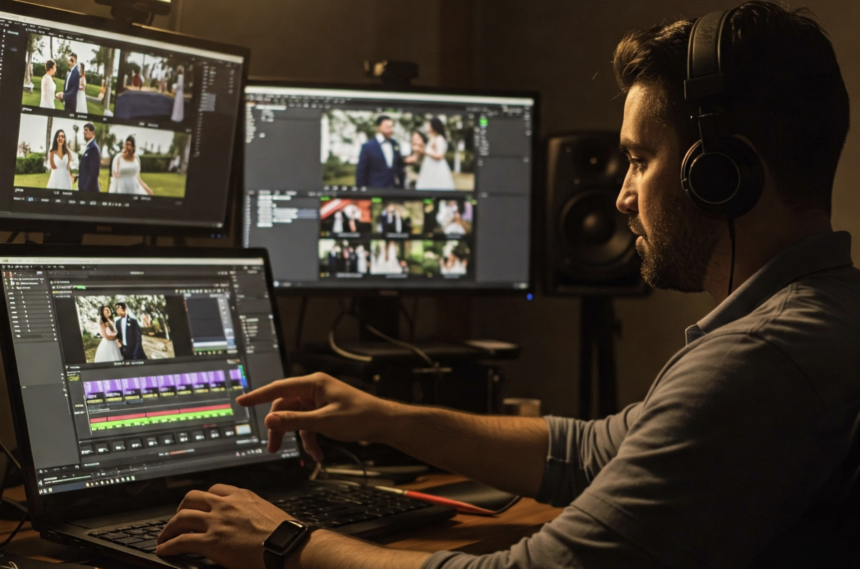
It’s Sunday evening in late October, the air crisp with autumn promise, while wedding season in the United States hits its fever pitch. While your competitors are imprisoned in dimly lit home offices eyes bloodshot from staring at timeline panels, drowning in twelve hours of reception footage, and battling the dreaded Premiere Pro spinning wheel of death you’re savoring a glass of wine on your patio, sketching concepts for your next luxury brand campaign. Your latest cinematic wedding film? Delivered yesterday, flawlessly executed, three days ahead of schedule. Your inbox isn’t overflowing with apology emails about delayed timelines; it’s bursting with five-star reviews, referral requests from high-end planners, and inquiries from couples who specifically mentioned your “impossibly fast” turnaround.
This isn’t a fantasy reserved for videography elites with million dollar studios and ten person teams. It’s the emerging reality for a savvy generation of American wedding filmmakers who’ve made a decision that once felt like creative heresy: they’ve completely stopped editing their own footage.
The Quiet Revolution: Outsourcing Editing to Scale and Thrive
From the misty coastlines of the Pacific Northwest to the sun baked ranches of Texas, from Charleston’s historic plantations to the industrial chic lofts of Brooklyn, wedding videographers are orchestrating a quiet revolution. They’re discovering that the invisible force separating thriving six figure studios from exhausted solo operators isn’t a $15,000 RED camera or a six figure Instagram following it’s strategic delegation. By partnering with professional post production teams, these entrepreneurs are transforming their businesses from grueling lifestyle jobs into scalable, sellable enterprises. And if you’re still sacrificing your weekends to color correcting footage and syncing multi-cam audio, you’re not just working inefficiently you’re actively capping your income and accelerating your own creative extinction.
Let’s confront the brutal mathematics that film school conveniently omits. A contemporary luxury wedding in the United States has evolved into a cinematic epic spanning entire weekends welcome parties, rehearsal dinners, twelve hour wedding extravaganzas, and farewell brunches. When you deploy multiple cinema cameras, FPV drones weaving through venue architecture, and professional audio recorders capturing every tremor in the father’s voice during vows, you’re capturing six to twelve hours of raw footage. Sometimes significantly more.
Transforming this mountain of media into a polished, narrative driven wedding film complete with multi-camera synchronization, audio sweetening, color grading that matches across different camera manufacturers, and emotional pacing demands between thirty to fifty hours of meticulous labor. Per single wedding. During peak season, shooting two or three weddings monthly means ninety to one hundred fifty hours chained to your editing suite. That’s essentially working two full-time jobs simultaneously, and you haven’t even touched client consultations, marketing initiatives, or perish the thought your actual life.
The Hidden Cost of Editing: How It Limits Your Growth and Income
This editing bottleneck represents the most severe constraint on growth in the wedding videography industry. Every hour you spend wrestling with timeline organization, hunting for the perfect music cue, or correcting white balance is an hour stolen from revenue generating activities. You’re not networking with luxury wedding planners who book $20,000 events. You’re not optimizing your website for local SEO. You’re not upselling current clients on engagement sessions or anniversary films. You’re merely trading hours for dollars with devastating inefficiency, effectively reducing your hourly rate to that of a retail manager once you calculate the true temporal investment.
Intelligent videographers recognize this trap early. By collaborating with dedicated wedding video editors, they reclaim those forty hours per project. Instead of vanishing into the edit cave, they’re out capturing additional weddings, building referral relationships with exclusive venues, or simply maintaining their sanity and relationships. The mathematics become undeniable: if you can shoot a wedding in eight hours and outsource the fifty hour post production process, you’ve liberated an entire work week to book another client worth $5,000, $8,000, or even $12,000. The editor’s fee pays for itself multiple times over, and you haven’t sacrificed your sleep or your marriage to make it happen.
The AI Disruption: Tools That Assist Rather Than Replace
The landscape is shifting beneath our feet with unprecedented velocity. We’re witnessing AI Video Creation: How Video AI Is Transforming Digital Storytelling across every sector of visual media, and wedding filmmaking is no exception. Algorithms can now automatically stabilize shaky drone footage, remove unwanted background objects from reception scenes, and even generate B roll from static photographs. These tools promise to compress timelines and reduce manual labor, tempting many videographers to believe they can simply automate their way out of the editing burden.
However, this technological revolution creates a paradox. While AI excels at technical corrections matching skin tones across different lighting conditions, audio noise reduction, and even rough cut assemblies it cannot replicate the emotional intelligence required for wedding storytelling. An algorithm might identify that the groom cried during the vows, but it cannot feel the precise moment to cut from his tear to his mother’s reaction three rows back. It cannot sense the rhythm of a reception montage or understand the cultural significance of a specific tradition that requires lingering on certain details.
This is where the outsourcing advantage becomes crystal clear. Professional wedding video editors don’t resist these AI tools they master them. They utilize AI-assisted color matching, automated transcription for faster dialogue editing, and intelligent reframing for vertical social media cuts, then apply human artistic judgment to elevate the technical foundation into emotional art. By outsourcing, you gain access to these cutting edge AI workflows without spending weekends learning new software interfaces or subscribing to expensive neural network platforms. Your films benefit from technological efficiency while maintaining the soul that commands premium pricing.
The temptation to fully automate post-production has never been stronger. With recent announcements that NotebookLM Launches Cinematic Video Overviews as Google Upgrades AI Mode Canvas, many videographers wonder if they can simply feed their footage into an algorithm and receive a finished film. These AI overview tools excel at creating quick summaries and visual synopses, compressing hours of content into digestible highlight reels through automated scene detection and smart clipping.
But wedding filmmaking isn’t about summarization it’s about emotional archaeology. An AI overview might identify that the father of the bride spoke for four minutes during the reception, but it will miss the micro-expression when his voice breaks mentioning his late wife. It cannot feel the pacing of a first dance or understand when to hold on a grandmother’s hands clasped in prayer. These automated tools are brilliant for creating rough assemblies or preview clips, but they lack the narrative intuition that separates commodity video from heirloom art.
Professional wedding video editors understand this distinction intimately. They use these AI overview features as starting points automated logging and preliminary scene selection then apply human emotional intelligence to craft the story. They know when to disregard the algorithm’s suggested cuts because the real magic happened three seconds later. By delegating to specialists who navigate both automated tools and artistic storytelling, you receive the efficiency of AI without sacrificing the emotional authenticity that makes couples pay luxury prices.
Ask any established wedding videographer about their recurring nightmare, and they’ll describe the same hellish scenario: October in America. Between Labor Day and Thanksgiving, the industry enters a compressed high intensity period where Saturdays book solid and the calendar fills with Friday and Sunday celebrations. In regions like New England, where outdoor wedding season essentially shuts down in November, every couple demands the same six-week window. The result? A terrifying traffic jam of footage that can bury even the most organized creative professional.
Without strategic workflow solutions, this seasonal surge creates catastrophic post production backlogs. Videographers find themselves delivering Christmas themed wedding highlights in February, apologizing to winter couples for delays caused by fall weddings, and watching their Google reviews plummet despite capturing gorgeous footage. The stress manifests physically bloodshot eyes, caffeine dependency, and that particular anxiety that jolts you awake at 3 AM wondering if you accidentally deleted the bride’s father’s toast.
Professional wedding video editing services function as pressure release valves during these critical months. Instead of your post production timeline extending linearly with each new booking meaning ten weddings create ten consecutive weeks of editing you establish parallel processing streams. While you capture next weekend’s celebration in the Hamptons, a professional editor is already transforming last week’s Colorado mountain wedding into a masterpiece. Your turnaround times actually compress during your busiest season rather than extending into unacceptable territory.
Mastering Peak Season Without Burning Out
This velocity isn’t merely about convenience; it’s about capitalizing on emotional momentum. When couples receive their wedding film within two weeks rather than three months, they’re still riding the honeymoon high. They’re excited to share the link with everyone they know, generating referral traffic while their wedding remains fresh in social conversations. Fast delivery creates delighted clients, delighted clients write glowing reviews, and glowing reviews book your next season at premium rates. Outsourcing transforms your bottleneck into your competitive advantage.
In today’s saturated wedding market, couples aren’t merely hiring a videographer they’re investing in a specific aesthetic promise. They’re scrolling through Instagram feeds and Pinterest boards, identifying particular cinematic styles, moods, and color palettes that resonate with their vision. Whether dark and moody, light and airy, or documentary authentic, they expect that exact tone delivered consistently across every film you produce.
The uncomfortable truth about DIY editing is that humans are inherently inconsistent creatures. Your energy levels fluctuate. Your creative inspiration waxes and wanes. One week, energized and focused, you might nail the perfect teal and orange grade; the next, exhausted from a red eye flight home from a destination wedding, you produce something slightly desaturated and off brand. These micro-variations might seem insignificant to you, but prospective clients notice. They detect the portfolio mismatches, the inconsistent skin tones, the varying audio levels, and they hesitate. They wonder if the sample film they loved was a fortunate fluke rather than your standard.
Partnering with a professional wedding video editor establishes quality control systems that solo operators simply cannot maintain alone. These specialists approach your footage with standardized workflows, calibrated reference monitors, and technical expertise that ensures every deliverable matches your brand bible precisely. They maintain consistent LUT applications, audio normalization standards, and pacing rhythms across twenty projects as easily as across two. This reliability builds trust, and in the luxury wedding space, trust commands premium pricing. When couples know exactly what cinematic experience they’re purchasing, you stop competing on price and start competing on artistry.
If you began shooting weddings five years ago, delivery expectations were charmingly straightforward: a highlight film, perhaps a full ceremony edit, and you were finished. But the social media revolution has fundamentally altered the post production landscape. Today’s couples particularly millennials and Gen Z clients expect an entire content ecosystem from their wedding day. They desire the cinematic highlight reel for Facebook, certainly. But they also require vertical sixty second versions for Instagram Reels and TikTok. They want the full ceremony documentary, individual speech videos for sharing with absent relatives, teaser trailers for immediate social posting, and “same day edits” for reception viewing.
Each format requires different aspect ratios, pacing strategies, music licensing considerations, and compression settings. Creating a comprehensive package might mean exporting fifteen different files per wedding, each demanding specific technical adjustments. Attempting this diversity of deliverables while maintaining your shooting schedule is a recipe for madness or missed deadlines.
Outsourced wedding video editing allows you to productize these offerings without personally shouldering the technical burden. You can confidently offer “The Social Media Package” or “The Complete Story Collection” knowing your editing partner possesses the bandwidth, specialized software, and AI-assisted reframing tools to generate these variations efficiently. Suddenly, your average client value jumps from $4,000 to $6,500, but your personal workload remains identical. You’re selling more without working more the very definition of business scalability.
Studio Mentality: Operating Like a CEO Instead of a Freelancer
A psychological transformation occurs when you stop identifying as “a videographer who edits” and begin operating as “a wedding film studio.” The former is a job; the latter is a business. The former trades time for money; the latter builds systems that generate revenue independent of your hourly participation.
America’s most successful wedding video companies those booking fifty, seventy, or even one hundred weddings annually don’t achieve those volumes by working eighty hour weeks. They achieve scale through systematic delegation. They treat post production as a specialized function deserving of specialized talent, just as they wouldn’t attempt to bake their own wedding cakes or arrange their own floral installations. They understand that their role encompasses creative direction, client experience, and business development, while technical execution happens through trusted partners.
When you collaborate with a skilled wedding video editor, you’re not merely buying back time; you’re purchasing professional infrastructure. You’re gaining access to cloud-based review systems, organized project management workflows, and backup protocols that protect against data loss. You begin viewing your calendar strategically, knowing precisely how many projects you can handle because your post-production capacity isn’t limited by your personal endurance. You evolve from a talented technician into a brand architect.
The Burnout Barrier: Protecting Your Creative Spark
Creative burnout in the wedding industry doesn’t announce itself with dramatic collapse. It creeps in slowly: the Sunday Scaries that begin Friday afternoon, the resentment when another inquiry hits your inbox, the inability to feel genuinely excited about a beautiful couple’s love story because you’re mentally calculating how many sleepless nights their wedding will cost you.
When you’re trapped in an endless cycle of shoot edit shoot edit, you lose the very passion that drew you to wedding filmmaking. You stop innovating. You stop exploring new shooting techniques or attending workshops. You become a footage processing machine rather than an artist. Eventually, either your health suffers, your relationships crumble, or you exit the industry entirely taking your talent and potential with you.
Delegating your editing isn’t lazy; it’s sustainable. It preserves your creative energy for the moments that actually require your presence and vision. It allows you to approach each wedding day refreshed and excited rather than exhausted from finishing last week’s project at 3 AM. In an industry notorious for high turnover and “retirement” after five years, outsourcing is longevity insurance.
Conclusion: The Strategic Path from Craftsman to Empire Builder
The wedding videography landscape in the United States has matured beyond the era of the solitary artist attempting every discipline alone. The market no longer rewards the jack of all trades who shoots, edits, invoices, and markets in isolation. It rewards strategic business owners who build systems that deliver consistent, high quality results at scale while maintaining their creative passion and personal wellbeing.
Outsourcing your wedding video editing isn’t admitting defeat or compromising artistry in the age of AI it’s recognizing that your highest value isn’t behind a computer screen syncing audio tracks or learning every new software update. Your value resides in your creative vision, your client relationships, and your ability to capture irreplaceable moments. By partnering with skilled wedding video editors who navigate both traditional craft and emerging technologies like AI Video Creation and intelligent overview tools, you transform from an overworked freelancer into a scalable studio capable of handling forty, fifty, or sixty weddings annually without sacrificing quality or sanity.
Building smarter systems matters more than working harder in this competitive landscape. One of the most effective systems a modern studio can implement is collaborating with professional wedding video editors, turning your post production bottleneck into your competitive advantage and reclaiming the work life balance that probably drew you to this career in the first place.
Frequently Asked Questions
1. How do I maintain my unique editing style if someone else is cutting the footage?
Provide style guides, reference films, and give feedback; experienced editors adapt to your aesthetic and become extensions of your vision.
2. Isn’t outsourcing only for large studios with massive budgets?
No, it’s essential for small operators too cost-effective and saves time, allowing you to book more clients and grow.
3. How do I handle client revisions when I’m not the one editing?
Use cloud review platforms like Frame.io for seamless collaboration and quick turnaround, making revisions efficient.
4. What about security and confidentiality?
Choose reputable editors with NDA agreements and secure, encrypted storage to protect your clients’ private footage.
5. Will couples know I’m not editing the films myself?
Generally no clients care about the final product, not who did the editing; you’re still the creative director.
6. How quickly can I expect turnaround times when outsourcing?
Most offer 7-14 days, with rush options; faster than solo editing, enabling consistent delivery and upselling.
7. Can’t AI software replace human editors?
AI can assist with technical tasks but can’t replicate the emotional storytelling and nuance of human judgment.