

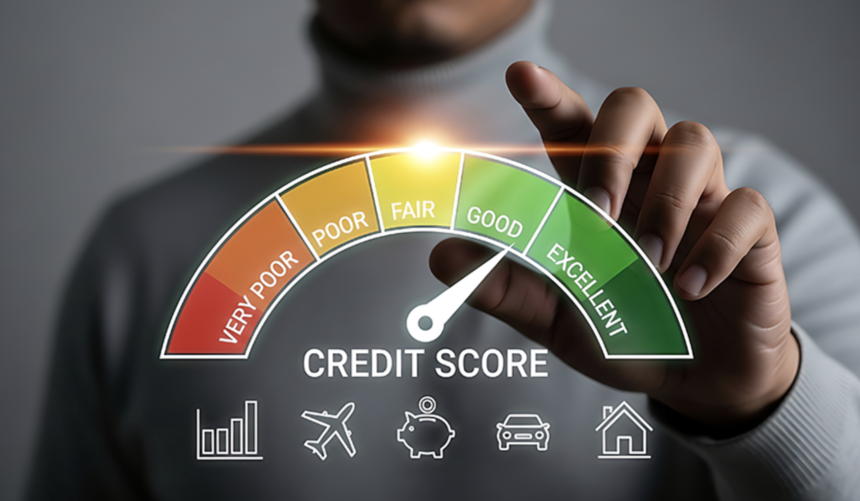
Applying for a mortgage, a car loan, or even a new mobile phone contract often comes down to a number most people rarely check until a lender’s decision leaves them wondering what went wrong. In the UK, three main credit reference agencies, Experian, Equifax, and TransUnion, each hold their own record of a person’s borrowing history, and lenders can choose which one, or which combination, to consult when assessing an application.
Because these agencies do not always hold identical information, a score with one can look noticeably different from a score with another, which confuses plenty of people who assume there is a single definitive figure that follows them everywhere. This guide explains how the three agencies work, what really shapes a score, and what steps can improve one steadily over time.
Experian, Equifax and TransUnion Explained
Each of the three main UK credit reference agencies collects data independently from banks, lenders, and other organisations that choose to report information to them, which means the picture held by each agency can differ depending on which lenders share data with which agency.
A missed payment reported to one agency will not automatically appear on a report held by another unless the lender in question reports to all three, which is common among larger banks but less consistent among smaller or newer lenders entering the market. Newer forms of credit, such as buy-now-pay-later services, have also begun reporting to some agencies more recently than others, adding a further layer of variation between what each agency’s record shows for the same borrower at any given moment.
Because lenders are free to choose which agency, or agencies, they consult before making a decision, a person’s experience applying for credit can vary depending on which record a specific lender happens to check. This is part of why checking a score with only one agency gives an incomplete picture, and why financial guidance generally recommends checking all three, especially before a major application such as a mortgage, where even a small discrepancy in one report could affect the outcome.
- Experian: One of the three main UK credit reference agencies, widely used by lenders across mortgages, credit cards, and loans.
- Equifax: A second major agency holding its own independent dataset, sometimes used alongside or instead of Experian by a given lender.
- TransUnion: The third main agency, increasingly used by newer lenders and some comparison services offering free score checks.
- Independent datasets: Each agency’s data can differ, meaning a check with only one gives an incomplete view of a borrowing history.
Free access to a credit report and score is available from each agency directly, either through their own service or through a range of third-party apps and comparison sites that pull data from one or more of the three. Many banking apps now display a free score pulled from one agency as a built-in feature, which is a convenient starting point, though relying solely on a single app’s number without ever checking the other two agencies risks missing a discrepancy that only shows up on a different report.
Factors That Influence Your Score

A credit score is built from a range of factors drawn from a person’s financial history, weighted differently by each agency’s own scoring model, though the broad categories of information considered tend to be similar across all three. Payment history sits near the top of most models, since consistently paying bills and credit commitments on time signals reliability to a lender assessing risk, while missed or late payments tend to weigh heavily against a score for a period afterward.
Credit utilisation, meaning how much of an available credit limit is being used at any given time, also plays a substantial role, with lower utilisation generally viewed more favourably than a card or account regularly maxed out close to its limit. The length of credit history matters too, since a longer track record of managed borrowing gives more data for a lender to assess than a thin file with only a few months of activity behind it.
- Payment history: Consistently paying bills and credit accounts on time is one of the strongest positive factors in most scoring models.
- Credit utilisation: Using a smaller proportion of available credit tends to be viewed more favourably than near-maximum usage.
- Length of history: A longer, well-managed credit history generally supports a stronger score than a thin or new file.
- Application frequency: Applying for several credit products in a short period can flag a score as higher risk to a lender.
- Types of credit held: A healthy mix of credit types, such as a card and a loan managed well, can support a score more than relying on just one type.
Electoral roll registration is another factor many people overlook, since being registered to vote at a current address helps agencies confirm identity and stability, which in turn supports a stronger credit profile compared with an unregistered address that leaves a gap in the verification picture a lender relies on.
Reading Your Credit Report Line by Line
A full credit report contains far more detail than the headline score alone, listing every account reported to that agency, including credit cards, loans, mobile contracts, and sometimes utility accounts, alongside a payment history for each one stretching back several years. Reviewing this detail regularly, rather than only glancing at the top-line number, helps spot errors such as an account that does not belong to the person, a payment marked late in error, or an old debt that should have dropped off the record after the standard retention period.
Financial associations also appear on a report, showing links to another person through a joint account, such as a joint mortgage or a joint credit card, and these associations can affect a score if the linked person has a poor credit history, even where the two finances are otherwise entirely separate. Requesting a formal disassociation after a relationship ends, such as following a divorce or the closure of a shared account, is a step many people forget, leaving an outdated financial link affecting a score long after it has stopped being relevant to either party’s finances.
Address history also carries weight in a credit report, since agencies track how long a person has lived at each recorded address, and frequent moves can make it harder for a lender to build a stable picture of identity and risk. Keeping address details up to date with every lender and account, promptly after a move rather than months later, avoids gaps in this history that could otherwise complicate a future application, especially one requiring a full and consistent address trail such as a mortgage.
Improving a Score Over Time

Improving a credit score is rarely a quick fix, since most scoring models reward a sustained pattern of reliable behaviour over months and years rather than a single corrective action taken in isolation. Paying every bill and credit commitment on time, keeping credit utilisation low relative to available limits, and avoiding a flurry of applications in a short window are the core habits that build a stronger score steadily over time.
- Set up direct debits: Automating minimum payments removes the risk of a missed payment due to a simple oversight.
- Reduce card balances: Paying down existing balances lowers utilisation and tends to have a noticeable positive effect on a score.
- Space out applications: Spacing credit applications further apart avoids the appearance of urgent or desperate borrowing behaviour.
- Correct report errors: Disputing an inaccurate entry with the relevant agency can remove an unfair drag on a score once resolved.
- Register on the electoral roll: Registering to vote at a current address supports identity verification used in scoring models.
- Consider a credit builder card: A small, well-managed card designed for building or repairing credit can help establish a positive track record.
Older accounts, even ones no longer actively used, can support a longer credit history if kept open rather than closed, so closing a long-standing card simply because it sits unused is not always the improvement it might seem, especially where the account carries no ongoing fee.
Applying for Credit Without Damage
Every formal credit application typically leaves a mark on a credit file known as a hard search, and too many hard searches in a short period can suggest financial strain to a lender reviewing an application, even where each individual application was reasonable on its own. Soft searches, by contrast, such as checking a personalised eligibility tool before applying, do not affect a score and offer a safer way to gauge the likely outcome of an application before committing to a formal request that leaves a visible mark.
Comparison tools that use soft searches to show likely acceptance odds across several lenders let a borrower narrow down options before submitting a single formal application to the lender most likely to approve it, reducing the number of hard searches recorded and protecting the score from unnecessary dents caused by speculative applications sent to multiple lenders at once.
- Hard search: A formal credit application that leaves a visible mark on a credit file, potentially affecting future lending decisions.
- Soft search: A check, such as an eligibility tool or a personal report review, that leaves no visible mark and does not affect a score.
- Eligibility checkers: Tools that estimate the likely outcome of an application using a soft search before a formal request is submitted.
- Timing applications: Spacing out formal applications and researching eligibility beforehand reduces unnecessary hard searches on a file.
Common Myths About Credit Scoring

Several persistent myths surround credit scoring in the UK, often leading people to take steps that either make no difference or actively work against building a stronger score. One common myth holds that checking your own credit report damages the score, when in reality a personal check registers as a soft search and has no negative effect whatsoever, unlike a formal application processed by a lender.
Another myth suggests that a single universal credit score exists and follows a person everywhere, when in practice each agency calculates its own score using its own model and its own dataset, meaning the same person can see different numbers depending on which agency, or which comparison service using that agency’s data, is being checked. A further myth claims that earning a high salary automatically produces a strong score, when in reality income is not typically a factor most agencies record directly, and score strength depends far more on borrowing behaviour than on how much a person earns.
- Myth: checking your own report harms your score: A personal check is a soft search and carries no negative effect on a credit score.
- Myth: one universal score exists: Each agency uses its own model and dataset, producing different numbers for the same person.
- Myth: high income guarantees a good score: Income is not typically a direct scoring factor; borrowing behaviour matters far more.
- Myth: having no debt gives the best score: A thin file with no credit history at all can score lower than a well-managed one with some.
A related myth suggests that a poor score is permanent and cannot be repaired, which discourages some people from even trying to improve their situation after a difficult financial period. In reality, most negative marks fade in influence over time and eventually drop off a report entirely after the standard retention period, meaning a poor score from several years ago carries far less weight today than the same mark would have carried the year it was recorded, provided more recent behaviour has been consistently positive.
A final common myth treats a rejected credit application as a permanent black mark in its own right, when the rejection itself is not visible to other lenders, though the hard search associated with the application does remain on file for a period and can still contribute to how a subsequent application is assessed by a different lender later on.
Final Thoughts
Credit scores in the UK are shaped by three separate agencies, each holding its own dataset and applying its own model, which is why checking only one paints an incomplete picture of a full borrowing history. Knowing what factors influence a score, from payment history to credit utilisation and application frequency, gives a clearer sense of where improvement efforts are best directed. Reading a credit report line by line, rather than glancing only at the headline number, uncovers errors and outdated associations that can otherwise drag a score down unnecessarily for months on end.
With steady habits and a little attention to how applications and reports are managed, most people can build a stronger credit profile over time without resorting to shortcuts that rarely work as promised, and the effort tends to pay off well before it feels like it should, provided the underlying habits are kept up consistently.
Frequently Asked Questions
Why do I have different credit scores with Experian, Equifax, and TransUnion?
Each agency uses its own scoring model and collects data independently from lenders, so differences in reported information and calculation methods naturally produce different scores, even when assessing the same person’s financial behaviour across the same period of time.
Does checking my own credit score damage it?
No, checking your own report or score counts as a soft search and has no effect on the score itself, unlike a formal credit application submitted to a lender, which registers as a hard search and is treated very differently by scoring models.
How long does a missed payment stay on a credit report?
Missed payments and other negative marks generally remain on a credit report for a set number of years before dropping off automatically, though the exact retention period can vary depending on the type of account and agency involved, so checking directly with the agency gives the clearest answer for a specific case.
Can I remove a financial association from an ex-partner on my credit file?
Yes, requesting a notice of disassociation from the relevant agency after a joint financial link, such as a joint account, has ended can remove the association, provided there is no ongoing shared financial product still open between both parties.
Will applying for several credit cards at once improve my chances of approval?
No, applying for several products in a short period tends to have the opposite effect, since multiple hard searches close together can signal financial strain to a lender reviewing a fresh application, even where each product on its own would have been approved easily.
Is it worth paying for a premium credit monitoring service?
It depends on personal preference, since free options from all three agencies exist and cover the essentials, though a paid service may offer more frequent updates or added features such as identity monitoring for those who value the extra convenience. Anyone applying for a mortgage or another major loan in the near future may find the added frequency of updates from a paid service reassuring, even if it is not strictly necessary for everyday monitoring of a stable financial situation.