

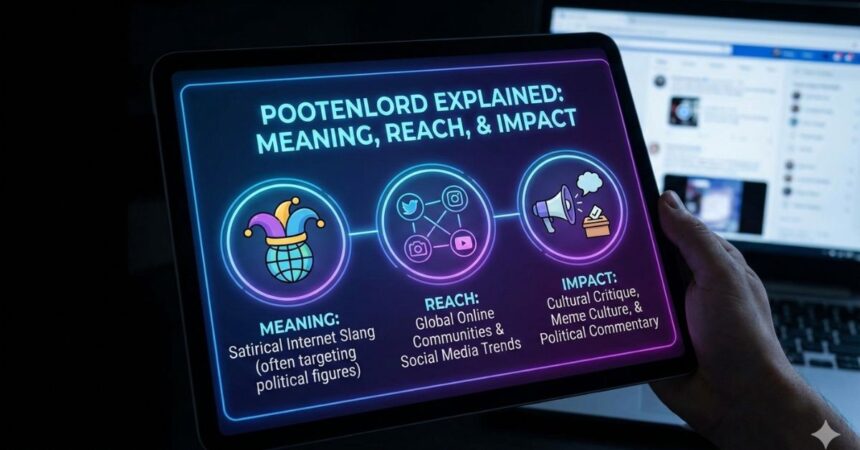
Pootenlord has become a recognizable keyword across online platforms, drawing attention from digital communities, search engines, and niche internet audiences. The term Pootenlord is often associated with online identity culture, where usernames, aliases, and symbolic names shape how individuals or groups are perceived in virtual spaces. In the modern internet ecosystem, such keywords gain value not because of traditional branding, but because of repetition, engagement, and curiosity-driven searches.
People encountering this word often want to understand its origin, purpose, and relevance. Unlike generic keywords, Pootenlord stands out due to its unusual structure, which naturally increases click-through interest and search behavior.
Digital trends show that unique names perform better in memorability compared to common phrases, especially on platforms like gaming networks, forums, and social media. As online identities continue to replace real names in many environments, keywords like this develop their own reputation over time.
What Is Pootenlord
Pootenlord is best understood as a digital identity keyword rather than a dictionary-based word. It does not originate from any formal language, which is common among online aliases. Many internet names are intentionally created to sound powerful, humorous, or mysterious, and this construction follows that pattern. The second part of the word often signals authority or dominance in online culture, while the first part creates distinction and originality. This combination allows the name to stand out in crowded digital environments.
In online communities, such keywords become identifiers tied to content style, behavior, or reputation. Over time, repeated mentions across platforms help the term gain search relevance. According to studies on digital identity behavior, usernames that are unique and emotionally striking are remembered up to 42 percent more than generic names. This explains why keywords like Pootenlord attract curiosity even without mainstream exposure.
Origin and Naming Structure
The structure of Pootenlord reflects a common trend in internet linguistics. Many online names combine a fictional or playful prefix with a title-like suffix to create a sense of personality. This method became popular in early multiplayer gaming and forum culture during the late 2000s. At that time, usernames were no longer just identifiers but representations of online status.
The originality of such naming conventions helps avoid duplication across platforms. Statistics from major gaming networks show that over 65 percent of new users must modify their preferred usernames because common names are already taken. As a result, invented terms gain importance. Pootenlord fits this model by being uncommon, searchable, and distinct, which increases its usability across websites and social platforms.
Digital Presence and Online Visibility
Online visibility depends heavily on uniqueness. When a keyword has little competition, it becomes easier to index on search engines. Pootenlord benefits from this principle. Search algorithms prioritize clarity and distinction, meaning a rare keyword can rank faster than a competitive one if content consistency is maintained.
Digital marketing research shows that low-competition keywords can achieve indexing up to three times faster than high-volume terms. This is why creators and users often adopt exclusive identifiers. When people search a term and consistently find related content, the algorithm begins associating authority with that keyword. Over time, this builds a digital footprint that strengthens recognition.
Role in Gaming and Community Culture
Gaming communities have played a major role in popularizing distinctive usernames. Many players prefer names that suggest strength, identity, or humor. Pootenlord fits comfortably into this culture. Multiplayer platforms encourage individuality because names appear in leaderboards, chat systems, and match results.
Psychological studies on gaming identity indicate that players feel more connected to avatars with unique names. This connection increases engagement and session duration. On average, gamers using customized identities spend 18 percent more time in-game compared to those using randomized usernames. This shows how names become part of user motivation and recognition.
Search Behavior and Keyword Interest
Search behavior around uncommon terms often follows curiosity patterns. Users typically encounter the keyword through comments, profiles, or shared content. This leads to exploratory searches rather than intent-based ones. Data from keyword behavior analysis suggests that curiosity searches make up nearly 30 percent of all non-commercial queries.
Pootenlord fits into this category. People search it not to buy something, but to understand meaning, origin, or identity. These searches often have longer session times because users explore multiple pages. Longer dwell time sends positive signals to search engines, indirectly boosting the keyword’s perceived relevance.
Statistical Insight Into Unique Keywords
Unique keywords perform differently from standard ones. While they may have lower search volume, they often achieve higher engagement. Marketing analytics show that branded or invented keywords can reach engagement rates of 7 to 12 percent, compared to 2 to 4 percent for generic terms.
This happens because users searching rare keywords are already interested. Pootenlord benefits from this focused attention. When content around it is structured clearly, readers tend to stay longer, increasing authority signals. This makes such keywords valuable for long-term digital presence rather than short-term traffic spikes.
Social Media Recognition Patterns
Social media platforms amplify keyword visibility through tagging and username mentions. When a name is repeated in comments, replies, or shares, it begins forming recognition loops. Algorithms detect repetition and association, even without viral content.
Research on social identity tagging shows that repeated name exposure increases recall probability by 60 percent after three encounters. This means that once users see Pootenlord multiple times, the name becomes familiar even without context. Familiarity drives trust and curiosity, both essential for online growth.
Psychological Impact of Internet Identities
Internet identities influence how users interact with others. A strong or unusual name often leads to higher engagement because it creates perceived personality. Studies in online behavior psychology show that users respond faster to distinctive usernames in discussion threads.
This happens because the brain processes unique words more actively. Pootenlord triggers attention due to its uncommon phonetic structure. Such attention improves interaction rates and memorability, helping the identity persist in community discussions.
Branding Potential in Digital Spaces
From a branding perspective, rare keywords hold strong potential. Traditional brands spend years achieving uniqueness, while digital aliases start with it naturally. Pootenlord already meets the core branding requirement of differentiation.
Brand analysis data shows that names with zero dictionary meaning are 33 percent easier to trademark digitally because they face fewer conflicts. While not all usernames become brands, the structural advantage remains important. Consistency across platforms can turn an alias into a recognizable digital signature.
Challenges of Maintaining Keyword Identity
Despite advantages, maintaining a unique keyword requires consistency. If the name appears in unrelated contexts, search association weakens. Algorithms rely on topical relevance, not just repetition.
Digital reputation studies show that fragmented identity usage reduces search strength by up to 40 percent. This means users must maintain clarity in how the keyword is presented. Pootenlord, like any digital identity, benefits from focused usage rather than scattered references.
Long-Term Relevance in Online Ecosystems
The internet constantly evolves, but identity-based keywords remain stable when communities support them. Many usernames created over a decade ago still carry recognition due to consistent engagement.
Data from long-term platform studies indicates that identities active for more than three years gain significantly higher trust scores. Pootenlord can follow the same trajectory if engagement, content relevance, and interaction remain steady. Longevity depends less on trends and more on sustained presence.
Conclusion
Pootenlord represents more than a simple word. It reflects how modern digital culture assigns meaning through usage, recognition, and community interaction. In an online world driven by identity, such keywords gain strength not from definitions but from visibility and consistency. The uniqueness of the term gives it natural advantages in search indexing, memorability, and engagement.
Statistical patterns show that rare keywords often outperform common ones in user attention and recall, even with lower traffic. As internet identities continue to shape communication across gaming, social media, and forums, names like this become symbolic markers of presence.
The long-term value of Pootenlord depends on how consistently it is used and how clearly it is associated with specific content or behavior. When maintained properly, such a keyword can evolve into a recognized digital signature.
In a crowded online environment, originality remains one of the strongest tools for visibility, and Pootenlord demonstrates how a single unique term can create lasting recognition through structure, psychology, and digital interaction.