

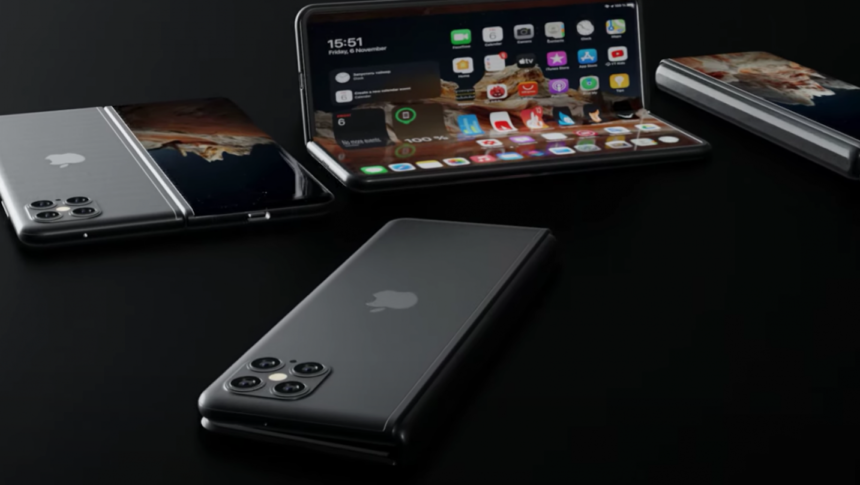
The arrival of Apple’s first foldable iPhone is generating tremendous global excitement and for good reason. The iPhone Fold marks one of Apple’s boldest hardware evolutions ever, pairing next-generation foldable engineering with a decisive leap toward an eSIM-only future. Yet despite Apple’s increasingly digital-first strategy, one market stands firmly opposed: mainland China, a region where physical SIM cards remain deeply rooted in consumer habits and mobile infrastructure.
In this comprehensive analysis, we explore the design philosophy behind the iPhone Fold, the implications of its eSIM-only configuration, the pushback expected in China, and whether Apple’s strategy will redefine the future of mobile connectivity or risk slowing momentum in one of its most essential markets.
A Radical Leap in Industrial Design: Apple’s Thinnest Foldable Vision
Apple’s engineering teams are reportedly pushing boundaries harder than ever. The iPhone Fold is described by insiders as “two titanium iPhone Airs fused together,” signaling a design ethos built around extreme thinness and precision.
Expected Technical Highlights
- 5.5-inch external display engineered for quick interactions
- 7.8-inch internal OLED display, reminiscent of a compact iPad mini
- Crease-free folding panel, solving the industry’s biggest visual flaw
- Refined book-style hinge, leveraging titanium materials
- Ultra-light internal layout, maximizing space for thermal efficiency
The decision to remove the physical SIM tray directly supports Apple’s ambition to create a super-slim foldable, freeing internal real estate for better hinge reinforcement, larger batteries, and enhanced structural rigidity.
Why Apple Is Committing Fully to an eSIM-Only Architecture
Apple has been steadily normalizing eSIM usage since debuting eSIM-only models in the U.S. with the iPhone 14. With the iPhone Fold, Apple appears ready to globalize that approach—except in China, where resistance remains strong.
Advantages Behind Apple’s Shift to eSIM
- More internal space for engineering improvements
- Superior water and dust protection with fewer intrusion points
- Simplified global manufacturing, reducing SKU fragmentation
- Long-term alignment with carriers transitioning to digital provisioning
An eSIM-only foldable offers massive manufacturing and engineering benefits. For Apple, the decision supports both product longevity and ecosystem uniformity.
However, this ambition comes at a cost in markets where physical SIM usage is not merely a preference—but a foundational expectation.
China’s Mobile Culture: A Deeply Ingrained Physical SIM Economy
China is Apple’s single largest overseas market, yet it remains the most resistant to eSIM adoption. Here, the physical SIM card plays a functional, cultural, and economic role unmatched anywhere else.
Why Physical SIM Cards Dominate China
- Rapid device switching is common among tech-savvy consumers
- High-volume resale markets rely on easy SIM swapping
- Dual physical SIMs remain the standard, even for budget devices
- Carrier activation workflows for eSIMs are slower and restrictive
- Mandatory in-person verification reduces the convenience of eSIMs
For many Chinese consumers, the ability to remove a SIM instantly—without contacting a carrier—is absolutely essential. An eSIM-only iPhone Fold risks elongating the activation process, complicating transfers, and disrupting resale workflows.
iPhone Air Lessons: A Clear Warning for Apple’s Foldable Strategy
The recent iPhone Air, an ultra-thin model sold as eSIM-only in China, offers a valuable glimpse into consumer sentiment. Unfortunately for Apple, its performance in the Chinese market was far below expectations.
iPhone Air Consumer Feedback
- Sales lagged, particularly in China
- Buyers preferred practicality over thinness
- Battery capacity compromises reduced appeal
- Single camera limitations discouraged upgraders
- Many avoided the device solely because it lacked a physical SIM tray
These insights indicate significant market hesitation. The iPhone Fold could face similar—but far more substantial—challenges unless Chinese carriers modernize eSIM onboarding.
Innovative Features That Could Help the iPhone Fold Overcome Adoption Barriers
Despite the eSIM controversy, Apple is preparing the Fold with breakthrough technologies designed to set a new premium standard.
Rumored Next-Gen Features
- 24MP under-display camera, delivering a flawless full-screen experience
- Crease-free main display, solving an issue plaguing all foldable competitors
- Advanced hinge engineering rated for long-term durability
- Optimized thermal and battery systems supporting dual screens
- Flagship-grade chip performance, matching top-tier iPhone Pros
The combination of display innovation, durability improvements, and chipset power could position the iPhone Fold as the most refined foldable available—potentially overshadowing the inconveniences of eSIM-only usage in many markets.
Global eSIM Adoption Outlook: Will 2027 Be the Turning Point?
Apple’s strategy suggests strong confidence that eSIM adoption will be far more widespread by the time the iPhone Fold launches. Many markets—including Europe, the U.S., and regions across Southeast Asia—are rapidly moving toward digital SIM standards.
Yet China remains the unpredictable variable.
For a Successful Launch in China, Apple Needs:
- Instant over-the-air activation, similar to Western carriers
- Removal of in-store registration requirements
- Support for multiple active eSIM profiles, matching dual-SIM expectations
- Simple resale-ready eSIM transfer systems
If carriers adapt, the iPhone Fold could push China’s mobile ecosystem into a new era. If they do not, adoption may stall.
Will the eSIM-Only iPhone Fold Be a Breakthrough or a Barrier?
The iPhone Fold is shaping up to be Apple’s most ambitious device since the first iPhone—a fusion of futuristic engineering and bold strategic risk-taking. Its success will depend on three critical factors:
- Apple’s ability to communicate the real benefits of eSIM-only technology
- Carrier modernization, particularly in China
- Whether the Fold’s display, design, and performance innovations outweigh the inconvenience of losing physical SIM support
If Apple executes this transition flawlessly, the iPhone Fold could redefine not only foldable phones—but the future of mobile connectivity itself. If not, it may face the same resistance that constrained the iPhone Air’s market impact.